

Summarize in
Can you have a wedding at an Airbnb?
Sometimes, yes — but not by default.
An Airbnb wedding is realistic when it's small, fully disclosed to the host, approved in writing, and planned so it won't disturb neighbors or break local rules. Think elopement, micro-wedding, family-only dinner, or a wedding weekend where the Airbnb is the home base rather than a full-scale reception venue.
Airbnb's Community Disturbance Policy still prohibits disruptive gatherings of any size, open-invite events, excessive visitors, excessive noise, parking nuisances, and listings advertised as "party or event friendly." The old 16-person occupancy cap was removed in 2022, but those restrictions stayed. Airbnb also screens reservations for party risk and may reject or flag bookings based on signals tied to them.
On paper, an Airbnb wedding sounds amazing: a beautiful home, a personal setting, and a whole weekend with your favorite people instead of a single rushed evening. Sometimes it works exactly like that. Sometimes it turns into a stressful lesson in guest limits, parking problems, noise complaints, and a host who never agreed to half of the plan.
The reality: an Airbnb wedding can work, but only when the property, the host, the guest count, and the local rules all line up.
In this article, we'll cover:
- Pros and cons of Airbnb weddings
- Airbnb vs. Vrbo for weddings
- The Airbnb rules for weddings
- Airbnb wedding costs
- How to plan an Airbnb wedding
- Frequently asked questions
Pros and cons of Airbnb weddings
| Pros | Cons |
| Total creative freedom | Strict party ban |
| Vendor flexibility | Micro-wedding only |
| Intimate setting | Logistics heavy |
| Lodging included | Utility limits |
| Unique locations | Insurance gaps |
Choosing an Airbnb for your wedding offers a unique set of advantages and disadvantages:
Advantages of Airbnb wedding
- Total aesthetic control: You aren't restricted by a hotel’s "package A or B." You have 100% control over the décor, the vibe, and the layout.
- Flexible vendor choice: Unlike traditional venues that force you to use their expensive "preferred caterers," a private rental lets you bring in food trucks, local chefs, or even DIY your bar.
- Intimate "micro-wedding" atmosphere: These properties are unparalleled for small, high-end gatherings (under 15–20 guests) where you want a cozy, "home away from home" feeling.
- Cost-effective (if small): For a tiny guest list, renting a luxury villa for a weekend is often cheaper than renting a ballroom for 6 hours.
- The "wedding weekend" experience: You, your wedding party, and your immediate family can often stay on-site, turning a 5-hour event into a multi-day celebration.
Disadvantages of Airbnb wedding
- The global party ban: Airbnb strictly prohibits "disruptive parties." If your guest count exceeds the sleeping capacity of the house or includes loud music, the host’s "NoiseAware" sensors or neighbors will likely alert Airbnb, which can result in immediate eviction and account suspension.
- Hidden "rental" costs: Because these aren't event spaces, you have to bring in everything. Renting tables, chairs, linens, glassware, and even portable luxury restrooms (if the septic system can't handle 30 people) can make this more expensive than a traditional venue.
- Insurance gaps: Airbnb’s AirCover is for standard lodging. It does not cover wedding-related accidents (like a guest slipping on a dance floor). You must purchase a separate Event Liability Policy or and often add the host as "Additionally Insured."
- Logistical "DIY" burnout: You are the venue manager. You have to coordinate trash removal, parking (most neighborhoods aren't zoned for 15 extra cars), and power needs (DJ speakers can blow a standard home circuit breaker).
- The "host factor": Unlike a corporate venue with a contract, an individual host can cancel your booking months out due to a change of heart or selling the property, leaving you without a backup.
Airbnb vs. Vrbo for weddings
If you’re comparing (or thinking about which one to choose) Airbnb vs. Vrbo platforms - Vrbo is usually easier to work with for event-style celebrations.
Vrbo explicitly tells guests to search for properties that allow events, check the house rules, get host approval before booking, follow local ordinances on noise and gathering size, and avoid disrupting the neighborhood. It also gives hosts an “Events allowed” house-rule option.
Airbnb on the other hand is less direct and more restrictive: it focuses on preventing disruptive gatherings and does not allow listings to be marketed as event friendly.
A simple rule of thumb:
-
If your plan is a small ceremony and dinner, Airbnb may work.
-
If your plan looks like a real event, Vrbo or a purpose-built venue is usually the safer option.
For more information, make sure to check out our article: How to host a wedding at a Vrbo property.
The Airbnb rules that matter most
a) Host approval matters more than the photos
A gorgeous garden means nothing if the host is not comfortable with visitors, vendors, or a ceremony onsite.
Airbnb’s guest ground rules say guests should respect the number of people that are allowed on the property and/or during the event and ask the host if they have questions related to the number of guests.
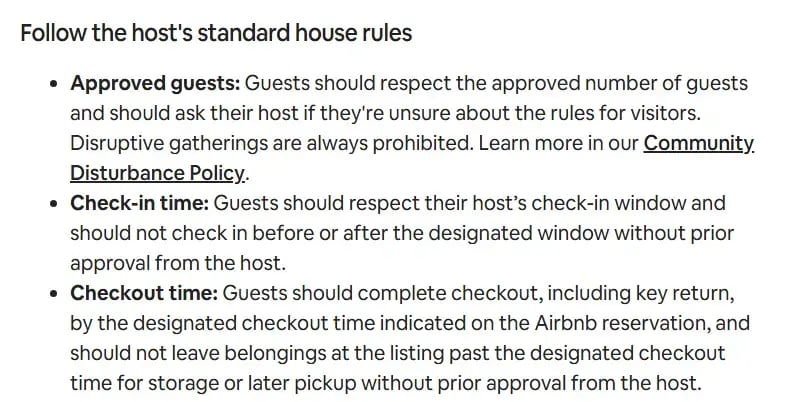
So, for example, if 8 people are sleeping over and 12 more are coming for dinner, that needs to be disclosed before booking.
💡Tip: If you would like to learn more about Airbnb and party rules, make sure to check out our article: Does Airbnb Allow Parties?
b) The old 16-person rule is gone
A lot of outdated wedding content still talks about Airbnb’s 16-person cap.
That advice is old. Airbnb removed the temporary 16-person cap in 2022.
What stayed in place however was the ban on disruptive gatherings and event-friendly advertising.
So the real question is no longer “Is it under 16?” It is “Is this approved, realistic for the property, and non-disruptive?”
c) Professional photography should be disclosed
Airbnb says guests should not participate in film or photography intended for commercial use or profit without documented permission from the host.
For weddings, the practical takeaway is simple: If you plan to bring in a professional photographer or videographer, mention it upfront.
d) Fees and deposits are not a free-for-all
Airbnb’s checkout pricing includes the listing price, applicable fees, taxes, and other items identified during checkout.
Hosts generally cannot collect reservation-related fees off-platform unless Airbnb specifically permits it in limited cases:
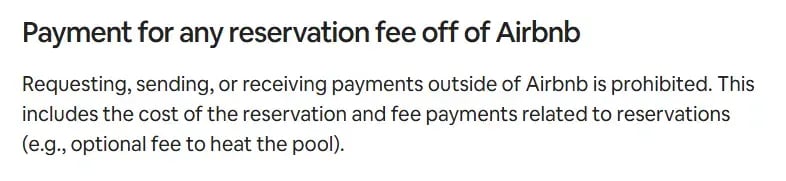
And most hosts are not allowed to charge security deposits in the normal way, aside from narrow exceptions such as some software-connected listings or hotel-style practices that are properly disclosed.
How much does an Airbnb wedding cost?
There is no reliable one-size-fits-all average.
The real cost depends on how much wedding infrastructure you need to add to a house that was designed for staying in, not hosting an event.
In most cases, the budget breaks into five parts:
-
The stay itself: nightly rate, Airbnb fees, and taxes. Airbnb’s pricing rules cover this part clearly.
-
Setup and cleanup time: many couples need an extra night before and after.
-
Infrastructure: tables, chairs, linen, heaters, lighting, toilets, waste removal, tenting.
-
Vendors: catering, staffing, florals, photography, planning, transport.
-
Backup plans: weather cover, extra cleaning, extra power, shuttle logistics.
That is where the “Airbnb is always cheaper” assumption starts to fall apart.
Sometimes the property is a bargain. Sometimes it is just the shell, and you end up building the venue around it.
How to plan an Airbnb wedding?
1. Decide whether the wedding should be in the venue or in the home base
This is the first real decision. If the Airbnb property will be only a place where people stay and get ready, your search becomes much easier.
If the ceremony and dinner happen there too, you need to think like an event planner.
2. Separate overnight guests from day guests
Do not lump them together. A property that sleeps ten guests is not automatically suitable for twenty-five people dropping in for a ceremony and dinner.
Airbnb’s guest rules make it clear that approved guests and visitor rules matter.
3. Shortlist for logistics, not just looks
Before you fall in love with the photos, check:
-
Parking and road access - a beautiful property can quickly become stressful if guests, vendors, or rental vehicles cannot reach it easily or park without causing problems.
-
Number of bathrooms - just one-two bathrooms can create long waits and make even a small wedding feel uncomfortable for guests.
-
Kitchen size - the kitchen matters because it affects how easily food, drinks, and any catering support can be handled on the day.
-
Indoor backup space - a strong property needs a realistic indoor option in case weather, wind, or temperature make the outdoor plan unworkable.
-
Outdoor shelter or shade - shade or cover is essential for guest comfort, especially during heat, strong sun, or light rain.
-
Accessibility for older guests - stairs, uneven ground, and long walking distances can make an otherwise lovely property difficult for some guests to enjoy.
-
Vendor load-in access - vendors need practical access to bring in food, furniture, flowers, or equipment without delays or unnecessary strain.
-
Distance from neighbors - the closer the neighbors are, the greater the chance of noise issues, complaints, or tighter limits on how the celebration can run.
The best Airbnb wedding properties are not just photogenic. They are easy to operate.
4. Ask the host before you book
Do not book first and explain later.
Airbnb’s reservation screening can flag stays that look higher-risk, and Airbnb says recent message-thread topics can be part of that assessment.
Honest, specific communication helps both you and the host. A message like this works well:
“Hi [Host Name], we love your property and are considering it for a two-night stay. We would have 8 overnight guests and a 12-person ceremony and dinner on Saturday from 4 pm to 8 pm. No DJ, no open invitation, no amplified music after quiet hours, and we would use professional cleaners. We would also have a photographer and caterer onsite for a few hours. Would you be comfortable approving that? Are there any rules on visitors, parking, vendors, décor, furniture moving, cleanup, or photography we should know about?”
5. Get the important approvals in writing
If the host says yes, confirm the details in the Airbnb message thread:
-
Overnight guest count
-
Day guest count
-
Event timing
-
Quiet hours
-
Parking plan
-
Vendor access
-
Decoration limits
-
Furniture-moving rules
-
Trash and cleanup expectations
-
Check-in and checkout flexibility
That protects both sides and reduces misunderstandings.
6. Check local rules before you pay deposits
Private property does not override local noise ordinances, gathering limits, parking restrictions, permit requirements, or HOA rules.
Vrbo’s own event guidance specifically tells guests to follow ordinances in the locality that are related to the number of guests and the noise:
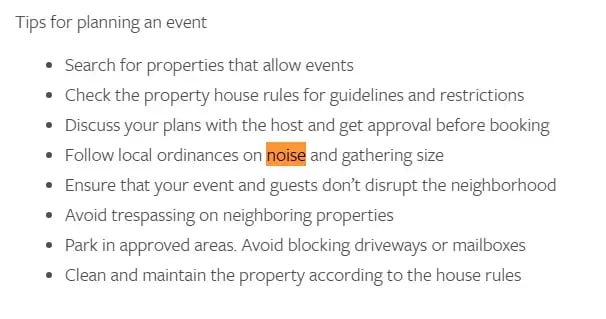
That is a good rule even if you book elsewhere - you should always check Airbnb regulations by a state or country before booking a property for the wedding.
7. Build the wedding around the property
The easiest Airbnb weddings work with the house, not against it.
A ceremony in the garden, drinks on the terrace, and a long dinner under lights usually fit the rental model better than a full reception with a DJ and a late finish.
8. Stress-test the hidden logistics
This is where many rental weddings either become brilliant or chaotic. Ask yourself:
-
Is there enough power?
-
Are there enough toilets?
-
Where will guests park?
-
Where will trash go?
-
What happens if it rains?
-
Is there enough shade or heat?
-
Can vendors load in safely?
-
Is the ground level enough for tables and chairs?
9. Budget for buffer time
Setup day and cleanup day are often the hidden line items that change the whole equation.
A property that looks affordable for one night may stop looking cheap once you add the real working time around the wedding.
10. Bring in a coordinator once the plan stops being tiny
For a true elopement, you may not need one.
For anything with multiple vendors, deliveries, furniture moves, and day guests, a coordinator can be the difference between a lovely day and a logistics marathon.
11. Make guest communication easy
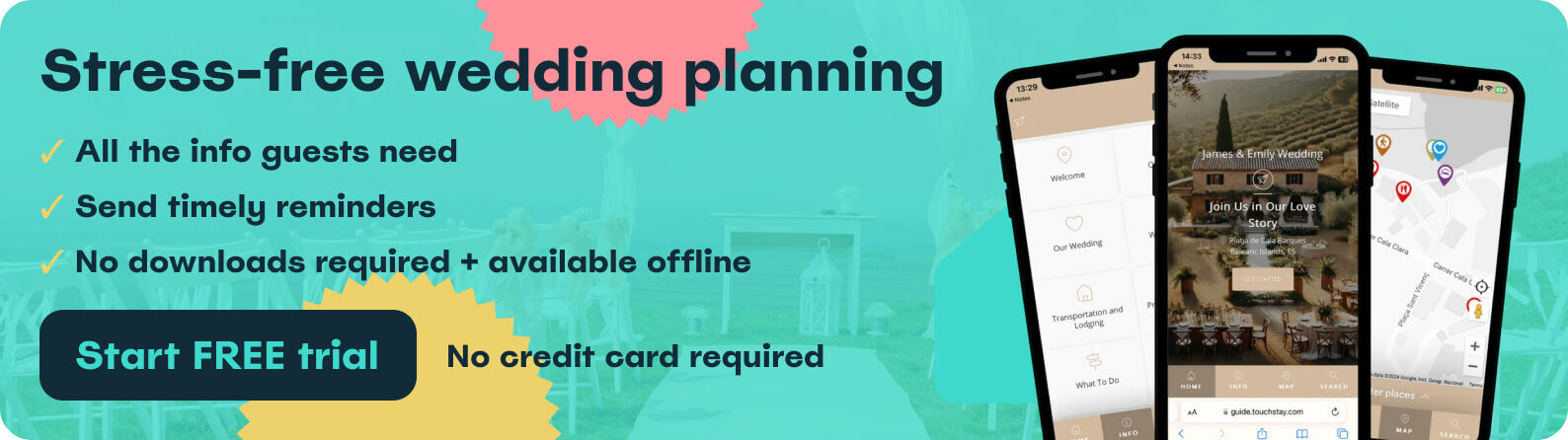
This is where a wedding digital guidebook genuinely helps.
If you are hosting a wedding weekend around a rental, guests and vendors need one place for the basics:
-
Address and arrival notes
-
Parking instructions
-
Room assignments
-
Weekend schedule
-
Dress code
-
Taxi details
-
Nearby accommodation options
-
Wi-Fi
-
Quiet-hour reminders
-
Emergency contacts
-
Next-day brunch plans
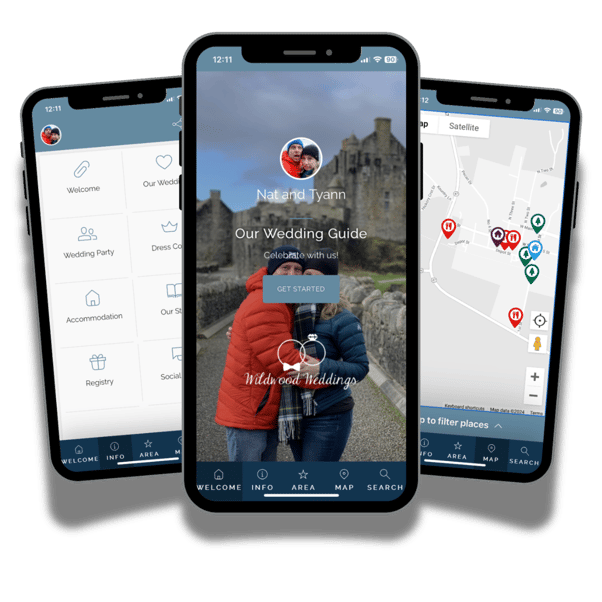
That turns communication into a system instead of a hundred scattered texts. In that case, you can utilize TouchStay digital guidebook and provide your guests a much better experience with all the crucial information in one place.
💡 Tip: If you would like to learn more about digital guidebooks for Airbnb, make sure to check out our guide: How to create an Airbnb welcome book.
Common Airbnb wedding mistakes
Assuming a beautiful property is automatically event-suitable
The biggest mistake is falling for the photos before checking whether the property can actually function as a wedding site, because access, bathrooms, weather backup and neighbor distance matter more on the day than aesthetics do.
According to The Knot Real Weddings Study (2026), the average size of U.S. weddings is around 117 guests, and only 6% of the weddings are planned for fewer than 50 people.
Therefore, most weddings are already larger than many house-style properties comfortably handle.
Treating a rental home like a purpose-built venue
Couples often underestimate how much infrastructure a normal wedding venue quietly provides, from space planning to vendor flow.
In The Knot’s study, couples used:
-
An average of 13 wedding professionals
-
73% of couples said their venue included rentals
-
41% said catering was included
-
37% said alcohol was included (meaning a house rental usually does not provide it by default)
Hiding the real plan from the host
This is one of the riskiest mistakes because it turns a logistical question into a trust problem.
Airbnb’s policy prohibits disruptive gatherings and open-invite gatherings, and specifically flags issues like excessive noise, visitors, trash and parking nuisances, so couples who avoid being upfront are increasing the chance of conflict or enforcement later.
Confusing sleeping capacity with event capacity
A house in which 12 - 16 people can sleep does not mean that it is automatically a good choice for a wedding ceremony, cocktail hour and dinner with far more people moving through it.
That is one reason private-home Airbnb weddings remain a niche format: Only small percentage of wedding receptions take place at a private home, even though many couples love the idea of a more personal setting.
Underestimating parking, bathrooms, trash and weather
These sound like boring details, but they are the details most likely to make a home feel strained and to create neighbor complaints.
Airbnb explicitly calls out parking nuisances, excessive trash and excessive noise, while wedding-industry data also shows how relevant weather planning is: More than 50% of couples usually hosts an outdoor wedding ceremony.
Thinking “outdoor” automatically means easy
Outdoor space is attractive, but it adds exposure to heat, wind, rain, tenting and power needs that many private rentals are not built to absorb.
Generally speaking, many couples choose venues based largely on the reception, and having some or all of the reception outdoors is often one of the most important factors.
Leaving guest communication too late
Airbnb-style weddings need more pre-event communication than traditional venues because guests may need instructions on parking, arrival timing, walking surfaces, quiet hours, transport and where they can and cannot go on the property.
That matters because guest behavior is messy in real life. Based on the report from Zola.com:
-
78% of couples had some guests who RSVP’d yes but didn’t attend their wedding
-
20% said an uninvited extra plus-one showed up
Therefore, unclear communication creates a simple, avoidable chaos really fast.
Final thoughts
An Airbnb wedding can be intimate, stylish, and deeply personal.
It can also become stressful very quickly if you treat a short-term rental like a blank-check event venue.
The couples who have the smoothest experience are usually the ones who stay realistic.
They keep the celebration small, disclose the plan early, get approval in writing, respect the property’s limits, and make guest logistics simple.
Do that, and an Airbnb wedding can feel less like a workaround and more like the whole point.
Frequently asked questions
Is it legal to get married at an Airbnb?
Sometimes, yes. But legality depends on more than the property itself. You need host approval, compliance with house rules, and follow all local requirements and short term rental rules around gatherings, parking, noise, permits, or HOA restrictions.
Does Airbnb allow weddings?
Airbnb does not allow listings to be advertised as “party friendly,” and it bans disruptive gatherings of any size. Small Airbnb parties (such as smaller weddings) may still happen in practice, but only with host approval and full compliance with house rules and local rules.
What size of the wedding works best at an Airbnb?
Usually an elopement, micro wedding, or family-only celebration. Once you add a larger guest list, heavier parking needs, lots of vendors, or late-night entertainment, a dedicated venue or clearly event-friendly rental is usually a better fit.
Is Vrbo better than Airbnb for weddings?
Often, yes, for event-style celebrations. Vrbo explicitly lets hosts state whether events are allowed and tells guests to search for event-friendly properties and get approval before booking.
How can a digital guidebook help with an Airbnb wedding?
A digital guidebook keeps directions, parking, the schedule, room details, local recommendations, and house rules in one place, which cuts down on repetitive questions and helps the weekend run more smoothly.
If you are a host who allows weddings on your Airbnb property, TouchStay digital guidebook can improve the guest experience, prevent misunderstandings and potential problems, and give guests easy access to all the key information about your property in one place, online, at any time.
Ready to create a truly special and personalised wedding experience at an Airbnb?