

Summarize in
As a short-term rental host, you have invested significant time, money and emotional energy into your property. It is your livelihood, and the vast majority of guests are a pleasure to host, resulting in smooth stays and positive reviews. However, the sharing economy, especially on platforms like Airbnb, has unfortunately introduced an unnerving possibility for property owners: the threat of an 'Airbnb squatter'.
While the situation is rare, the risks are real, and understanding how to proactively protect your property is essential for long-term success and peace of mind. In this comprehensive guide, we will explore:
- What are Airbnb squatters?
- Identifying potential squatters
- Preventive and protective measures
- Actions to take if you have squatters
- Squatters’ rights and legal implications
- Key takeaways
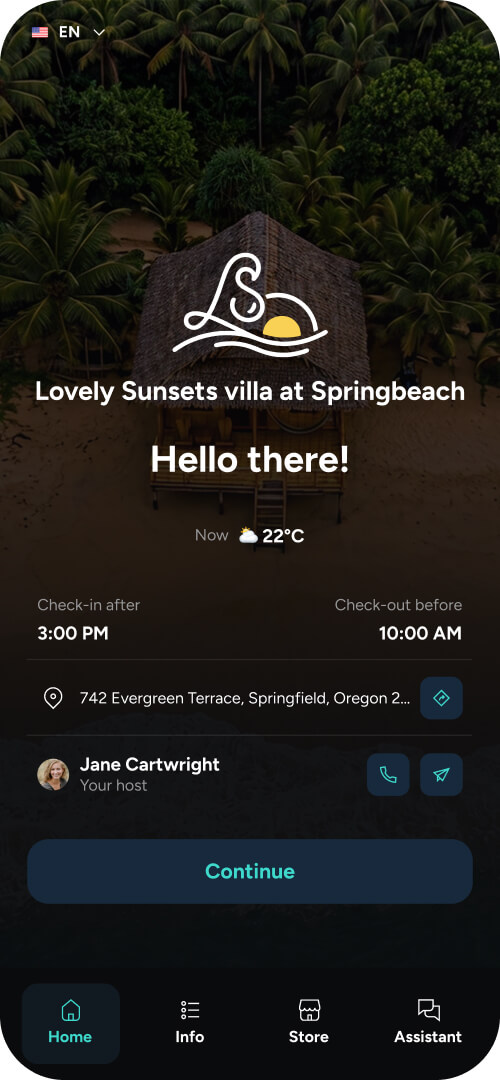
Clearly communicate your Airbnb house rules and policies with a Touch Stay digital guidebook.
What are Airbnb squatters?
The term ‘Airbnb squatter’ refers to a guest who enters a short-term rental property under a legitimate booking but then refuses to leave once their reservation period has ended. The critical factor that complicates the situation is that, in many jurisdictions, once a guest establishes residency – even after an initial short stay – they may acquire 'tenants’ rights' or 'occupancy rights'.
Crucially, an Airbnb guest is typically considered a licensee, meaning they are granted permission to use the property for a short, defined period. They are not a tenant under a traditional lease. However, if a guest overstays and the host fails to take immediate, definitive action, the line between a guest and a tenant can become dangerously blurred, particularly if local laws favour the occupant or define ‘residency’ broadly.
A squatter is not simply someone who misses their check-out time by a few hours; it is someone who deliberately attempts to exploit the system to gain long-term, rent-free occupancy.
Identifying potential squatters
Prevention is always the strongest defence against an Airbnb squatter. Being vigilant during the booking process and throughout the guest’s stay can save you months of legal stress and financial loss. Hosts need to look beyond the five-star reviews and learn to spot specific warning signs that indicate a guest may have malicious intent.
Here are the critical warning signs to look out for:
- Booking long stays immediately: A classic tactic involves booking a stay that pushes the limit of what is considered a short-term rental – often 28 to 30 days, as this is the threshold in many regions where tenant rights begin to apply. If a guest, especially a first-time guest with no review history, immediately attempts to book a near-month-long stay, this should raise a cautionary flag.
- Lack of personal information or profile history: If a guest’s profile is brand new, lacks a verified ID, or contains a minimal profile photo and description, this warrants extra scrutiny. While everyone is new to the platform at some point, a combination of a new profile and a long-stay request is particularly suspicious. Legitimate guests typically take the time to build a trustworthy profile.
- Evasive or odd communication: Pay close attention to the guest’s communication style. If they avoid answering direct questions about the purpose of their trip, the number of occupants, or any specific rules, they may be trying to hide their intentions. Similarly, a guest who is too keen to discuss utility bills, postal arrangements, or extending the stay immediately after check-in, but is vague about their employment or departure plans, is cause for concern.
- Attempting to accept mail or make changes to utilities: This is a major red flag. Establishing an address is a key component in claiming tenancy. If a guest asks to receive official mail at your address or, even worse, attempts to change the name on a utility bill, you must intervene immediately and firmly remind them that the property is a short-term rental and mail is not permitted.
- Paying with cash or outside the platform (for extensions): A host should never process payments for a booking or an extension outside of the official booking platform. Squatters may attempt to lure hosts into cash payments to establish a paper trail independent of the platform's terms, which can complicate the host's position if legal action is required.
Preventive and protective measures
Proactive steps are your best defence. By implementing rigorous processes before, during, and after a booking, you can significantly reduce the vulnerability of your short-term rental property.
1. Use trusted platforms
The primary advantage of using major platforms like Airbnb or Booking.com is the layer of security and verification they offer. These platforms typically verify guest IDs and payment methods. Crucially, they also document the agreed-upon check-in and check-out dates, which is your most important piece of evidence in any legal dispute. Never book an unknown guest off-platform, even if it means saving on commission fees. The cost of a squatter far outweighs any booking fee. Sticking to trusted ecosystems ensures that you have a third-party record of the agreement and their established terms of service to back you up.
2. Pre-screen and verify your Airbnb guests
Do not be afraid to be a discerning host. The best way to vet a guest is to ask specific, polite and direct questions after they submit a booking request.
- Ask for the purpose of the trip: “Thank you for your booking! What brings you to [City Name]?”
- Confirm the number of guests: “Just to confirm, will there be only two people staying in the flat for the duration of the trip?”
- Request external verification (optional): For longer stays, some hosts request a quick video call or a link to a professional social media profile (e.g., LinkedIn) to confirm the guest's identity and general legitimacy.
💡 Pro tip: discover how to get to know your guests with short-term rental checks
3. Ask your Airbnb guest to sign a vacation rental contract
While your platform’s terms cover the booking, a separate, specific vacation rental agreement adds a critical layer of protection. This contract explicitly reinforces the short-term nature of the rental, reiterates house rules, and clearly states the check-out date and the consequences of overstaying (i.e., immediate eviction proceedings). This legal document is essential because it demonstrates the guest’s acknowledgement that they are not entering into a traditional tenancy. You can find detailed clauses and templates by looking for specialist guidance on holiday let agreements.
4. Utilising technology
Smart home technology is no longer just a luxury; it is a vital security tool for hosts.
- Keyless entry: Smart locks allow you to set time-limited access codes that expire precisely at the check-out time. This physical barrier is a clear and immediate boundary that prevents unauthorised access from the moment the booking ends.
- Exterior monitoring: Legally placed external security cameras (never inside the property) can monitor when a guest arrives, how many people enter, and, most importantly, provide video evidence of when they leave. This is invaluable in proving the occupancy status.
- Noise/occupancy sensors: Internal, privacy-compliant sensors can alert you to excessive noise or occupancy levels that violate your house rules, giving you an early warning if a guest is running an unauthorised party or moving in more people than agreed.
5. Better communication
This is where the user experience you provide directly overlaps with your property protection strategy. Ambiguity breeds opportunity for misinterpretation, which is exactly what a squatter might try to exploit.
Many issues, including a reluctant check-out, begin with misunderstandings about house rules or the departure process. If a guest is confused about what to do with the keys, the rubbish, or what time they absolutely must vacate the property, that confusion can quickly become an accidental (or intentional) overstay.
This is why a clear, accessible, and user-friendly digital guidebook is so vital. With Touch Stay, you can provide all property information, local recommendations, and, crucially, crystal-clear check-out instructions in one, simple-to-use location. By reducing friction and ensuring guests know exactly what to do before check-out, you remove any plausible deniability should they refuse to leave. You can include:
- A prominent check-out time notice
- Step-by-step instructions for key return/lock procedure
- A firm reminder of the penalties for late departure, as outlined in your contract
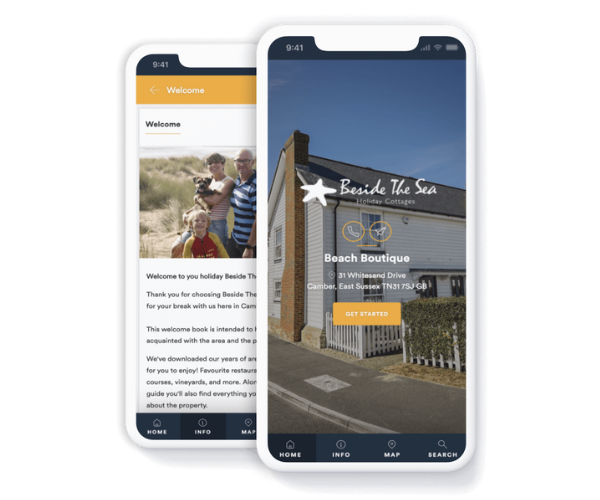
By using a Touch Stay digital guidebook, you eliminate confusion and provide a professional, transparent experience that protects your property by setting explicit boundaries.
If you are serious about protecting your rental property while delivering a five-star guest experience, it is time to upgrade your information delivery. Discover how easy it is to communicate clearly and professionally
6. Insurance
Standard homeowner policies are usually not adequate for short-term rentals. You need a specific short-term rental or commercial liability insurance policy. These policies often include provisions for loss of income due to eviction proceedings and can sometimes cover legal fees associated with removing an overstaying or problematic guest. Review your policy carefully and ensure it explicitly covers malicious damage and legal liabilities related to non-payment or overstaying.
7. Request a security deposit
A substantial security deposit, held through the booking platform, provides both a financial safety net and a psychological deterrent. The deposit signals to the guest that you are serious about the condition of your property and the adherence to your rules. While it may not cover the full cost of an eviction, it provides funds for any immediate damage and gives you leverage in the event of a dispute.
8. Educate yourself
The law surrounding short-term rentals and tenancy rights is highly localised. What constitutes a 'tenant' in London may be different from Manchester, or completely different in Dublin. You must know the specific laws that govern your region, including:
- The maximum length of a short-term rental before tenancy rights kick in (e.g., 28, 30, or 90 days).
- The legal process for serving an eviction notice or a ‘notice to quit’ (e.g., Section 21 in England).
- The local police’s role (which is often limited to civil disputes).
Knowing these procedures before a problem arises allows you to act swiftly and correctly, which is the key to preventing a squatter from establishing legal residency. A great place to start is the UK Government's planning rules for short-term lets.
Actions to take if you have squatters
Despite all precautions, you might find yourself facing a situation where a guest refuses to leave. Your response must be immediate, precise and entirely legal. Do not take matters into your own hands!
Formally ask the squatter to leave
The first, and most crucial, step is to create a clear, documented paper trail. Immediately serve the guest with a formal ‘notice to quit’ or a letter demanding they vacate the premises. This document should:
- Reference the original booking contract and the agreed-upon check-out time.
- State clearly that the booking has ended and the guest has no legal right to occupy the property.
- Specify a time and date by which they must leave.
- Be delivered in a way that provides proof of receipt (e.g., by recorded email or hand-delivered with a witness).
This formal notice serves as the starting gun for any legal proceedings and must be executed flawlessly according to local law.
Communication
Maintain all subsequent communication through official channels. Communicate through the booking platform where possible, and always be polite, professional, and firm. Avoid emotional language. State only facts: "Your booking ended on [Date] at [Time]. You are now trespassing/occupying the property without permission. Please vacate immediately." Record every phone call, save every text message, and document every interaction. This evidence will be critical in court to demonstrate your efforts to resolve the situation lawfully and your clear intent not to allow a tenancy to be created.
Legal steps
If the squatter refuses to leave, you must escalate to legal action immediately. Do not delay, as time is the squatter’s greatest ally.
- Consult a lawyer: Hire a legal professional who specialises in landlord/tenant or short-term rental law. They will know the fastest path to legal possession.
- File for eviction/possession: Depending on your jurisdiction, you will need to file a claim for possession (eviction) through the local courts. This is a civil matter, and the police will not get involved without a court order.
- Do not engage in 'self-help' eviction: Never change the locks while the squatter’s belongings are inside, turn off utilities, or physically remove them. These actions are illegal and can lead to you being sued and having the squatter reinstated by the court. Follow the legal process exactly as instructed by your lawyer.
Squatters’ rights and legal implications
The core challenge in a squatter scenario is the tension between property ownership and occupancy rights. The legal system is often designed to protect vulnerable tenants from wrongful eviction, and unfortunately, clever squatters can exploit this system.
In the UK, for example, the concept of 'adverse possession' (true squatting on abandoned land) is distinct from an overstaying short-term rental guest. The primary issue for hosts is the rapid acquisition of implied tenancy or occupancy rights. If a guest has been in the property long enough, or if the host accepts any form of rent or payment after the official check-out date, a host may inadvertently create a periodic tenancy, which drastically changes the legal procedure required to remove them.
Legal implications vary wildly, but the common factor is that the burden of proof falls on the host to demonstrate that the stay was always intended to be short-term and that no new agreement was ever established. Your signed rental contract, the booking platform’s records, and clear communication – as facilitated by tools like Touch Stay – become your best defence in proving the initial intent of the booking. This process is complex, costly, and time-consuming, which is the strongest argument for robust preventative measures.
Key takeaways
Dealing with an Airbnb squatter is one of the most stressful experiences a short-term rental host can face. The essential strategy is to view every booking, especially long ones, through a risk-management lens.
- Preparation is paramount: Use contracts, require verification and know your local laws.
- Clarity is king: Eliminate ambiguity through professional documentation and communication. The simpler and clearer your instructions, especially around check-out, the harder it is for a guest to claim confusion.
- Act immediately: Do not let an overstay linger. The moment a guest misses check-out, begin your formal, documented process to demand departure.
By treating your short-term rental as a professional business, investing in smart technology, and ensuring every guest interaction is governed by clear, pre-defined boundaries, you can significantly mitigate the risk of a squatter.
Ready to professionalise your hosting, save hours of time and create a comprehensive digital guidebook that helps prevent misunderstandings from becoming costly legal issues?
Remember, a stress-free hosting business starts with a well-informed guest.