


Summarize in
The appeal of the short-term rental market has never been stronger. As we look towards 2026, the global appetite for unique, flexible and localised travel experiences continues to grow, making a vacation rental business a highly attractive venture. Whether you are seeking a lucrative side hustle or a pathway to full-time financial independence, the short-term rental sector offers significant opportunity.
Starting any business can feel daunting, but with a structured plan and the right tools, you can navigate the process successfully. This comprehensive guide will walk you through everything you need to know, from understanding the market basics to managing and scaling your new enterprise.
Here is what we’ll cover in this step-by-step guide:
- What is a vacation rental business?
- How much profit can you make from vacation rentals?
- Steps to start a vacation rental business
- Managing and growing your vacation rental business
- Common mistakes to avoid
- Key takeaways
Take the short cut to vacation rental success with Touch Stay
What is a vacation rental business?
A vacation rental business involves letting out residential properties to guests for short, fixed periods – typically a few nights up to a few weeks. The market is primarily served by platforms like Airbnb, Booking.com, and Vrbo, but also includes privately managed properties.
This model differs significantly from traditional real estate investing or long-term rentals (such as assured shorthold tenancies in the UK). In a traditional long-term rental, you have a fixed income, lower turnover and minimal interaction with the tenant. In contrast, a short-term or vacation rental business operates more like a hospitality enterprise. You are not just a landlord; you are a host, providing a full guest experience that includes marketing, booking management, cleaning, maintenance and 24/7 support.
The potential for income is often much higher than long-term letting, particularly in high-demand tourist or business locations, as nightly rates tend to outpace monthly rent. Furthermore, this type of business offers appealing flexibility and lifestyle benefits. You can often choose when to block out the property for personal use, and the work (while demanding) can be done remotely with the right management systems in place, offering the potential for a ‘digital nomad’ lifestyle.
Traits of a successful vacation rental business owner
Running a profitable short-term rental business requires more than just owning a nice property. Successful hosts and property managers typically share a few key skills and qualities:
- Customer focus: The core of this business is hospitality. You must genuinely enjoy providing a great experience and be willing to go the extra mile.
- Attention to detail: From a sparkling clean bathroom to a comprehensive welcome pack, the small details make the difference between a good review and a great one.
- Organisation: Juggling bookings, cleaning schedules, maintenance and communications requires excellent organisational skills.
- Adaptability: Regulations change, appliances break and guests are unpredictable. The ability to quickly pivot and problem-solve is essential.
- Financial acumen: Understanding profit margins, managing budgets, analysing pricing data, tracking expenses and using accounting software for small businesses to stay on top of cash flow, taxes, and profitability are crucial for long-term success. are crucial for long-term success.
How much profit can you make from vacation rentals?
Profitability is the main driver for entering the market, but it’s crucial to approach this with realistic expectations. Unlike long-term rentals, profits in short-term rentals can fluctuate wildly based on season, demand and your operational efficiency.
Understand your costs
Before you calculate potential income, you must fully grasp the outgoing costs. These include:
- Purchase and set-up: The initial property purchase price, furnishing and initial renovation costs.
- Maintenance: Expect to spend more on wear and tear than with a long-term rental. Regular property checks, emergency repairs and occasional refurbishments must be budgeted for.
- Cleaning and turnover: Professional cleaning between every guest stay is non-negotiable. This is one of the highest recurring operational costs.
- Management: Whether you hire a property manager (who might take 15-30% of revenue) or manage it yourself, your time is a cost.
- Utilities and supplies: All utilities (gas, electricity, water, high-speed Wi-Fi) are included in the nightly rate. You also need to supply consumables like soap, toilet roll and welcome essentials.
- Marketing and technology: Costs for photography, listing optimisation, booking software and guest communication tools like digital guidebooks are necessary business expenditures.
Want to instantly save time and maximise STR revenue?
Analyse the market and set the right price
Profit begins with pricing. You must research local demand and compare competitors rigorously. Look at what similar properties charge in your area – not just their base rate, but their average occupancy and how their pricing changes seasonally.
Successful vacation rental businesses utilise dynamic pricing, adjusting rates daily based on local events, weather, season and competitor prices. Tools and professional property managers can automate this, ensuring you never leave money on the table during peak demand or sit empty during a slow period.
💡 Pro tip: discover how to maximise your revenue with our guide to Airbnb pricing strategies
Consider fees and taxes
Never forget the charges that chip away at your gross revenue. These commonly include:
- Booking platform fees: Airbnb, for instance, typically takes a percentage of the host’s income.
- Service charges: Guests often pay a service fee, but this doesn't affect your net income; however, it influences the final price the guest sees.
- Local lodging taxes: Many cities and regions impose tourist or transient occupancy taxes that you are legally responsible for collecting and remitting. Ensure you register and comply with all local tax obligations.
Review and adjust performance
Profitability isn't static. You must regularly review key performance indicators (KPIs) like average daily rate (ADR), occupancy rate, and revenue per available rental (RevPAR). If your occupancy is low, your price might be too high. If your occupancy is near 100%, your price is probably too low. Continuous review is the only way to maximise profit.
Common pricing mistakes
The most common pricing errors include:
- Setting a fixed, year-round price: Ignoring seasonality and local events.
- Underpricing to compete: This devalues your offering and makes guests suspicious of quality.
- Failing to account for cleaning/turnover costs: Not building high cleaning fees into your pricing strategy.
Steps to start a vacation rental business
Once you have a handle on the financials, you can move on to the practical steps of launching your business.
Step 1: Create a business plan
A formal business plan forces you to answer the hard questions: Who is your target guest? What is your unique selling proposition (USP)? What are your start-up and operational costs? How will you finance the venture? A solid plan acts as your roadmap and is essential if you seek external financing.
Step 2: Choose your business model
There are two main paths to entering the short-term rental market:
- Owning properties: This is the most traditional, capital-intensive route. You buy and mortgage the properties, giving you complete control over assets and maximising potential long-term returns (through both rental income and property appreciation).
- Managing or renting properties on behalf of owners:
- Rental arbitrage: You sign a long-term lease with a property owner and then, with their permission, sublet the property on a short-term basis.
- Property management: You manage properties for other owners for a fee. This is a service-based business, allowing you to scale without purchasing assets, but relies heavily on excellent operational efficiency and reputation.
Step 3: Decide on the location
Location is the biggest determinant of success. You need to look for areas with year-round demand, strong tourism, or corporate travel needs. Research local regulations, as some cities have extremely strict limitations on short-term letting.
Step 4: Prepare your property
Guests expect a high standard. Invest in quality furniture, reliable appliances, and exceptional décor that aligns with your target guest (e.g., family-friendly, luxury couples retreat, or business traveller hub). High-speed Wi-Fi is non-negotiable, and consider adding smart home features for security and convenience.
Step 5: Create essential documents and policies
Before listing, you must have all your documentation ready. This includes your cancellation policy, house rules (noise limits, smoking policy, pet rules), emergency procedures and insurance details.
A crucial part of reducing stress and saving time is digitising this information. By compiling all house details, local recommendations, appliance instructions, and emergency contacts into a digital guidebook, you ensure guests have instant access to the information they need without bombarding you with questions. This enhances their stay and dramatically cuts down on host-guest communication.
Step 6: Hire and manage staff (if needed)
You can’t do everything alone. You will likely need professional cleaners, a reliable handyman and perhaps a virtual assistant or co-host. Build a small, trusted team and treat them well. Your cleaners, in particular, are the frontline of your business’s quality control.
Step 7: List and market your property
A fantastic property is useless if no one knows it exists. Your marketing strategy is key to high occupancy.
To ensure your marketing and business operations run smoothly, consider using specific professional tools. For SEO research, look into platforms like Mangools to find the right keywords for your listing and direct booking site. To maintain a strong sender reputation for direct booking emails, services like Warmup Inbox and EmailListVerify can be invaluable.
Craft a compelling listing description
- Tips for writing headlines: Your headline is your biggest attention-grabber. Use emotive, specific language, and highlight the one best feature (e.g., “Panoramic Sea View Penthouse with Hot Tub”).
💡 Pro tip: learn more about describing your vacation rental
- Showcasing features: Don’t just list amenities; describe the experience they offer. (E.g., instead of “Fast Wi-Fi,” write “Blazing-fast Fibre Wi-Fi perfect for remote working”).
- Adding professional photos: High-quality, professional photography is the single biggest factor in attracting bookings. Invest in a professional who understands how to photograph interiors to maximise light and space.
💡 Pro tip: check out our guide to Airbnb photography
Promote your rental
While the Online Travel Agencies (OTAs) are essential for visibility, developing a direct booking channel saves you on commission fees. Use social media, local partnerships, and targeted email marketing to drive repeat business and direct reservations.
Manage guest communication
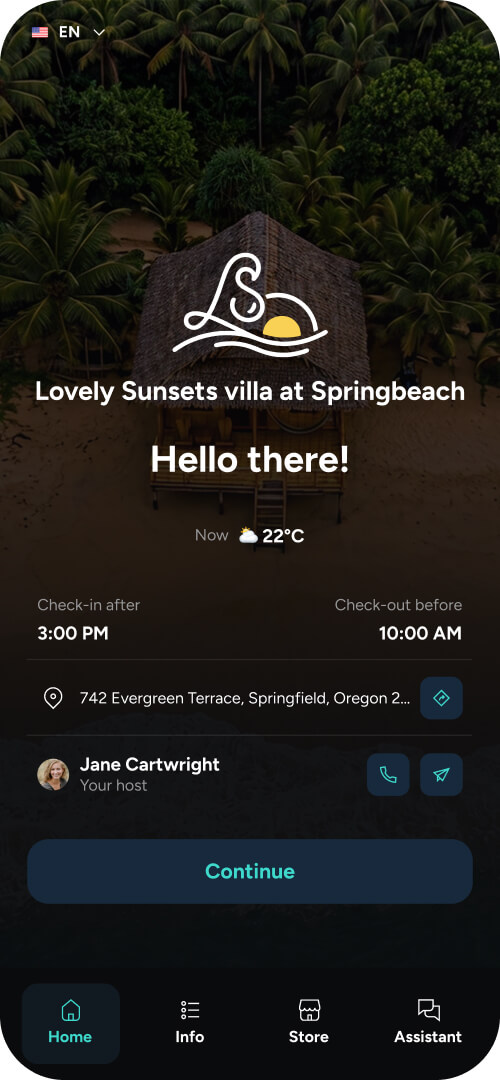
Guest communication starts the moment a booking is made and continues until they check out. A smooth, professional communication process is vital for great reviews. This is where a digital guest welcome book truly shines. It allows you to automate the delivery of essential arrival details, Wi-Fi codes and house instructions, reducing the volume of repetitive questions guests send.
By providing everything in one elegant, mobile-friendly location, you save yourself hours of time and give your guests a seamless experience.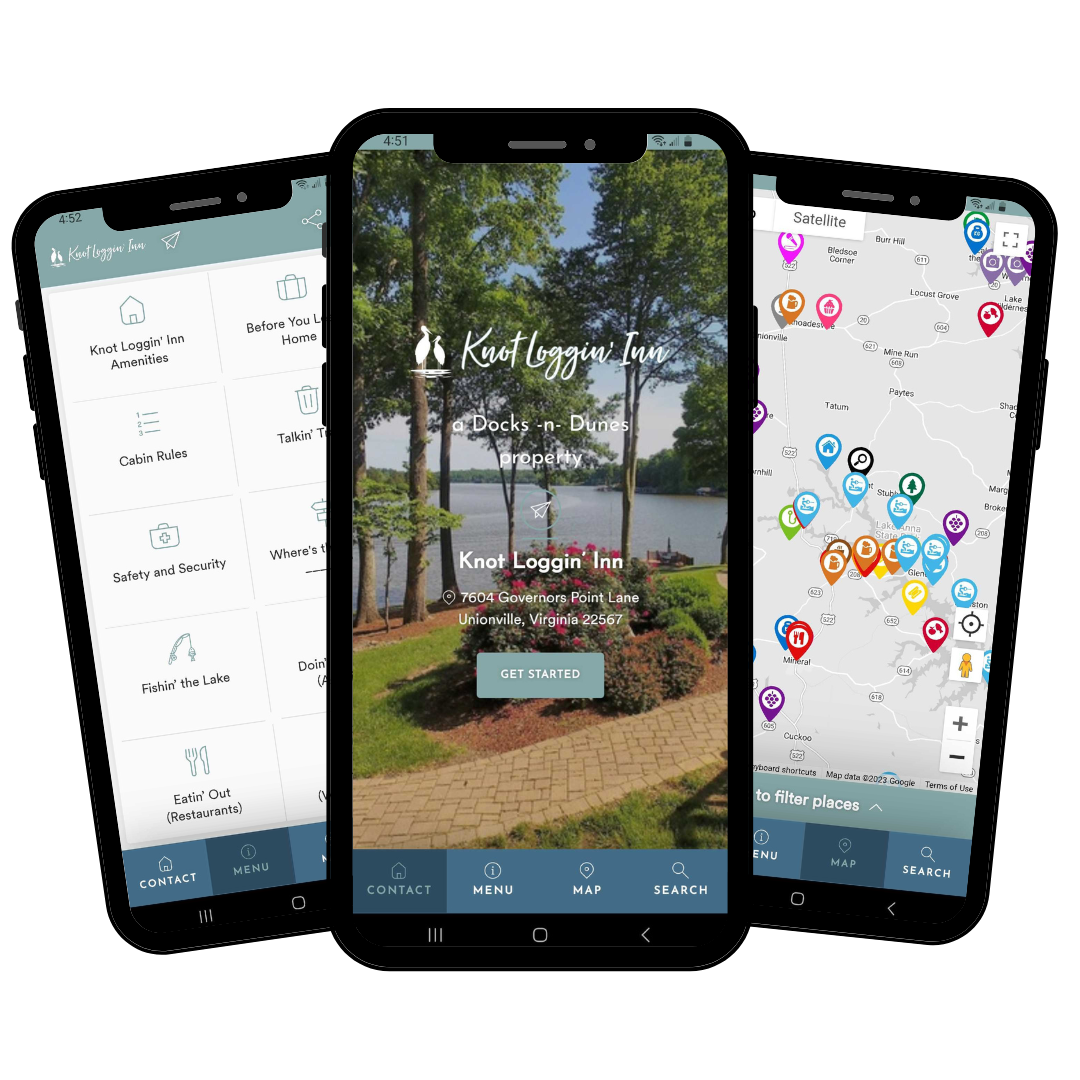
Ready to eliminate 70% of those repetitive guest questions and enhance your 5-star reviews?
Managing and growing your vacation rental business
Once you're operational, the focus shifts to efficiency and expansion.
Use smart tools and automation
The only way to scale without sacrificing your life is through automation. Invest in a channel manager (software that syncs calendars across all booking platforms), a smart lock system for self check-in, and, critically, a digital guest experience platform. Automated tools handle mundane tasks, allowing you to focus on strategic growth and guest relations.
Understand consumer needs
The vacation rental market is dynamic. Are guests in your area looking for family space, pet-friendly options, or high-tech workspace? Pay attention to booking trends and guest demographics. The most successful businesses continually refine their offering to meet the evolving demands of their target market.
Listen to feedback and adapt
Reviews are gold. Treat every piece of feedback – positive or negative – as a free consultation on how to improve your business. Respond gracefully, and, more importantly, act on the constructive criticism. If multiple guests complain about a mattress, replace the mattress.
Stay ahead of market trends
The short-term rental landscape is constantly shifting, particularly concerning local regulations and technological advances (e.g., AI-driven pricing and communication). Regularly research new market opportunities and remain compliant with all regional laws.
Common mistakes to avoid
Even seasoned entrepreneurs make mistakes, but being aware of these pitfalls can save you from costly errors.
Treating it like a hobby, not a business
If you approach it casually, the results will be casual. Successful short-term rentals require a proper business plan, financial rigour, dedicated time and professional operational standards. Set clear goals and measure your performance against them.
Ignoring guest feedback
As mentioned, guest reviews are your most valuable asset. Ignoring negative feedback or failing to respond professionally signals a lack of care and will deter future bookings.
💡 Pro tip: learn how to respond to feedback – good and bad!
Poor financial planning
Failing to budget for maintenance, taxes, insurance, and slow seasons can quickly lead to insolvency. Always keep a healthy cash reserve to cover operational costs during periods of low occupancy.
Neglecting maintenance or cleanliness
Cleanliness is the number one complaint in negative reviews. Your cleaning crew must be exceptional and accountable. Likewise, deferred maintenance leads to expensive emergency repairs down the line and impacts the guest experience.
Letting fear or inexperience hold you back
Every successful host started somewhere. You don't need to be perfect from day one. Start small, learn from your mistakes and invest in tools and education that mitigate your weaknesses.
Automating guest communication is the fastest way to professionalise your business. Why spend hours answering the same questions?
Key takeaways
Starting a successful vacation rental business in 2026 is entirely achievable with careful planning and execution. The pathway to profitability involves:
- Preparation: Creating a robust business plan, choosing the right model (owning or managing) and preparing your property to a professional standard.
- Pricing: Using dynamic pricing strategies and fully accounting for all costs, fees and taxes to ensure genuine profit.
- Professionalism: Treating your venture as a real business, investing in smart automation tools (like your essential digital guidebook) and building a reliable team.
- People: Focusing relentlessly on the guest experience, listening to feedback and using that insight for continuous improvement.
By following these steps, you lay a solid foundation for a scalable, profitable and rewarding short-term rental business.