Ask a host what loses them bookings and you'll usually hear "price". Ask a guest and the answer is different.
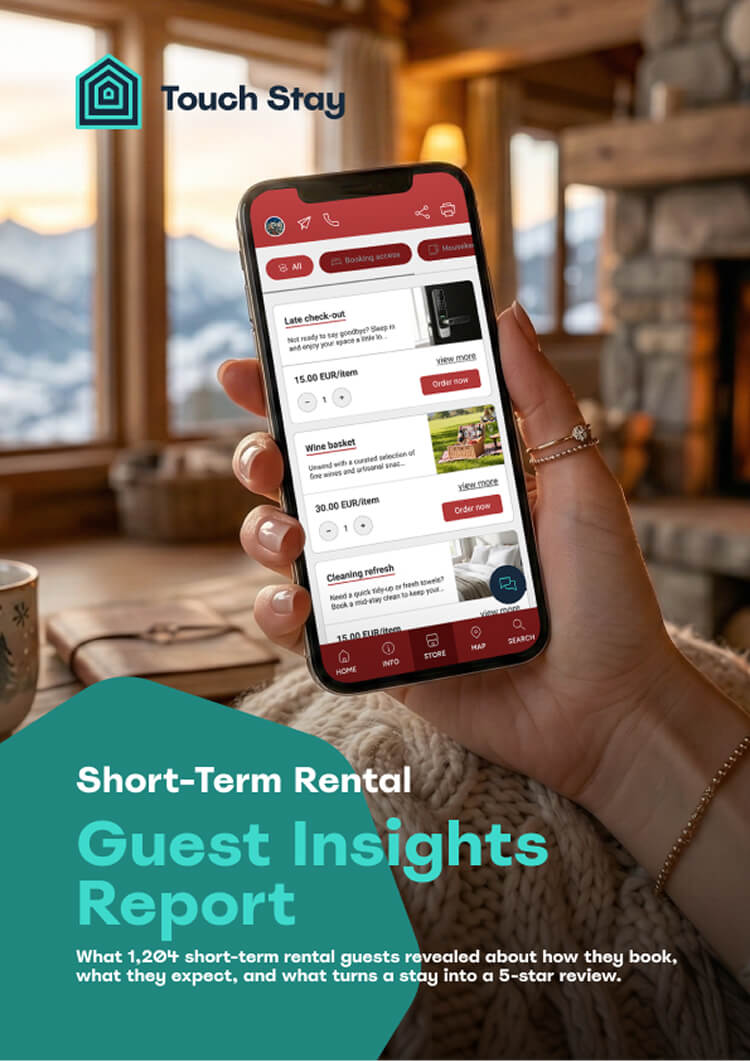
When we surveyed 1,204 short-term rental guests for the 2026 STR Industry Report, their biggest concern when comparing similar properties wasn't price, reviews or amenities. It was whether the listing matched reality.
Just under half of those surveyed named the accuracy of photos and descriptions as their top concern.
That's worth paying attention to. Accuracy is one of the few things on the list you can improve this afternoon, without spending anything.
In this article, we'll look at:
Guests aren't first-timers any more
Today's guest usually arrives with a benchmark. They've stayed in short-term rentals before, often several times a year, and they're comparing your property with places they've already experienced.
That makes them pretty good at spotting the gap between a listing and the property itself.
And the worry isn't irrational. Maybe they've already booked a "spacious garden apartment" that turned out to be a basement with a window well. They're not particularly keen to make the same mistake twice.
For hosts, that means vague language can create doubt where you didn't intend it. Specifics do the opposite. They show guests exactly what they're getting.
For more on setting clear expectations throughout the booking journey, see our guest communication guide.
What guests mean by accurate
Accuracy isn't just about keeping your photos up to date, although outdated photos are one of the quickest ways to lose trust.
It's the details that can change someone's decision once they're seriously considering a booking:
- Sleeping arrangements. How many actual beds are there? What size are they? Which ones are sofa beds? If "sleeps 6" means four adults plus two children on a pull-out, say so.
- Stairs and access. How many flights are there? Are there handrails? Is the path from the parking space uneven? How far is it from the car to the front door?
- Shared space. Does the guest share an entrance, garden, laundry area or driveway with you, a neighbour or another property?
- Seasonal limitations. Does the pool close in October? Does the heating struggle in January? Does the terrace only get direct sun from May onwards?
- Parking. Where is it? How many cars can fit? Is a permit required? What happens if the designated space is occupied?
For most guests, none of these things will necessarily be a deal-breaker.
Finding them out at 9pm on arrival day is another matter.
Our Airbnb guidebook guide covers the practical information guests need before and during their stay, from check-in details to property instructions.
Your promise has to match in three places
Most accuracy problems aren't deliberate. They're drift.
The listing gets updated, but the confirmation message doesn't. The guidebook still mentions the old lockbox. Your website says check-in is at 4pm while the platform says 3pm.
Pick one property and put these three things side by side:
- The listing. What you've promised the market.
- The confirmation message. What you've promised this particular guest.
- The guidebook. What they'll actually use when they're standing outside the property.
Any disagreement between the three creates uncertainty at exactly the wrong moment.
Align them, then make your guidebook the source of truth. Everything else should point back to the same information.
It's also worth reviewing those handoffs as part of the wider guest journey, especially where information moves from booking to pre-arrival and then into the stay.
If you'd like a second opinion on the listing itself, our free Airbnb Listing Audit reviews your listing, local market, reviews and calendar and flags what to prioritize.
Run the walk-through
Give yourself an hour. Take your phone and your live listing, then walk through the property in the same order a guest experiences it: the street, parking, the approach, the front door, the entrance, each room and the outdoor space.
At every stage, ask yourself:
Would a first-time visitor recognize this from what I've published?
Photograph anything a guest would reasonably want to see but can't.
That might be the entrance at night, the parking bay, a flight of stairs, the storage space under the bed or the appliance that nobody quite knows how to operate.
Make a note of anything you'd mention if you were describing the property to a friend who was about to stay. That list is your edit.
Then repeat the exercise for different seasons. A property photographed in July can look like a completely different place in February. Guests booking a winter stay deserve to see the winter version.
Accuracy is also a review strategy
There's another reason this matters.
When we asked the same guests what makes them leave a five-star review, the most-selected answer was that everything matched the listing. Communication and information came next.
Put those findings together and a pattern emerges: guests don't necessarily need to be dazzled. They need the experience to match what they were sold.
A property that delivers exactly what it promised, with enough information to use it properly, is much less likely to leave guests with something negative to mention.
A property that oversells itself can end up with a four-star review and a paragraph explaining that the bathroom was smaller than expected.
Under-promising isn't exciting. But it is a strategy any host can use, at any price point, starting with the next booking.
For more practical ways to anticipate guest questions before they become messages, see the guest questions guidebook article.
Where to start
If you only do one thing this week, fix the detail your guests ask about most.
Look back through your last ten pre-arrival conversations. Which question keeps coming up?
That's probably the thing your listing hasn't explained clearly enough.
Answer it once in the listing and guidebook, and you can stop answering the same question in every booking conversation.
The full breakdown of what guests told us, including what they compare before booking and what makes them leave the reviews you want, is in the 2026 STR Industry Report.
It's free, 19 pages, and includes a property checklist and a 30-day plan.