

Summarize in
Hospitality marketing is about more than getting your property in front of potential guests. It’s about showing the right people why your property is worth booking, building confidence before they arrive, and giving them reasons to return.
For hotels, vacation rentals, and other accommodation businesses, that means bringing together your online presence, booking channels, guest communication, and the experience you deliver on the ground. When these elements work together, marketing can do more than fill vacancies. It can help you attract better-fit guests, encourage direct bookings, and increase revenue beyond the nightly rate.
The challenge is knowing where to focus. Should you invest in social media, improve your website, build an email list, or encourage more repeat bookings?
In this guide, we’ll explore eight practical hospitality marketing strategies, with insights from Touch Stay’s host and traveler research, guest communication data, and Store sales.
Contents
- What is hospitality marketing?
- What does effective hospitality marketing look like?
- Eight hospitality marketing strategies
- How to create a hospitality marketing plan
- Hospitality marketing metrics to track
- Common hospitality marketing mistakes
- Frequently asked questions
What is hospitality marketing?
Hospitality marketing is the process of promoting accommodation, services, and experiences to attract guests, generate bookings, and build long-term customer relationships.
It includes the activities that help travelers discover your business, evaluate whether it suits their needs, make a booking, and remember their stay afterward.
For accommodation providers, hospitality marketing can include:
- Brand positioning: Defining what makes your property or business distinctive.
- Search and website marketing: Helping travelers find you online and book with confidence.
- Social media: Sharing useful, engaging content that brings your property and destination to life.
- Booking channel strategy: Balancing online travel agencies (OTAs) with opportunities to generate direct bookings.
- Guest communication: Answering questions and setting expectations before, during, and after a stay.
- Guest experience marketing: Encouraging reviews, recommendations, repeat stays, and referrals.
- Additional revenue: Promoting relevant extras and experiences that improve a guest’s stay.
These activities are connected. A beautiful social media post might attract attention, but an inaccurate listing can undermine trust. A well-designed website might generate interest, but unclear booking information can prevent a reservation. And a great stay can lead to a repeat booking, but only if you give guests a reason to remember you.
The strongest hospitality marketing strategies account for the entire guest journey, rather than treating marketing as something that ends when a booking is confirmed.
What does effective hospitality marketing look like?
Effective hospitality marketing combines visibility with credibility. Travelers need to find your property, understand what makes it right for them, and feel confident enough to book.
Touch Stay’s research offers some useful context for where accommodation providers can focus.
In a Touch Stay survey of 1,365 hosts, building consistent bookings and growing a business are important challenges to understand when planning marketing activity. A separate survey of 1,203 travelers provides a valuable perspective on what guests need when choosing accommodation.
The practical takeaway is that marketing should address both sides of the decision: how you attract attention and how you build enough trust to turn that attention into a booking.
Touch Stay’s guest communication data adds another perspective. Across 37,359 conversations at 11,293 properties between November 2025 and May 2026, location and directions were the most common question category, with 4,019 questions. Check-in generated another 3,822, followed by food and restaurants at 2,638.
These are questions asked during stays, not direct measures of what drives bookings. But they highlight an important opportunity: the information guests need to enjoy their stay can also help you demonstrate the quality of your service before they arrive.
For more context on the guest journey, see our guide to improving the guest experience before, during, and after a stay.
Eight hospitality marketing strategies
1. Define what makes your property different
Before choosing marketing channels, get clear on what you want guests to remember about your business.
“Beautiful accommodation in a great location” is unlikely to distinguish you from dozens of other properties. A more specific proposition gives potential guests a reason to choose you.
Consider what your property offers that matters to a particular audience:
- A family-friendly stay with practical amenities and local activities nearby.
- A quiet retreat for couples looking to switch off.
- A convenient base for business travelers.
- A pet-friendly property with easy access to walking routes.
- A design-led city apartment close to restaurants and attractions.
Your positioning should reflect genuine strengths, not simply the audience you would like to attract. If you market a property as family-friendly, for example, make sure the facilities and information support that promise.
How to put this into practice
Start by answering three questions:
- Who is most likely to enjoy staying here?
- What problem, need, or desire does the property address?
- What evidence can you show to support that promise?
Use the answers to shape your listing descriptions, website headlines, photography, social media content, and guest communications.
Consistency matters. If your website promises a relaxing, premium experience but your listing is vague and your arrival instructions are confusing, the overall impression will be weaker.
2. Improve your website and booking journey
Your website is more than an online brochure. It can be a place where travelers learn about your property, compare options, and book directly.
A useful hospitality website should answer the questions that influence a booking decision:
- What makes the property suitable for this trip?
- What does the accommodation look like?
- Where is it, and what is nearby?
- What is included in the price?
- What are the check-in arrangements and house rules?
- How can guests contact you if they need help?
Use clear photography, accurate descriptions, transparent pricing, and an obvious booking process. Make sure the website works well on mobile devices, where many travelers browse and compare accommodation.
If you accept direct bookings, explain the benefits clearly. These might include a more personal booking experience, flexible communication, or access to services and offers that are available through your own website.
Avoid making promises you cannot consistently deliver. A direct booking channel is only valuable if guests feel comfortable using it.
For more ideas, read our guide to direct bookings and the opportunities hosts can explore.
A simple improvement: Ask someone unfamiliar with your property to look at your website for two minutes and tell you what they understand about the stay. If they cannot quickly explain the location, key benefits, price, and booking process, those are good places to start.
3. Use social media to tell a more useful story
Social media gives hospitality businesses a way to show potential guests what staying with them might feel like. But effective content goes beyond attractive room photos and occasional availability announcements.
Think about the questions and interests your ideal guests have before they book.
A property near a national park could share seasonal walking routes, advice on what to pack, and recommendations for rainy days. A city hotel could highlight neighborhood restaurants, local events, and convenient transport links. A family vacation rental could show how its layout and amenities make traveling with children easier.
Useful content can help travelers imagine themselves at your property and understand why the location suits their trip.
Try building your content around four themes:
- The property: Rooms, amenities, design details, and practical features.
- The destination: Local businesses, attractions, events, and lesser-known places.
- The guest experience: What arrival looks like, how the stay works, and what makes it comfortable.
- Practical advice: Travel tips, seasonal recommendations, and answers to common questions.
You do not need to post on every platform. Choose the channels your audience actually uses and focus on creating content you can sustain.
Make it easy for interested travelers to take the next step, whether that means visiting your website, checking availability, or asking a question.
4. Make search engine optimization part of your marketing
Search engine optimization (SEO) helps travelers discover your business when they search for accommodation, destinations, or particular amenities.
For example, someone planning a family trip might search for “family-friendly vacation rental near Yosemite,” while a business traveler might look for a hotel near a conference center.
You cannot control exactly what people search for, but you can make your website and listings more relevant to the terms that genuinely describe your property.
Start with the basics:
- Use descriptive page titles and headings.
- Include your destination and relevant property features naturally in your copy.
- Write accurate, helpful descriptions rather than repeating keywords.
- Keep your contact details and business information consistent where applicable.
- Make your website fast, mobile-friendly, and easy to navigate.
- Publish useful content that answers real traveler questions.
Local information can be particularly valuable. A page about nearby attractions, transportation, or seasonal activities can help travelers understand the area while giving search engines more context about your business.
Avoid creating dozens of thin pages that differ only by a place name. Focus on content that offers genuine value to a prospective guest.
SEO is a longer-term investment. Track whether organic visitors are finding relevant pages and whether those visits lead to enquiries or bookings, rather than judging success by traffic alone.
5. Build trust with accurate information and clear communication
Marketing does not stop at attracting a visitor to your website. Every interaction that follows can either reinforce confidence or introduce doubt.
That includes the information in your listing, the speed and tone of your replies, the clarity of your policies, and the instructions guests receive before arrival.
If a guest has to contact you several times to confirm parking arrangements or understand check-in, the experience may feel less professional than the marketing promised.
Touch Stay’s guest conversation data shows how much practical information guests need during a stay. Across the conversations analyzed, location and directions, check-in, and food and restaurant recommendations were among the most common topics.
For hospitality businesses, that suggests a useful marketing opportunity: demonstrate how well you understand your guests’ needs by making essential information easy to find.
Try this approach:
- Review your listing and website for missing or inconsistent information.
- Create clear answers to common questions about arrival, amenities, parking, and house rules.
- Send relevant information at the right point in the guest journey.
- Make sure guests know how to reach a person when they need help.
- Update your content whenever property details or local recommendations change.
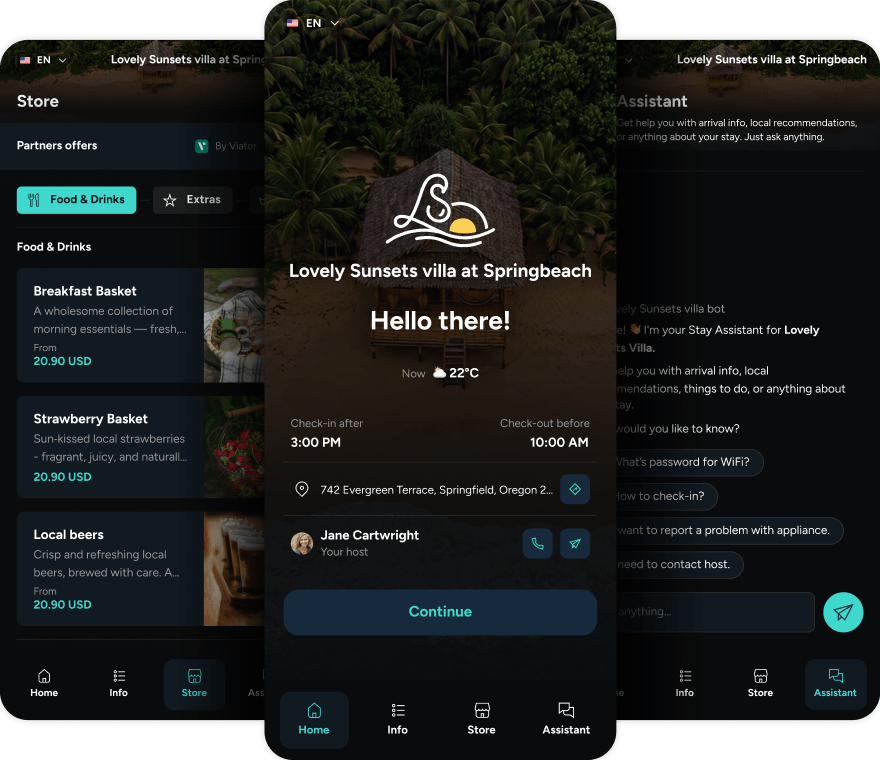
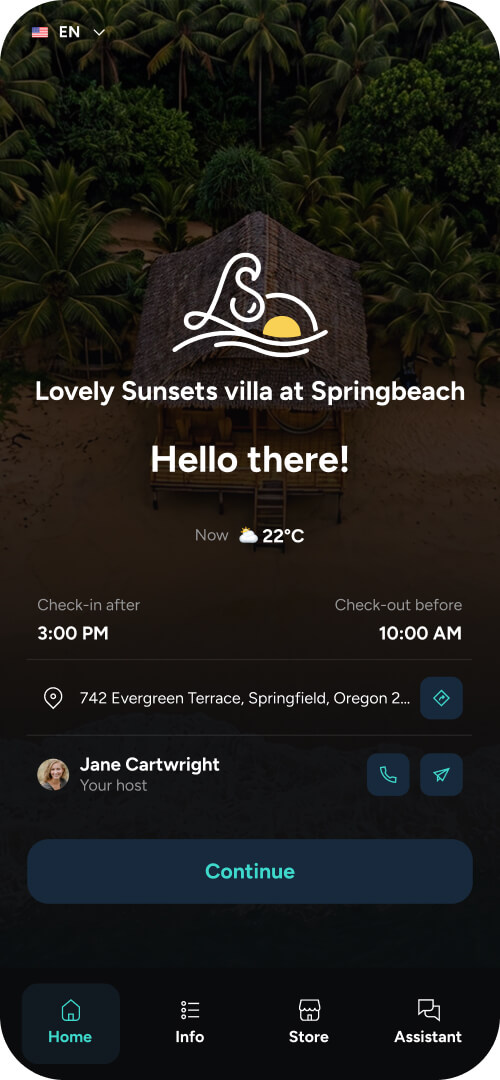
A digital guidebook can bring practical information, local recommendations, and arrival instructions together in one place. Touch Stay’s digital guidebooks help accommodation providers share that information in a branded, accessible format.
The aim is not to replace personal service. It is to make routine information easier to access so your team can focus on the interactions that genuinely need a human touch.
For a deeper look at the information guests need, read what guests actually want before they arrive.
6. Use email marketing to encourage repeat bookings
Email gives you a way to maintain relationships with past guests and people who have chosen to hear from your business.
Unlike social media, where your content competes with a constantly changing feed, email lets you communicate directly with an opted-in audience. The key is to send messages that are relevant rather than simply sending more of them.
A practical email strategy could include:
- A welcome email for new subscribers.
- Seasonal updates about your destination.
- Recommendations for upcoming events or quieter travel periods.
- Early access to relevant offers.
- A post-stay message thanking guests and inviting feedback.
- A return-guest offer, where appropriate.
Segmentation can make these emails more useful. A family who stayed during school holidays may appreciate different recommendations from a couple who visited for a weekend getaway.
Keep messages focused, and make the next step clear. If you are promoting a seasonal stay, link to the relevant page rather than sending everyone to your homepage.
Always follow the email marketing and privacy requirements that apply to your business. Collect permission where required, explain what subscribers are signing up for, and make it easy to unsubscribe.
Email works best when it builds on a good guest experience. A discount alone may encourage a booking, but helpful communication and a stay worth repeating give guests a stronger reason to come back.
7. Turn guest reviews and recommendations into marketing assets
Reviews help potential guests understand what it is like to stay at your property. They can also show you which parts of the experience are working well and where you need to improve.
Make it easy for guests to share honest feedback after their stay. A friendly follow-up message can thank them for visiting and invite them to leave a review on an appropriate platform.
Never pressure guests to leave only positive feedback or offer incentives in ways that violate the platform's rules. The goal is to encourage genuine reviews and learn from them.
Use feedback to improve your marketing as well as your operations.
If guests repeatedly praise your convenient location, thoughtful amenities, or clear arrival instructions, those details may deserve more prominence in your website and listing. If they regularly mention the same problem, address it rather than trying to write around it.
You can also use testimonials, with permission and in line with applicable rules, to illustrate the experience you offer. Choose specific comments that help prospective guests understand the value of staying with you.
Reviews are not just promotional material. They are a feedback loop between the experience you promise and the experience you deliver.
For a more complete approach, explore our guest communication guide.
8. Create relevant opportunities to increase revenue
Hospitality marketing can also help you generate more revenue from each booking, provided the offers you promote are useful to guests.
Additional services might include early check-in, late checkout, parking, equipment rental, breakfast, or property-specific experiences. Hotels may have opportunities to promote dining, spa treatments, or other on-site services. Vacation rental hosts can highlight practical extras and local experiences that suit their property.
The important point is to make relevant offers visible at the right time, with clear pricing and simple instructions for booking.
Touch Stay Store sales data offers a useful example. Between March 9 and September 29, 2026, 38% of accepted guest orders included early check-in or late checkout. This suggests that arrival and departure flexibility can be a meaningful add-on for some guests.
It does not mean every property should offer the same extras. Demand will vary by location, property type, operating capacity, and guest needs.
Start by identifying services you can deliver reliably. Then:
- Explain the benefit in plain language.
- Show the price before the guest commits.
- Make the offer available at a relevant point in the journey.
- Ensure your team can fulfill it.
- Track views, purchases, revenue, and guest feedback.
A digital guidebook can provide a convenient place to showcase these options alongside property information and local recommendations. Learn more in our article on how to make your vacation rental guidebook pay for itself.
Additional revenue should enhance the stay, not make guests feel that every interaction is a sales pitch.
How to create a hospitality marketing plan
You do not need to launch all eight strategies at once. A focused plan is more manageable and easier to measure.
Use these steps to decide what to prioritize.
Step 1: Set a specific goal
Choose one main business objective for the next three months. For example:
- Increase direct bookings.
- Improve occupancy during quieter periods.
- Generate more repeat stays.
- Increase revenue from additional services.
- Improve conversion from website visits to bookings.
A clear goal helps you choose the right activities and avoid spreading your budget too thinly.
Step 2: Understand your audience
Review your bookings, guest feedback, enquiries, and website data. Look for patterns in who books, why they choose your property, what they ask before arrival, and what they mention afterward.
You can also ask past guests what influenced their decision and what information would have made the booking process easier.
Step 3: Choose two or three priority activities
If your website receives traffic but few bookings, improve the booking journey before investing heavily in more social content. If guests struggle to find your property online, prioritize search visibility and listing quality. If repeat bookings are low, review your post-stay communication and email strategy.
Choose activities based on the problem you are trying to solve.
Step 4: Assign owners, budgets, and deadlines
Even a small plan benefits from clear responsibilities. Decide who will update the website, prepare social content, send emails, respond to reviews, and review performance.
Set a realistic budget and schedule. Consistent execution is usually more useful than an ambitious plan that is difficult to maintain.
Step 5: Review and adjust
Check your results regularly. Keep activities that contribute to your goal, improve those that show promise, and stop spending time or money on work that is not producing useful results.
Marketing should be an ongoing learning process, not a fixed list of tasks.
Hospitality marketing metrics to track
The most useful metrics depend on your goals. Avoid measuring success through likes or website traffic alone if your real objective is to generate bookings.
| Goal | Useful metrics | What they tell you |
|---|---|---|
| Increase visibility | Organic traffic, search impressions, social reach | Whether more potential guests are discovering your business |
| Generate bookings | Booking conversion rate, enquiries, cost per booking | Whether marketing activity is turning interest into business |
| Grow direct bookings | Direct booking volume, website conversion, direct revenue | Whether your own channels are contributing more bookings |
| Encourage loyalty | Repeat booking rate, email engagement, referrals | Whether guests are returning or recommending you |
| Improve the guest experience | Review themes, guest questions, complaints | Where communication or operations may need attention |
| Increase additional revenue | Offer views, purchase rate, revenue per order | Which extras guests find useful and worth buying |
Establish a baseline before making changes. Then compare results over a consistent period, accounting for seasonality and changes in availability or pricing.
For example, an increase in website traffic may look positive, but if bookings remain flat, you may need to examine whether the visitors are relevant, whether your prices are competitive, or whether the booking process creates friction.
Similarly, a successful upsell campaign should not be judged on revenue alone. Consider fulfillment costs, staff workload, and whether guests found the offer useful.
Common hospitality marketing mistakes
Even well-intentioned marketing can underperform when the basics are overlooked.
Trying to reach everyone. A clear audience and distinctive positioning make it easier to create relevant messages.
Treating every channel as equally important. Focus on the channels that help you reach your audience and achieve your current goal.
Using outdated or inconsistent information. Your website, listings, and guest communications should reflect the property as it is today.
Focusing on acquisition alone. Repeat guests, referrals, and positive reviews can support long-term growth, so continue the relationship after checkout.
Promoting extras without explaining their value. Guests need to understand what an offer includes, how much it costs, and how to book it.
Tracking activity instead of outcomes. Posting regularly is not the same as generating bookings. Connect marketing metrics to business objectives.
Making promises the experience cannot support. Your marketing should reflect what your team can consistently deliver. A strong guest experience is part of the marketing strategy, not separate from it.
Final thoughts: Make hospitality marketing work across the guest journey
The best hospitality marketing strategy is not necessarily the one with the biggest budget or the most channels. It is the one that connects the right audience with a clear promise, makes booking straightforward, and delivers an experience that guests want to recommend.
Start by defining what makes your property different. Improve the information travelers rely on, choose marketing channels you can maintain, and build relationships that continue after checkout. Then measure the results and adjust your approach as you learn more about your guests.
And remember that marketing is not just about attracting the next booking. Every clear answer, helpful recommendation, and well-managed arrival reinforces the value you promised when a guest chose your business.
Touch Stay helps accommodation providers deliver that experience with branded digital guidebooks that bring property information, arrival instructions, and local recommendations together in one accessible place. Explore Touch Stay digital guidebooks to see how clearer guest information can support your wider hospitality strategy.
Frequently asked questions about hospitality marketing