A short-term rental guidebook can hold the operational details, but a good guest welcome book should do more: it should anticipate questions, surface useful local knowledge, and make the stay feel considered.
In this article, we'll cover:
- What separates a welcome book from a concierge
- The four questions a guest asks in the first ten minutes
- Building the recommendations layer
- Three examples that work
- Where to keep it so guests actually find it
A guest welcome book usually starts as a list. Wifi password, checkout time, bin day. Useful, and about as memorable as a receipt.
A better version does something else. It answers the question before it's asked, at the moment it comes up, in a way that makes the guest feel like someone thought about their stay. That's the concierge part. Unlike a human concierge, it works at 2am and costs very little to run.
Here's how to build one for a city apartment, cottage, B&B, or small portfolio.
Table of contents
What separates a welcome book from a concierge
A list waits to be consulted. A concierge anticipates.
The practical difference is in how the content is organised. A list is grouped by category, which is how you think about your property. A concierge is organised by moment, which is how a guest experiences it.
That shift from simply providing information to anticipating what guests need is at the heart of a great guest experience.
Guests move through four moments, and each one has its own questions:
Before they arrive. How do I get there, where do I park, should I buy food on the way, what time can I get in.
The first ten minutes. How do I get in, what's the wifi, where's the bathroom, how do I turn the heating on.
During the stay. Where do we eat tonight, what do we do if it rains, how does this appliance work, is there a pharmacy nearby.
Leaving. What time, what do I need to do, where do the keys go.
Build the book around those four moments and the same content becomes dramatically more useful, because things surface when they're needed rather than sitting where they logically belong.
The four questions to answer first
If you do nothing else, cover these four properly. They account for the large majority of guest messages across every property type.
How do I get in? Step by step, with a photo of the door, plus what to do if it fails. Include a fallback contact and be explicit that it's fine to use it.
What's the wifi? Network and password on their own line, near the top. If coverage is uneven, say where.
How does the [heating / shower / oven] work? Pick the two or three things in your property that confuse people, and explain them with photos. You already know which ones they are, because you've explained them before.
What time do I leave and what do I need to do? Specific and short. Include what they don't need to worry about, which prevents both the guests who do too much and the ones who do nothing.
Everything else adds value. These four are the baseline.
Building the recommendations layer
This is what turns a manual into something closer to a concierge, and it is where many hosts overdo it.
Curate hard. Six to eight recommendations, not thirty. You're competing with a phone that already has every restaurant in a five mile radius ranked by rating. Your advantage is that you've been to these places and have an opinion.
Give the why in one line. "Tiny, six tables, book ahead, the fish is the thing to order" tells the guest more than a rating ever will. It also tells them you actually go there.
Cover the practical alongside the nice. The best coffee matters, and so does which supermarket is open on Sunday, where the nearest pharmacy is, and which cash machine doesn't charge. Guests remember the host who thought about the boring ones.
Sort by condition, not by category. Rainy day, with kids, evening, twenty minutes to spare, worth the drive. Those are the filters a guest applies in their head. Matching them means the answer arrives without a search.
Be honest about the misses. "The place on the corner looks lovely and is consistently slow" saves someone an evening and buys you more trust than five recommendations.
Three examples that work
The city apartment. Access and wifi at the top because arrival is the friction point, transit and parking next because a car is usually a liability, then a tight food list within walking distance sorted by price. Appliance section is short. Noise expectations are set explicitly.
The rural cottage. Arrival gets more space, including what the lane looks like and where signal drops. Heating and hot water get real attention because the systems are usually older and less obvious. Recommendations lean on drives, walks and the nearest useful shop, with opening hours, because getting that wrong costs the guest an hour.
The multi-unit portfolio. The area content, food, attractions, transport, is written once and shared across every unit in the location. Only access, wifi, and the unit's quirks change per property. Adding a new unit becomes filling in a short form rather than writing a book, which is why Touch Stay users can get a new property live in under ten minutes.
Where to keep it so guests find it
A welcome book only works if it's in the guest's hand at the moment the question comes up. That rules out a couple of formats people still default to.
A binder in the property is invisible before arrival, which is when a third of the questions happen. A PDF sent by email is stale the moment anything changes, and awkward to read on a phone.
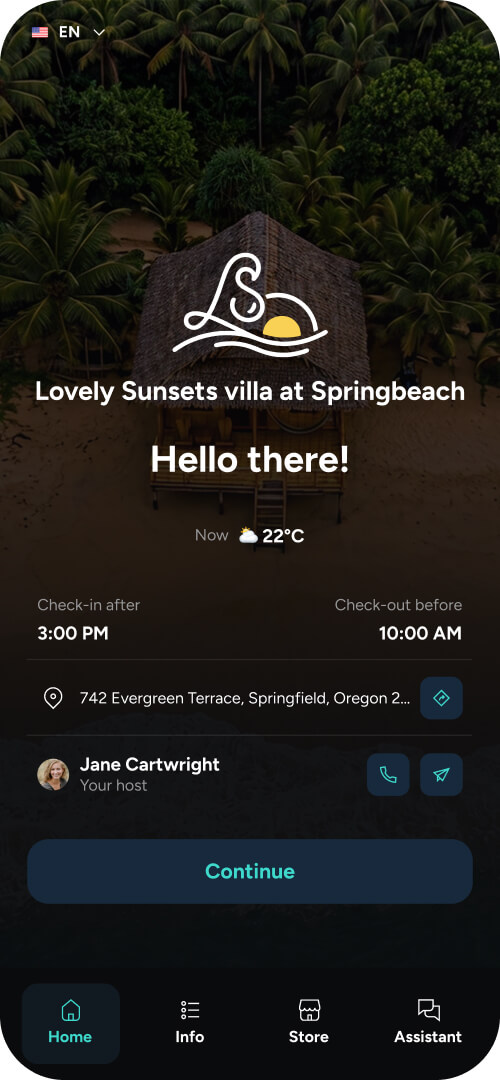
A digital guidebook is a link. It goes out with the booking confirmation, again a few days before arrival, and it's in the guest's message history when they need it at 11pm. You update it once and everyone sees the new version, including guests who booked months ago. Touch Stay guidebooks open in the browser with no app to install, work offline once loaded, and display in over 30 languages, which matters as soon as your guests aren't all local. See example guidebooks to see how this works in practice.
A QR code by the front door covers the guest who never opened your email. It is a simple backup, and it costs almost nothing.
Start small and let guests write the rest
Do not try to anticipate everything on the first pass. Cover the four essential questions, add six recommendations you'd stand behind, and publish it.
Then let your inbox finish the job. Every question a guest asks that isn't in the book is a line the book is missing. Answer the guest, add the line, and within a couple of months you'll have a welcome book built entirely out of things people genuinely wanted to know. For a more traditional vacation-rental format, see our vacation rental welcome book.
That is what makes it feel like a concierge: the content comes from real guest questions.
Turn your welcome book into a digital guidebook
Once the content is working, make it easy for guests to reach from anywhere. A digital guidebook can be shared before arrival, opened during the stay, and updated without sending a new file.