
.png?width=50)
Summarize in
TL;DR (Quick Answer)
How do you improve hotel guest experience?
Fix the basics first: clean rooms, accurate bills, clear communication, and fast recovery when something goes wrong. TouchStay helps with a mobile-first digital compendium, guest messaging, and feedback tools that take friction out of the stay before, during, and after.
Key Takeaways
- Guests judge value by whether the stay matches the price, the reviews, and the booking promise.
- J.D. Power found just 12% of stays had a reported problem, but satisfaction dropped 217 points when one happened.
- Staffing shortages still shape what hotels can deliver, with housekeeping and front desk hit hardest.
- TouchStay puts Wi-Fi, room service, and local info in one place, with no app download.
- Cleanliness, sleep quality, and response time drive most of what guests remember.
- A 90-day plan works when you fix repeated friction first, then connect systems and test one change at a time.
In this article, we'll cover:
- What guests now expect from the hotel stay experience
- Map the hotel guest experience touchpoints before you invest
- 12 ways to improve the hotel guest experience
- Hotel guest experience metrics to track
- Build a 90-day hotel guest experience strategy
- Conclusion
Rates are the highest they've ever been. J.D. Power puts U.S. average daily rate at a record $158.67 in 2024, and Expedia found price and good reviews are what U.S. guests weigh most heavily when they book. Guests notice what they paid, and they measure the stay against it.
Which means the work isn't a single fix at the front desk. It runs from the booking promise all the way through to what happens after something goes wrong. Twelve improvements below, fundamentals first, technology where it genuinely removes effort.
What guests now expect from the hotel stay experience
Guests still want hospitality. They've just got less patience for vague promises about it.
A good stay comes down to whether the property delivers what the booking page, the price, and the reviews led someone to expect. Cleanliness, comfort, clarity, consistency, care: protect those before you add tools or amenities. Once they're steady, digital convenience and personalization can take effort out of the stay without turning it into self-service by default.
A strong guest experience brings these elements together across the entire stay, from the first pre-arrival interaction through to checkout and follow-up.
Value means the promise has to match the price
Value is the gap between the total price and what the guest actually receives. Final bill, room type, amenity list, service level, all of it has to line up with what was promised at booking. That makes accuracy a revenue issue as much as a service one.
Discounting isn't the only lever. Guests will pay more for a property that feels honest, well run, and suited to the trip they're taking. Scroll an r/travel thread on choosing hotels and location, quiet, cleanliness and reviews come up far more often than star ratings do.
Guest problems create a disproportionate satisfaction penalty
J.D. Power found only 12% of stays involved a reported problem. Satisfaction fell 217 points when one did.
That's the whole argument for putting prevention and recovery ahead of nearly everything else on this list. And the problems doing the damage are ordinary: a dirty room, a surprise charge, a broken fixture, a request that takes three asks. A nice lobby doesn't offset any of it. If a guest has to chase the same thing twice, the trust is already gone.
Staffing constraints shape what hotels can deliver consistently
AHLA found 65% of hotels reported staffing shortages at the end of 2024, housekeeping most cited at 38%, front desk at 26%.
Unclear handoffs, skipped room checks, and guest information scattered across a binder, an inbox and someone's memory are process problems. What helps is making the right work visible, cutting the questions staff answer forty times a day, and leaving them time for the ones only a person can handle.
Classic hospitality rules should become useful behaviors
Service frameworks earn their keep when they turn into habits instead of scripts. The common ones, translated:
- The 5 Cs: Cleanliness, Comfort, Clarity, Consistency, Care. A quick test to run any proposed service change through.
- The 10/5 rule: acknowledge a guest at about 10 feet with eye contact or a smile, then greet verbally at about 5. The 15/5 version widens that first acknowledgment to roughly 15 feet.
- The 80/20 rule: find the handful of recurring issues behind most complaints, and fix those.
- The 5 Ps: Product, Price, Promotion, Place, People, which for a hotel means the property, the rate, distribution, marketing, and service culture.
Coach the behavior you can watch someone do, and count the failures that repeat.
Map the hotel guest experience touchpoints before you invest
Guest experience work gets expensive fast when every complaint produces a new tool, amenity or policy. Map booking through follow-up first. Then work out what the guest needs at each stage, and what your team needs in order to deliver it every day rather than on a good Tuesday.
Before arrival
Guests want certainty before they travel: confirmation details, arrival instructions, what the rate covers. Parking, accessibility, and how to actually get there from the airport should be findable without emailing anyone.
It's also the moment to ask about preferences that change something operationally. Arrival time, pillow choice, dietary needs, mobility requirements. Don't ask about anything nobody downstream will act on, because guests notice when the answer disappears.
Arrival and check-in
Arrival is about choice and control. Someone who already handed over their details should be able to move through digital check-in, a kiosk or an express desk quickly.
But keep the staffed welcome. First-time guests, families, international travelers, anyone with an access need, they may want a person who can read the situation and adjust. Speed is worth having. Not at the cost of the human behind the desk.
During the stay
Reliability matters more than anything else here. The room works, housekeeping choices are clear, and requests don't vanish into a shared inbox nobody owns.
One test covers most of it: can a request be seen, assigned, completed and confirmed without the guest chasing it? Maintenance, extra towels, a dinner booking, same standard.
Departure and follow-up
The bill should be accurate, the checkout option should match what the guest wants, and anything still open needs a name attached to it.
Give guests a private route to raise a problem before you ask them for a public review. That one step protects the rating, and it tells your managers more than a star score ever will.
12 ways to improve the hotel guest experience
What lasts is the stuff guests notice first: accuracy, cleanliness, sleep, response time. Technology helps when it makes those easier to reach.
1. Own the pre-arrival moment
Send one restrained message after booking, then a second three to five days out. Access, parking, what the rate includes, any deadline the guest needs to know about. Two is the limit, in my view. A third reads as marketing.
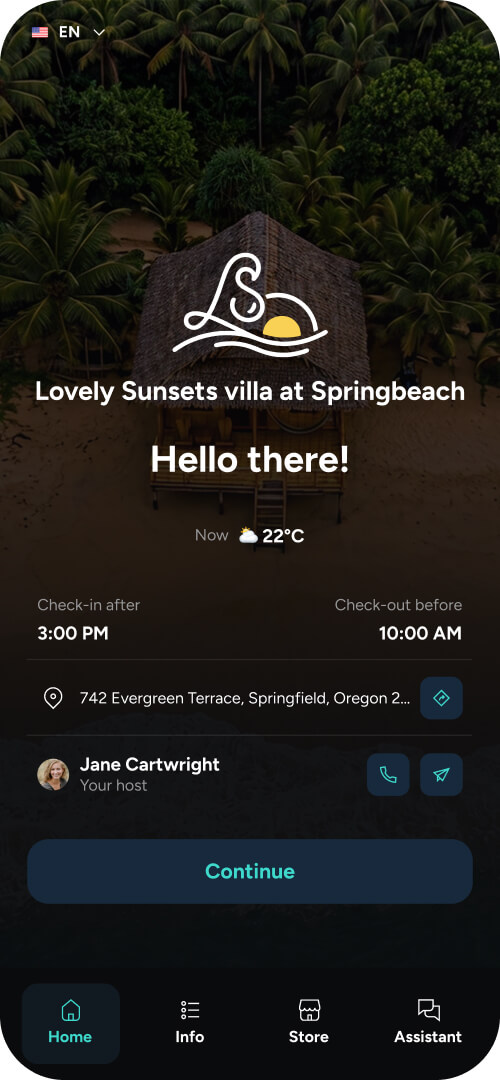
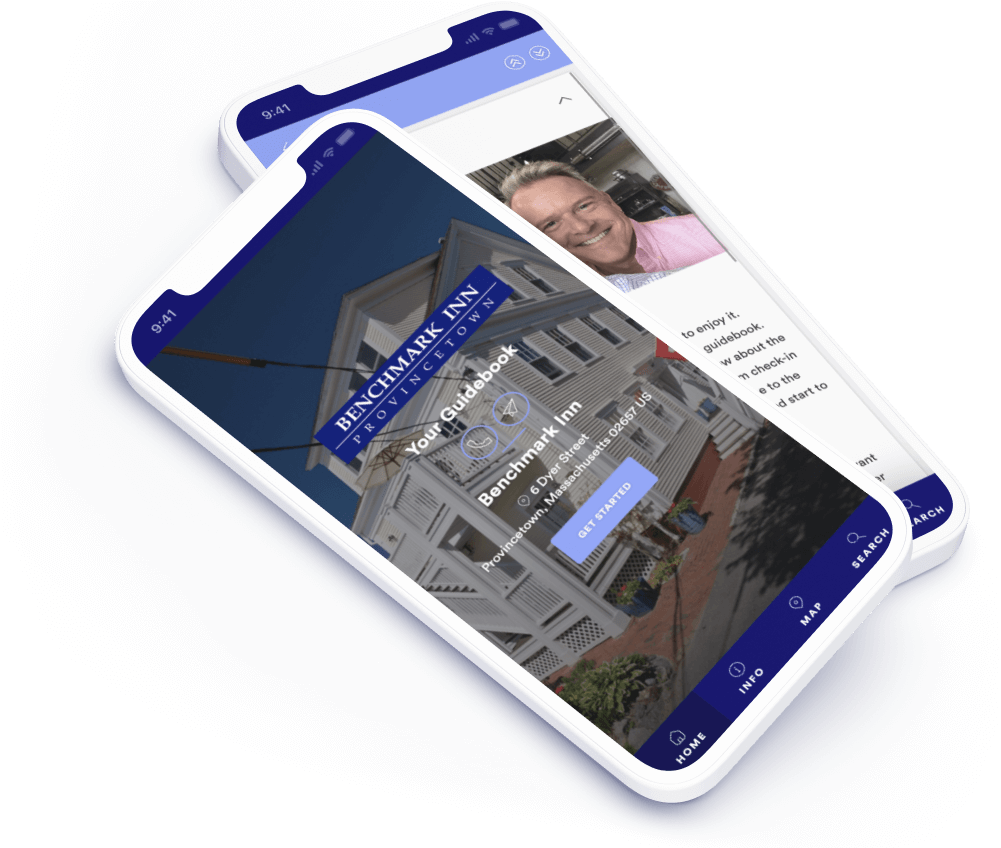
TouchStay fits here. Its hotel and resort digital compendium puts Wi-Fi details, room service menus and local recommendations in one mobile-friendly place, and guests open it on any device without downloading anything.
2. Make booking and check-in transparent, fast, and optional
Check-in starts long before the lobby. Show the full price before payment: taxes, parking, resort fees, deposits, cancellation terms. If a fee is unavoidable, say so up front, not at the desk when the guest is tired and already holding a card.
Then let people pick their channel. Digital check-in shortens waits, but not if it forces an app download or a second round of typing in details they've already given you.
3. Make the room a dependable sleep-and-work environment
Room condition beats decorative technology every time. Mattress, blackout, temperature control, water pressure, Wi-Fi.
A room-readiness checklist should record defects, not just tick the room as clean. Cover:
- Sleep: mattress wear, pillow condition, blackout gaps, noise from the corridor.
- Climate and air: HVAC function, thermostat labels, odors, ventilation.
- Work and charging: desk setup, outlet access, USB-C, and the real published Wi-Fi speed in Mbps.
- Fixtures: water pressure, drain speed, toilet, door locks.
- Tech: TV casting reset, remote batteries, room phone, or a QR code that reaches support.
That list is a promise to the guest. It stops being one the moment it turns into a form someone signs on their way out.
4. Treat cleanliness as a visible operating system
Cleanliness runs well beyond the room: bathrooms, corridors, elevators, dining spaces.
Internally, make the inspection visible. Track high-touch points, sample as a supervisor, and log repeat defects by room number, because it's usually the same rooms failing.
Keep sustainable housekeeping opt-in. If you're offering linen reuse or reduced service, explain what the guest is choosing and let them choose it.
5. Engineer warm, empowered human service
Warm service gets easier when staff know what good looks like. Train people to recognize returning guests, explain things in plain language, and share local knowledge without turning a two-minute exchange into a tour briefing.
Then give them the authority to fix routine problems without hunting for a manager. Cornell research found problem-solving training for frontline staff improved problem-resolution satisfaction, perceived helpfulness and NPS among guests who'd had a problem.
6. Personalize with permission, restraint, and operational memory
Personalization should make the stay easier. That's the whole bar.
Ask for opt-in preferences that change what actually happens: pillow choice, dietary needs, accessibility support, preferred channel. Store them where the right team will see them, in the PMS or the messaging system, and stop collecting the ones nobody uses. Deloitte reports 76% of surveyed hoteliers believe personalization improves reputation and repeat business, and 70% believe technology enables it.
7. Build a useful, human-centered digital layer
Digital tools should take effort off the guest. Fast Wi-Fi, mobile requests, a digital directory, messaging that reaches a real person. All of it works when it's wired into staff workflows, and none of it works when it isn't.
TouchStay covers this without an app: a digital guidebook plus a guest messaging layer with scheduled emails and SMS, a central inbox, and an AI chatbot trained on your guidebook that handles routine questions while leaving a clear path to a person.
.png?width=2160&height=2160&name=2%20way%20messaging%20(5).png)
8. Make amenities and food-and-beverage fit the trip
Amenities should match the reason someone is travelling. A business guest wants a quiet desk and coffee before dawn. A family cares about breakfast timing, filtered water, and somewhere nearby to eat that won't mind a toddler.
Food gets talked about more than almost anything else you control. Travel Media Group's 2025 guest sentiment analysis found it among the most-mentioned experience topics, with the positive comments clustering around locally inspired dishes, late-night room service, and grab-and-go options.
9. Design for accessibility and inclusion from discovery through departure
Publish the specifics: doorway widths, step-free routes, transfer space in the bathroom. Then connect that information to booking, arrival, dining and emergency communication. Publishing it once in a PDF nobody can find doesn't count.
Train staff to ask what support someone wants instead of guessing at it.
10. Make sustainability tangible, voluntary, and locally beneficial
Sustainability lands better as a choice than a policy. Booking.com's 2025 research found 53% of travelers are conscious of tourism's effect on local communities and the environment.
Start with things a guest can picture. Refillable water, laundry they opt into, food bought locally. Vague green claims do nothing at all. And don't quietly reduce comfort without telling people what they're choosing and what it achieves.
Tip: Paper guides create a negative environmental impact, and are difficult to update. Go digital instead.
11. Prevent problems and recover decisively
Four moves: catch it early, acknowledge it fast, say what you're going to do, confirm when it's done.
Don't get defensive when the failure was yours. Rose and Blodgett found management responses can limit reputational damage for controllable failures, with apology plus assurance and apology-plus-corrective-action performing about the same in their experiment.
12. Convert departure into loyalty and learning
Make checkout accurate and boring. Ask one short question while the stay is still fresh, then send the receipt and the thank-you on whatever channel the guest actually uses.
Ask for the public review after you've offered a private route. Cornell research found review encouragement was associated with higher ratings, and that management responses increased click-throughs to hotel listings on OTAs.
TouchStay's guest feedback flow does exactly that split, pointing happy guests toward a review and routing lower-rated feedback back to you first.
.png?width=1080&height=1600&name=5%20star%20feedback%20(1).png)
Hotel guest experience metrics to track
Review scores tell you how guests felt. They don't tell you what caused it. Pair the guest-facing numbers with the operational ones underneath, or you won't know whether a new process improved the stay or just moved work onto a team that was already stretched.
Guest sentiment and reputation metrics
Track post-stay satisfaction, NPS or recommendation intent, the public review rating, and the recurring themes in review text.
The themes are the useful part. A few repeated phrases, "waited at check-in", "room smelled", will tell you more than the average rating, which moves too slowly to be worth watching week to week.
Operational reliability metrics
Check-in wait time, cleanliness defects per occupied room, maintenance closure time, and Wi-Fi uptime where you can measure it honestly. Plenty of properties can't, and an invented uptime figure is worse than no figure.
Room-readiness accuracy belongs here too. A room marked ready should be clean, working, and the room the guest actually booked.
Revenue and loyalty metrics
Upsell revenue tells you whether the offers fit the trip. Track paid add-on adoption, repeat bookings, loyalty engagement, and direct booking behavior.
Keep it balanced. A well-timed late checkout or parking offer improves the trip; one that misses makes the whole personalization effort look like a sales funnel.
Staff workload and recovery metrics
First-contact resolution, recovery satisfaction, housekeeping completion accuracy. These show whether a change is helping staff deliver or quietly creating manual work for them.
Watch recovery hardest. A property can hold a strong overall rating and still be mishandling every stay that went wrong, because there aren't enough of them to move the average.
|
Metric area |
Track |
What it helps you fix |
|---|---|---|
|
Guest sentiment |
Post-stay satisfaction; NPS or recommendation intent; review rating; recurring review themes |
Reputation gaps and the moments guests remember most |
|
Operational reliability |
Check-in wait; cleanliness defects per occupied room; maintenance closure time; Wi-Fi uptime |
Service failures before they become public complaints |
|
Revenue and loyalty |
Paid add-on adoption; repeat bookings; loyalty behavior; direct booking behavior |
Offers that match the trip and encourage return stays |
|
Staff workload and recovery |
First-contact resolution; recovery satisfaction; housekeeping completion accuracy; issue reopen rate |
Workload pressure and unresolved guest problems |
Start with these, then drop the ones your systems can't feed properly.
Build a 90-day hotel guest experience strategy
You don't have to rebuild everything at once. Set baselines, fix the friction that repeats, then pilot one change you can actually measure.
Days 1 to 30: audit the journey and set baselines
Audit the journey from booking through follow-up. Read the last 12 months of complaints and reviews and pull out the five defects that keep coming back. Verify your pricing claims and accessibility information before you change anything, then record baselines for wait times, cleanliness defects, maintenance closure, review themes and recovery satisfaction.
Resist fixing things during the audit. You'll lose the baseline you came for.
Days 31 to 60: fix high-frequency friction first
Go after whatever repeats. Cleanliness, maintenance and check-in delays usually deserve the first pass, because they touch so many stays.
Add pre-arrival and mid-stay messaging only once you've decided who answers the replies. An unattended inbox is worse than no messaging at all. Give staff clear recovery authority, make review responses specific rather than templated, and fix the root cause behind the ones you're replying to.
Days 61 to 90: connect systems and pilot one improvement
Pick one pilot with one owner. A digital request channel, a single personalization use case, one sustainability measure against the baseline.
Integration matters more than the tool itself. If a request moves between front desk, housekeeping and management, every one of them has to be able to see where it got to.
Adapt the plan by property size
Size changes how you get there. The requirements don't move: clean rooms, accurate information, fast recovery. Start with the lightest system your team will actually keep using, then add automation when it removes repeated work.
- Small independent hotel: a daily arrivals huddle, one shared issue log, and guest information that works on a phone.
- Midscale group: PMS-connected messaging, housekeeping tasks on mobile, and a weekly complaint review.
- Large portfolio: predictive maintenance, identity resolution, and privacy governance that would survive an audit.
The best plan is the one your team can run on a bad day.
Conclusion
Clean, quiet rooms. Accurate bills. Someone who answers. That's most of it, and the digital layer earns its place by making those easier to reach. If you want somewhere to start, hotels and resorts can use TouchStay to share a mobile-first digital compendium before arrival, answer the routine questions during the stay, and collect feedback after checkout. There's a 14-day free trial, no credit card.
Touch Stay gives hotels a Digital Hotel Compendium guests reach by QR code or link, with no app download. Add the AI Chatbot trained on your guidebook and the routine stay questions get answered at 2am without waking anyone up. Your staff get that time back for the problems only people can fix.
Clearer answers for guests, more time for hospitality.