
.webp?width=50)
Summarize in
In the hospitality industry, we aren't just selling rooms or tables; we are selling experiences. And because those experiences are delivered by people for people, things will occasionally go wrong. A lightbulb flickers out, a check-in is delayed, or a steak comes out medium-well instead of rare.
While a complaint might feel like a personal failure, it is actually one of the most valuable pieces of feedback your business can receive. A guest who complains is giving you a second chance to keep their business. The guest who says nothing but never returns – and tells 10 friends why – is the one who truly hurts your bottom line.
Handling complaints with grace, speed and a structured process can turn a frustrated visitor into a lifelong brand advocate. In this guide, we will explore the best practices for managing guest grievances and, more importantly, how to prevent them from happening in the first place. We’re going to cover:
- Why complaint handling matters
- Common guest complaint types
- Core principles of handling complaints
- Step-by-step resolution process
- Practical service recovery
- Internal systems and feedback workflows
- Proactive strategies to prevent complaints
- Handling online reviews and complaints
- Tips for staff empowerment
- Frequently asked questions
Want to streamline your guest experience and reduce complaints?
Why complaint handling matters
The stakes have never been higher for hospitality operators. In a digital-first world, your reputation is built (or broken) by the feedback of your guests.
Guest satisfaction and loyalty
Effective service recovery can actually result in higher loyalty than if nothing had gone wrong. Known as the ‘Service Recovery Paradox’, this happens because a guest sees first-hand that you care about their experience. By resolving an issue with grace, you build a human connection that a standard, ‘perfect’ stay doesn't provide.
Online reviews and reputation
Word-of-mouth has moved online. Potential guests scan reviews not just for the score, but for how the management responds to criticism. A professional, thoughtful response to a complaint demonstrates accountability and reassures future customers that they are in safe hands.
Revenue and repeat business
Retaining a guest is significantly more cost-effective than acquiring a new one. A well-handled complaint saves the lifetime value of that customer. Furthermore, satisfied guests become brand ambassadors, driving organic growth through recommendations.
Common guest complaint types
Understanding the ‘why’ behind most complaints allows you to prepare your team for the most frequent scenarios.
Noise and disturbances
Whether it’s thin walls, a loud group in the corridor, or external street noise, sleep disruption is a top-tier complaint. Guests view their room as a sanctuary; when that is compromised, their patience thins quickly.
Reservation inaccuracies
Arriving to find a booking has been lost or the room type doesn't match the photos is a disastrous start. These issues usually stem from a lack of synchronisation between booking platforms.
Cleanliness and room condition
Cleanliness is non-negotiable. A stray hair or a dusty surface signals a lack of care. In the post-pandemic era, guests are hyper-aware of hygiene standards, making this a frequent point of friction.
💡 Pro tip: don’t miss a spot with our ultimate rental cleaning checklist
Amenity or facility issues
When the Wi-Fi is patchy, the gym is closed, or the ‘heated’ pool is cold, guests feel they aren't getting the value they paid for. Even minor issues, like a missing kettle, can cause frustration if not resolved instantly.
Technical problems
Modern hospitality relies on tech. Confusing air conditioning controls, smart TVs that won't connect, or complicated lighting systems are common triggers for complaints.
Staff interaction issues
A guest may forgive a broken appliance, but they rarely forgive a rude or indifferent staff member. Interactions that feel dismissive or unhelpful are the hardest complaints to manage but the most important for brand culture.
Billing and unexpected charges
Hidden fees or errors on the final bill create a sour ending to a stay. Transparency at the point of booking and check-in is essential to avoid these tense check-out moments.
💡 Pro tip: learn how upselling – when done right – wows guests and increases revenue
Core principles of handling complaints
Before following a process, staff must adopt the right mindset. These five principles should guide every interaction.
Listen actively
When a guest is complaining, let them finish. Do not interrupt or offer excuses. Maintain eye contact and nod. Often, the guest simply needs to feel heard to begin de-escalating.
Show empathy and understanding
Acknowledge the emotional impact. "I can see how frustrating that must be for you" is a powerful phrase. Validating their feelings builds a bridge toward a resolution.
Stay calm and professional
Guests can be emotional or even rude. It is vital that staff remain calm and do not take the criticism personally. Matching a guest’s aggression will only escalate the conflict.
Apologise sincerely
Avoid the ‘non-apology’ (e.g., "We are sorry if you feel that way"). A sincere apology takes ownership: "I am very sorry the room wasn't ready; that is not the standard we aim for."
Take ownership
The guest doesn't care whose department made the mistake. They want the person in front of them to take responsibility for fixing it. Never blame a colleague or another department.
Step-by-step resolution process
A consistent framework ensures every guest receives the same high level of care.
1. Hear (the full issue)
Give the guest your undivided attention. If you are in a busy lobby, ask to step aside to a quieter area to show they are your priority.
2. Empathise (acknowledge feelings)
Acknowledge the inconvenience. If they couldn't get the shower to work, recognise that it probably ruined their morning routine.
3. Apologise (sincere apology)
Be specific in your apology so the guest knows you were actually listening.
4. Resolve (offer solutions)
Ask the guest, "What can I do to make this right for you?" Often, their request is more modest than what you might have offered. If their request is reasonable, act on it immediately.
5. Diagnose (find the root cause)
Once the guest is happy, investigate why the problem happened. Was it a training gap or a faulty process? Fixing the root cause prevents the issue from recurring.
Need all your staff on the same page?

Touch Stay’s employee onboarding guidebooks provide a compass for new hires that set the stage for success!
Practical service recovery
Service recovery is the art of fixing the relationship, not just the problem.
Compensation options (upgrades, discounts)
While an apology is vital, a tangible gesture can restore a sense of value. This might be a complimentary drink, a room upgrade, or a discount on their next stay.
Empower staff for quick fixes
The biggest barrier to fast resolution is waiting for a manager. Give your frontline team a ‘buffer’ – the authority to discount a bill or provide a perk without needing approval.
Quick fixes vs. long-term solutions
Moving a guest to a quieter room is a quick fix. Investing in better soundproofing is the long-term solution. Both are necessary for a sustainable business.
Technology for streamlined response
Use internal task-management software to ensure that when a guest reports a leak, maintenance is notified instantly. Speed of response is the most impressive part of service recovery.
Internal systems & feedback workflows
Complaints are valuable data points that should inform your business strategy.
Document complaints for trend analysis
Keep a log of every complaint. If you notice a spike in issues regarding check-in times, you know exactly where to focus your resources.
Staff training on service recovery protocols
Regular role-play sessions help staff feel confident. When a team member knows they have the tools to handle a difficult situation, they are more likely to stay calm.
Share insights to improve service
Bring feedback into your weekly meetings. Highlighting how a complaint was successfully handled provides a learning opportunity for the whole team.
Multi-channel feedback collection
Don't wait for the guest to leave. Use QR codes in-room or mid-stay messages to catch ‘niggles’ before they become full-blown complaints.
Proactive strategies to prevent complaints
The best way to handle a complaint is to ensure it never happens.
Set clear expectations pre-arrival
Most complaints are the result of a gap between expectation and reality. Be honest in your marketing. If your property doesn't have a lift, make that clear upfront.
Use digital guidebooks for FAQs
A significant number of guest frustrations are caused by simple confusion. "How do I use the oven?" "What is the Wi-Fi password?" "Where is the nearest pharmacy?"
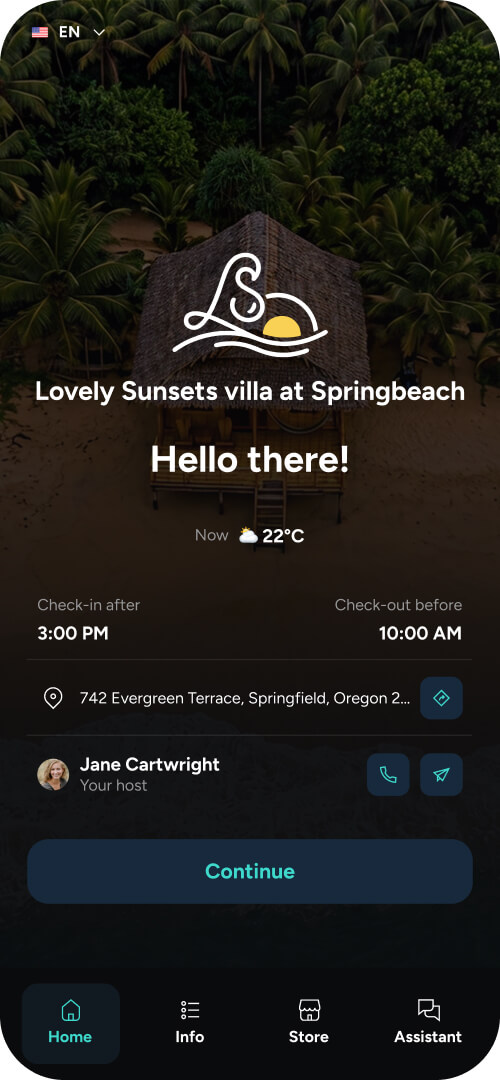
By using a Touch Stay digital guidebook, you put all these answers in the guest’s pocket. Providing clear, visual instructions for appliances and detailed local maps removes the ‘friction’ from their stay. When guests feel empowered to help themselves, they are far less likely to call the front desk with a problem.
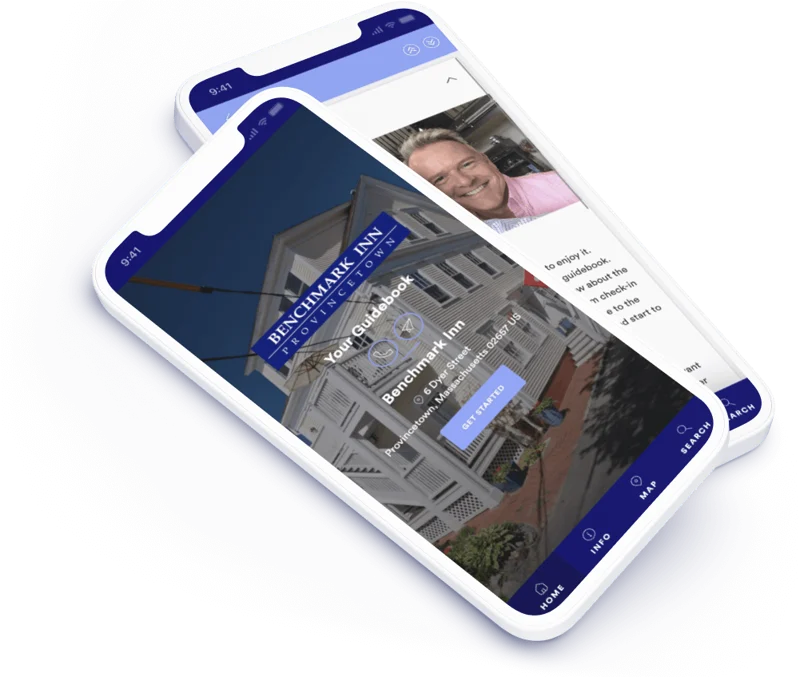
Touch Stay digital guidebooks act as a 24/7 concierge, preventing the common ‘how-to’ questions that often lead to guest frustration if left unanswered.
Reduce guest friction and save your team hours of work!
Regular maintenance and audits
Implement a preventative maintenance schedule. Check lightbulbs, taps, and remotes before a guest ever enters the room.
Monitor online reviews proactively
Set up alerts for your business. Responding quickly to reviews shows you are attentive and prevents a small issue from snowballing into a reputation crisis.
Handling online reviews & complaints
A digital response is a public demonstration of your brand values.
1. Responding graciously on platforms
Always thank the reviewer for their feedback. Address the specific points raised and explain how you have addressed them.
2. Turning negative reviews into engagement
Invite the guest to contact you directly via phone or email. This takes the negotiation offline and shows you are committed to a personal resolution.
3. Leveraging responses for credibility
A well-handled negative review can actually be more convincing than a 5-star review. It proves that you are a real, accountable business that cares about its guests.
💡 Pro tip: struggling with bad reviews or complaints? Use one of our 50 review templates
Tips for staff empowerment
Your team is your first line of defence. If they feel supported, they will perform better under pressure.
Empower frontline teams
Give staff the authority to make small financial decisions. A server who can remove a late starter from the bill without asking a manager is a server who can save a guest's evening.
Provide tools and authority
Provide your team with the right technology. A Touch Stay digital guidebook allows staff to quickly point guests to instructions or maps, resolving queries in seconds rather than minutes.
Encourage proactive engagement
Teach staff to spot the signs of a struggling guest. If someone is staring at a thermostat with a confused look, a proactive "Can I help you with the heating?" prevents a complaint later that night.
Frequently asked questions