Summarize in
A good short-term rental guidebook can handle the operational details while this welcome book does the hospitality work: helping guests feel oriented, looked after, and confident about the stay.
In this article, we'll cover:
- What a welcome book is for, and what it isn't for
- The eight sections that earn their place
- How to write it so people actually read it
- Printed, PDF or digital
- A guidebook template
Most vacation rental welcome books are written once, printed once, and then quietly ignored by everyone including the person who wrote them. The binder sits on the counter. The guest messages you about the wifi anyway.
That's usually a structure problem, and it is fixable.
Here's how to write a welcome book people actually use.
What a welcome book is actually for
Two jobs, and they pull in slightly different directions.
The first is operational. Get people in the door, onto the wifi, through the appliances, and out again on time without messaging you. Every question your welcome book answers before it's asked is a message you don't write.
The second is hospitality. Make the stay feel considered. Send them to the bakery you'd send a friend to, not the one with the most reviews. This is the part that shows up in your ratings, because "the host had thought of everything" is a sentence guests write when the operational stuff was invisible and the recommendations were good.
The mistake is letting the hospitality content crowd out the essentials. A gorgeous forty-page book full of local colour, with the door code on page eleven, fails at both.
The eight sections that earn their place
Start here, adjust to your property, and resist adding a ninth until something in your inbox demands it.
1. Welcome and orientation
Two or three sentences in your own voice. Who you are, that you're glad they're here, how to reach you. Then immediately: the address, what the building looks like from the street, and where to park.
Put a photo of the front door in. It sounds trivial and it eliminates an entire genre of arrival message.
2. Getting in
Door code or key location, spelled out step by step, plus what to do if it doesn't work. Include the backup: a second number, a lockbox, whatever your fallback is. People need this at 11pm with a dying phone battery, so write it for that moment.
3. Wifi
Network name and password, on their own line, big, near the top. Not buried in a paragraph about the smart TV. If your signal is patchy in the back bedroom, say so, because an expectation set in advance is a complaint that doesn't get written.
4. How things work
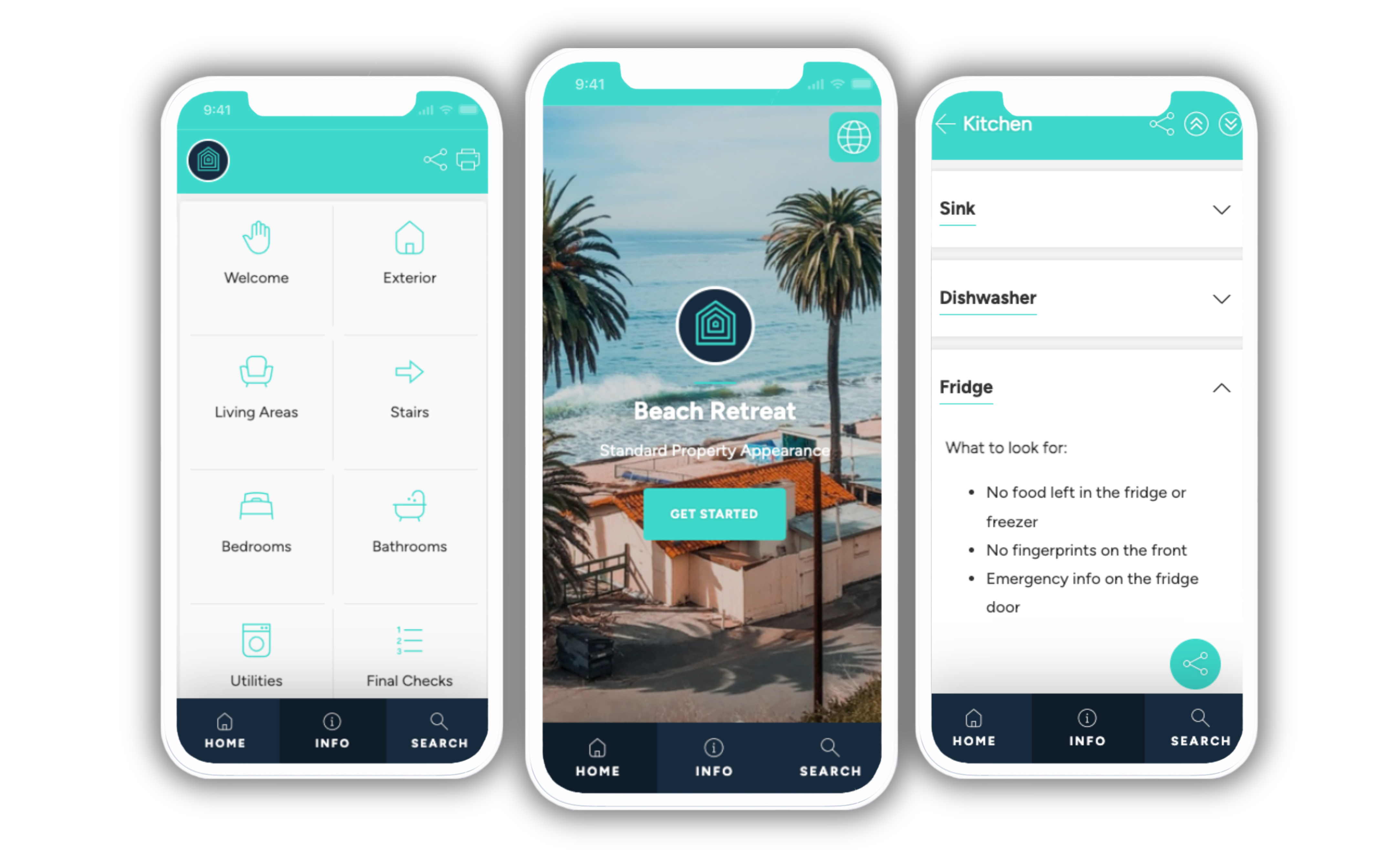
Your oven, your shower, your heating controller, your washing machine, the coffee maker with the unlabelled buttons. One short block each, and photos wherever a photo is faster than a sentence.
This section can save the most support time, yet it is often skipped because it feels obvious to the host. It will not feel obvious to a first-time guest.
5. House rules, written like a host
Quiet hours, smoking, pets, visitors, parties. Say them plainly, but say them the way you'd say them out loud rather than the way a lease says them.
"We're in a building of long-term neighbours, so we keep noise down after 10pm" does the job of "NO NOISE AFTER 22:00" and doesn't set the tone of the stay to landlord.
6. Local recommendations, curated
Six to eight places, not thirty. Coffee, casual dinner, a proper dinner, groceries, one drink spot, one thing to do on a rainy day.
Write one line of why for each. "Best croissants within walking distance, cash only, closed Mondays" is worth more than a name, a star rating and an address, because the why is the part a search engine can't give them.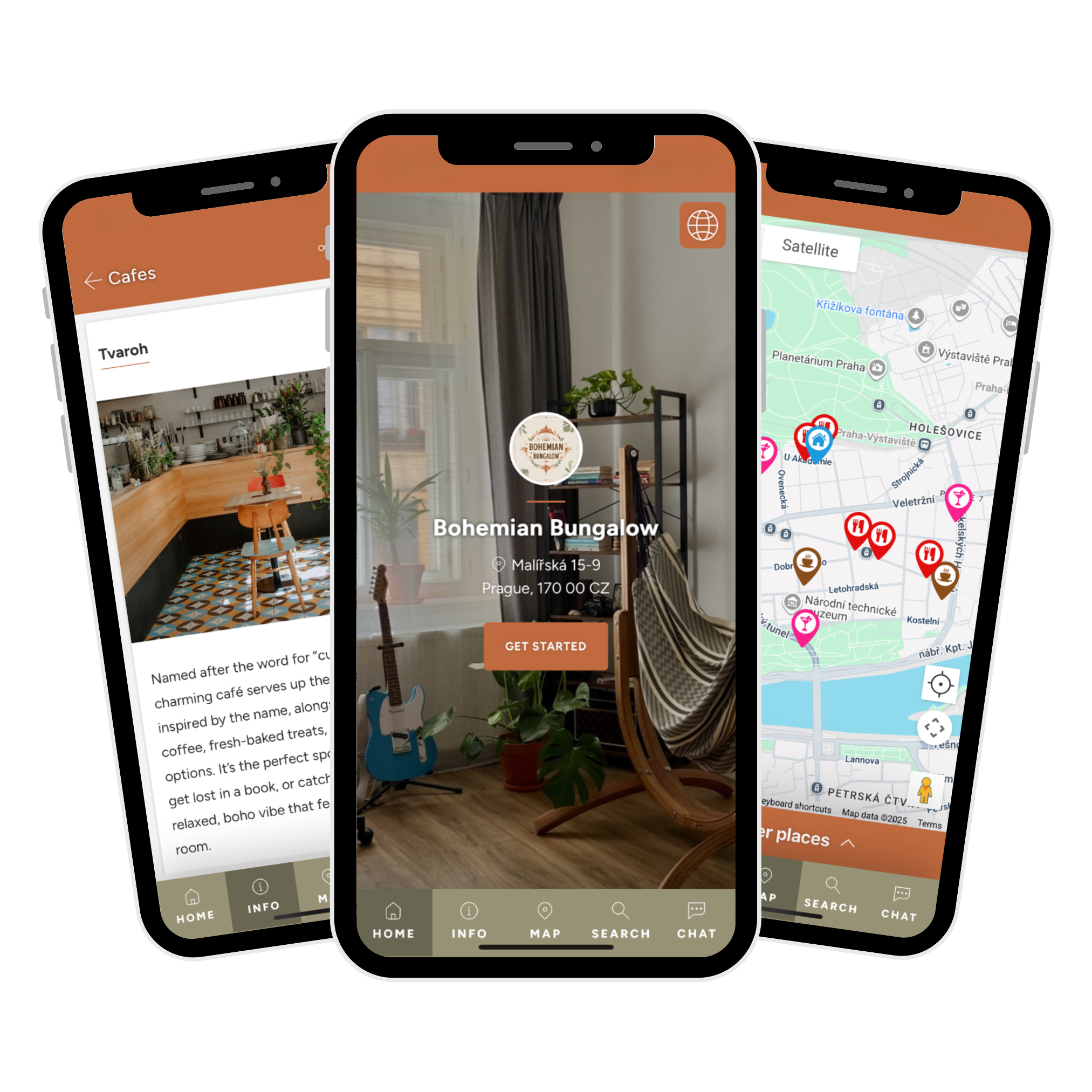
7. Getting around
Parking specifics, including which bay and whether you need a permit. Nearest shop and how far. Transit basics. Whether a car is genuinely necessary. Taxi or rideshare availability, especially at night and especially if the answer is "not really."
8. Checkout
Time, and a short list of what you want done. Dishwasher started, windows shut, keys back in the box, bins out if it's the day.
Be specific about what you don't need. Guests who aren't told will either strip the beds you'd rather they didn't touch or do nothing at all, and both cost your cleaner time.
How to write it so people actually read it
Good content still fails when the structure is hard to scan. A few rules make a consistent difference:
Order by urgency, not by narrative. Access, wifi, and checkout are the three things people hunt for. Everything else can sit lower. Your welcome message is nice, but it shouldn't be the thing between an arriving guest and the door code.
One idea per block. Short blocks with clear headings survive scanning. Paragraphs don't get read on a phone in a hallway.
Photos over prose. The front door, the fuse box, the heating panel, the bin location. A photo answers in a second what a paragraph answers in twenty.
Write like you talk. Second person, contractions, short sentences. You're a host, not a manual.
Cut anything you're including out of thoroughness. If a section exists because it felt incomplete without it, and no guest has ever asked about it, delete it. Every line you cut makes the important lines easier to find.
Say the awkward things. Thin walls, a steep stair, no lift, roadworks nearby, a shower that takes a minute to warm up. Disclosed in advance it's honesty. Discovered on arrival it's a review.
Printed, PDF, or digital
All three can work, but they solve different problems.
Printed binder. Feels hospitable and works with no signal. But it only exists inside the property, so it does nothing before arrival, which is exactly when your guest is deciding where to park and whether to buy milk on the way. Updating it means reprinting it, so in practice it goes stale and nobody notices for a year.
PDF. Travels by email, which is better. But it's awkward to read on a phone, it can't be updated once sent, and the version in a guest's inbox from four months ago will still be showing your old door code.
Digital guidebook. A link, opened in a browser, no app to install. It reaches guests before arrival, in the property, and after they leave. You update it once and every guest sees the current version, including the ones who booked in March. Touch Stay guidebooks also work offline once loaded and display in over 30 languages, which matters if your guests aren't all local. You can also see example guidebooks to compare how the same information can be presented digitally.
If you're keeping a printed copy, keep it as a companion to the digital one rather than the main event. A QR code inside the front door covers the guest who never opened your email. For platform-specific guidance, see our Airbnb welcome book.
The faster option: let Touch Stay build the first draft
You do not have to start from a blank page. Touch Stay can generate a digital guidebook from an existing Airbnb or Booking.com listing: paste in the listing URL and it pulls in your property details and photos, then creates a guidebook draft with sections such as check-in information, Wi-Fi, house rules, local recommendations, and departure information. You can review it, edit anything that needs changing, add your own recommendations and publish it when you're happy.
For a host starting from scratch, that means the work in this article becomes much smaller. Instead of writing every section yourself, you start with a guidebook populated from information you have already written in your listing.
A welcome book template you can copy
Use this as your skeleton and fill it in. It takes about an hour for a first property.
WELCOME TO [PROPERTY NAME]
Hi, we're [name]. [One or two sentences.]
Any problems: [phone] / [email]. We usually reply within [X].
GETTING IN
Address:
What to look for:
Parking:
Door code / keys:
If that doesn't work:
WIFI
Network:
Password:
Notes:
HOW THINGS WORK
Heating:
Hot water / shower:
Oven / hob:
Washing machine:
TV:
Coffee:
[+ photo for anything with more than two steps]
HOUSE RULES
Quiet hours:
Smoking:
Pets:
Visitors:
Parties:
IF SOMETHING GOES WRONG
Fuse box:
Water shut-off:
Out of hours contact:
Nearest pharmacy / hospital:
EAT AND DRINK
[6 to 8 places, one line each on why]
GETTING AROUND
Parking:
Nearest shop:
Transit:
Taxis:
Do you need a car?
CHECKOUT
Time:
Please do:
Please don't worry about:
Keys:
Print it, paste it into a doc, or start from a ready-made digital version and skip the formatting entirely.
Five mistakes that make a welcome book useless
Writing it for yourself. You know where the fuse box is, so you don't write it down. Give the draft to someone who's never been in the property and watch what they can't find.
Burying the essentials. If the wifi password is below the fold, the book has failed at its main job regardless of how good the rest is.
Recommending everything. A list of every restaurant in town is a search result, and guests already have one of those. The value you add is having eaten there.
Letting it go stale. An out of date door code is worse than no code at all, because the guest trusts it and then stands outside for ten minutes before messaging you.
Only existing inside the house. Half the questions your book answers are asked before arrival: where to park, what to bring, whether to stop for groceries. A book the guest can't open until they're already inside answers them too late.
Keep it alive
The welcome book works when it matches the property as it is today, not as it was when you wrote it.
Two habits keep it true. First, every time you answer a guest question by message, ask whether the answer belongs in the book. If you've answered it twice, it does. Second, when anything physical changes, the code, the appliance, the parking rule, the book gets updated in the same ten minutes, not next month.
That's the entire maintenance routine. Do it and the book quietly stops being something you wrote and starts being the reason your inbox is quiet.