

Summarize in
What separates a five-star Airbnb host from a struggling one? We surveyed over 1,300 short-term rental hosts and property managers to find out. Their answers, combined with insights from host communities across Reddit, Airbnb forums, and Facebook groups, form one of the most practical collections of Airbnb hosting tips you’ll find anywhere.
Whether you’re preparing for your first guest or trying to sharpen operations after years of hosting, this guide covers the fundamentals that protect your business, the guest experience details that earn five-star reviews, the pricing and marketing strategies that keep your calendar full, and the operational habits that save hours every week.
Table of contents
- What the data tells us about successful hosting
- Setting up for success: before you welcome a single guest
- Guest communication: the skill that makes or breaks your reviews
- The guest experience: details that earn five-star reviews
- Pricing and revenue: the challenge most hosts underestimate
- Operations: how top hosts save 10+ hours per week
- Reviews and reputation: the compound effect
- Marketing beyond the listing
- The long game: what experienced hosts want you to know
- Tools and resources to level up your hosting
- Your next step
What the data tells us about successful hosting
Before we get into specific tips, our 2026 Host Report revealed some clear patterns about the state of short-term rental hosting right now.
Two challenges dominated the survey above all others, each cited by more than two-thirds of respondents: cleaning and maintenance coordination, and pricing competitively. Regulations came in third, followed by finding reliable guests and handling guest communication. Strategically, maintaining consistent bookings in a competitive market was the top concern, with more than half of hosts also focused on increasing nightly rates without losing guests.
In open-ended responses, the same themes surfaced repeatedly: increased competition and market saturation, tighter regulations, economic uncertainty reducing travel budgets, and a growing shift toward last-minute bookings.
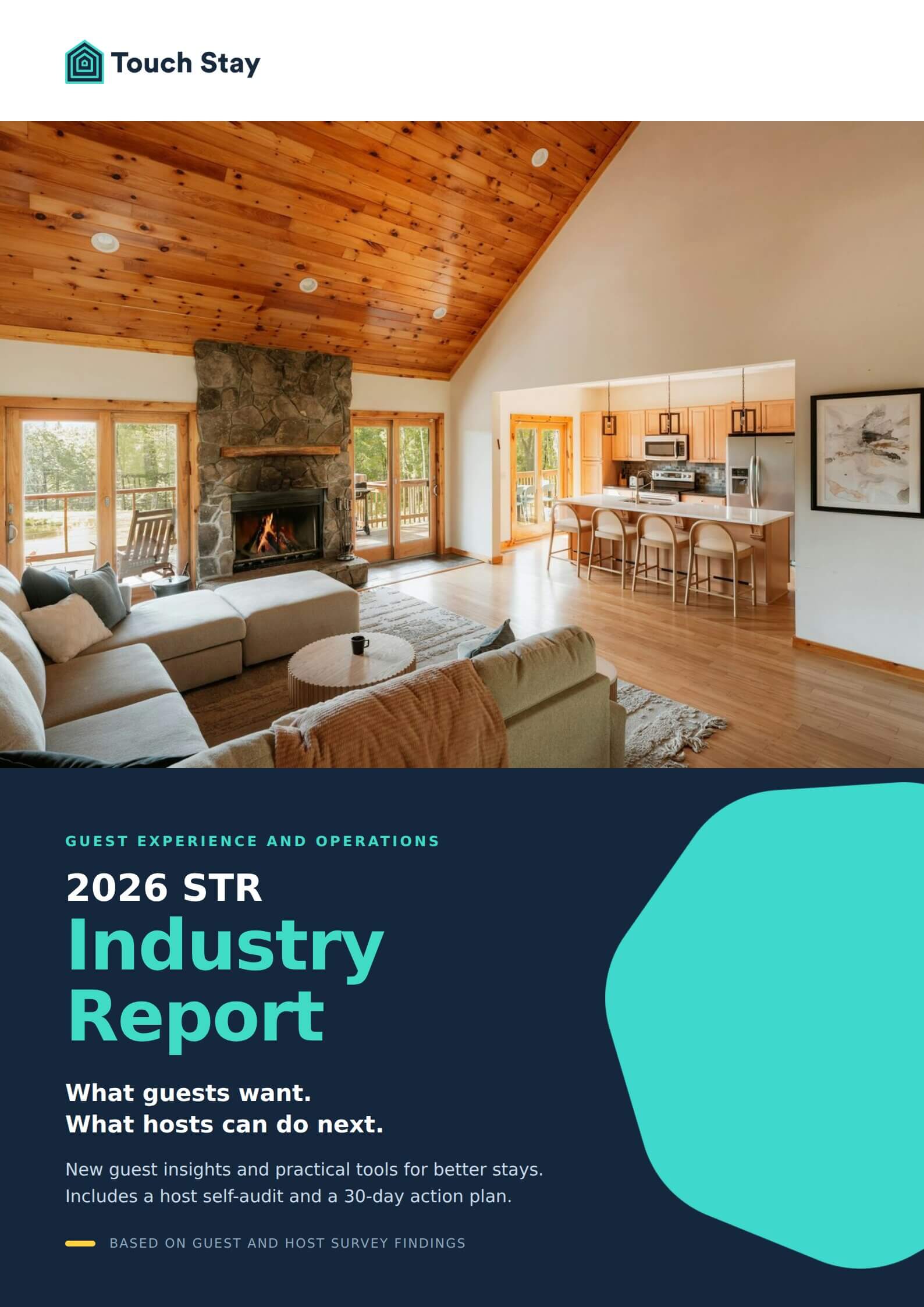
These data points inform every tip in this guide. The advice isn’t theoretical; it’s rooted in the situations hosts are facing right now. For the full data breakdown, including occupancy rates, revenue benchmarks, and automation adoption stats, download the free 2026 Host Report.
.png?width=2964&height=2300&name=host_report_hero%20(2).png)
Setting up for success: before you welcome a single guest
1. Research your local regulations before anything else
This was one of the most common responses when we asked hosts what they wished they’d known before starting. Local short-term rental laws vary enormously, and getting it wrong can mean fines, forced delisting, or worse.
Check your city’s permit requirements, zoning rules, tax obligations, and any caps on the number of nights per year you can rent. If you’re in an HOA or strata-managed building, review those rules too. Airbnb’s responsible hosting page is a useful starting point, but always verify with your local council or municipality directly.
2. Get your insurance sorted properly
Your standard homeowner’s policy probably doesn’t cover short-term rental activity. Talk to your insurer about what’s covered, look into Airbnb’s AirCover for Hosts, and consider dedicated short-term rental insurance for additional peace of mind.
One host in our survey put it bluntly: knowing how to handle property damage from a guest, and understanding which platforms actually support you through it, would have saved them significant stress.
3. Treat it like a business from day one
“Keep things professional and treat it as a business, not a charity” was specific advice shared by one host, and echoed by many. That means setting up proper bookkeeping, tracking expenses, understanding your tax deductions, and creating systems before they become urgent.
Hosts who approach their rental casually tend to be the ones who burn out or run into financial surprises. Our Airbnb host checklist walks through the full setup process step by step.
4. Fully prepare the property before going live
Resist the temptation to list your property before it’s 100% ready. Every room should be furnished, every amenity operational, and every detail in place before your first photo is taken.
Guests expect what they see in the listing photos, and you’ll only stress yourself out if you’re still installing blackout blinds or assembling furniture between your first bookings.
5. Invest in professional photography early
Multiple hosts across Reddit and Airbnb forums mentioned this as a game-changer they wish they’d done sooner. Professional photos increase bookings, set accurate expectations, and help your listing stand out in a saturated market.
In a market where the majority of hosts are worried about maintaining consistent bookings, strong visuals are one of your best competitive advantages. Learn how to properly photograph your Airbnb listing.
6. Start on one platform, then expand
It’s tempting to list everywhere immediately, but experienced hosts consistently recommend starting with Airbnb alone. Master one platform’s systems, messaging, pricing tools, and review dynamics before adding Vrbo, Booking.com, or a direct booking site.
You can always expand once your operations are smooth. If you’re curious about what else is out there, our guide to the best short-term rental platforms covers all the major options.
Guest communication: the skill that makes or breaks your reviews
Our survey found that a majority of hosts still rely primarily on manual emails, texts, or calls to communicate with guests. Meanwhile, fewer than half use automated messaging through their booking platform, and even fewer use a property management system or digital guidebook.
That’s a missed opportunity, because the hosts who have invested in proactive guest communication tools consistently report spending less time on repetitive questions and earning better reviews.
7. Front-load information to reduce questions
The single most effective communication strategy is sharing comprehensive property information before guests arrive, not after. This includes check-in instructions, WiFi details, parking information, house rules, appliance instructions, and local recommendations.
.png?width=1080&height=1080&name=Bohemian%20bungalow%20(4).png)
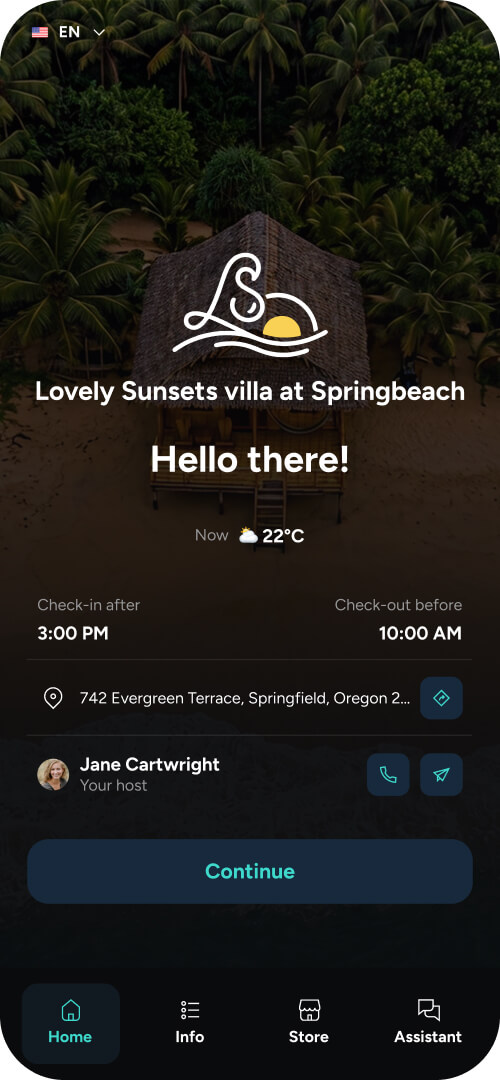
A digital guidebook is the most efficient way to do this. Among our survey respondents, the vast majority now use a digital guidebook or app to share property information, and those who do report fewer repetitive guest questions.
8. Automate your routine messages
Set up automated messages for booking confirmation, pre-arrival details sent 2–3 days before check-in, check-in day instructions, a mid-stay check-in, and checkout reminders.
Our survey shows the majority of hosts have already embraced messaging automation. If you’re still manually sending every message, you’re spending hours on work that software can handle in seconds. Our Airbnb automation guide covers the full range of tasks you can automate.
9. Respond fast, always
Airbnb’s algorithm rewards fast response times, and guests notice when you’re slow. Aim for under an hour during business hours, and have a system for handling late-night messages, even if that system is just an automated reply acknowledging their message and providing your guidebook link.
According to Airbnb’s own hosting resources, your response rate directly influences your search ranking.
10. Don’t take guest tone personally
This is one of the hardest lessons for new hosts. As one experienced host noted, guests may voice-text you, be distracted, or simply communicate differently than you do.
A terse message doesn’t necessarily mean an unhappy guest. Address concerns promptly, stay professional, and don’t read emotion into brevity.
11. Set communication boundaries
Hosting does require being accessible, but that doesn’t mean being available around the clock for non-urgent questions. Proactively sharing information through your guidebook handles most questions before they’re asked.
For emergencies, make sure guests know how to reach you or your co-host immediately. For everything else, a reasonable response window is perfectly fine. Offering hosts a digital guidebook that includes a high quality chatbot is a great way to ensure round-the-clock assistance without the never-ending responsibility.
The guest experience: details that earn five-star reviews
12. Nail the basics: clean, comfortable, and functional
Every host forum, every Reddit thread, every community discussion comes back to the same fundamentals. Your property needs to be spotlessly clean, genuinely comfortable, and fully functional.
No amount of welcome baskets or clever design can compensate for a dirty bathroom, a lumpy mattress, or a broken coffee maker. Cleaning and maintenance coordination was the single most cited challenge in our survey. Our Airbnb cleaning checklist and vacation rental cleaning best practices guide will help you nail this consistently.
13. Label everything
This tip came up repeatedly in Reddit threads about hosting. Label light switches, thermostat instructions, appliance quirks, rubbish and recycling bins, and anything else that isn’t immediately obvious.
It sounds small, but it dramatically reduces guest confusion and the “how does X work?” messages that eat into your time.
14. Think like a guest, not a homeowner
Stay in your own property before listing it. Use every appliance, sleep in every bed, take a shower, and try to operate the TV. Better yet, invite a friend to do a test run and give you brutally honest feedback.
You’ll be surprised what you’ve overlooked. Several hosts on the Airbnb Community forums mentioned they discovered issues like insufficient lighting, confusing remotes, or missing basics that they’d simply never noticed because they knew their own property too well.
15. Stock the essentials and a few surprises
At minimum: quality toiletries, fresh towels and linens, kitchen basics, cleaning supplies, and a first aid kit. Then add one or two unexpected touches that make your property memorable.
This doesn’t need to be expensive. Local coffee beans, a curated list of your genuine restaurant recommendations, or a small welcome note goes a long way. What matters is that it feels personal, not generic.
16. Provide excellent WiFi and clear instructions for it
This is no longer optional. Guests expect fast, reliable internet, and they’ll mention it in reviews if it’s poor. Post the WiFi network name and password in a visible place and in your digital guidebook.
Consider a mesh router system if your property has dead zones.
17. Make check-in seamless with smart technology
Our survey showed that a growing number of hosts have automated their guest onboarding and check-in process. A smart lock with a unique code for each guest eliminates key exchange hassles, late-night arrivals, and the security risk of physical keys floating around.
Pair it with clear, step-by-step arrival instructions sent in advance, and you’ve removed one of the biggest stress points for both you and your guests.
Pricing and revenue: the challenge most hosts underestimate
Competitive pricing was tied as the number one challenge in our survey. Here’s how to approach it. For a deep dive, see our full guide to Airbnb pricing strategies.
18. Use dynamic pricing tools
Static pricing leaves money on the table during peak periods and results in empty calendars during slow ones. Tools like PriceLabs, Beyond Pricing, or Wheelhouse analyse market demand, competitor rates, local events, and seasonality to adjust your rate daily.
A dynamic pricing tool is one of the highest-ROI investments you can make.
19. Don’t race to the bottom
When bookings slow down, the instinct is to slash prices. Resist it. Dropping rates too low attracts guests who leave worse reviews, and it devalues your property in the algorithm.
Instead, focus on improving your listing quality, adding value through amenities or experiences, and adjusting your minimum stay requirements. Our guide on how to get more bookings on Airbnb covers 17 strategies beyond just lowering price.
20. Understand your actual costs
Several hosts in our survey wished they’d better understood the true cost of running a short-term rental before starting. Factor in cleaning fees, platform commissions, taxes, insurance, utilities, maintenance reserves, consumables, and your own time.
One host’s open-ended response summed it up: “Renovating houses takes three times longer than expected and costs three times more than expected.” Know your numbers. Our Airbnb pricing calculator can help you work through them.
21. Optimise your minimum stay settings
Shorter stays mean more turnovers, more cleaning costs, and more wear and tear. Longer stays reduce these costs but may leave calendar gaps. Experiment with different minimum stay requirements for different seasons.
Many experienced hosts set a 2–3 night minimum as standard, with longer minimums during peak weekends and holidays.
| Average stay length | Revenue effect | Why it matters |
|---|---|---|
| 3–4 nights | More turnovers, higher cleaning and coordination costs | Short stays can fill gaps, but they usually require more work per booking. |
| 5–7 nights | Balanced revenue and operations | This is often a strong middle ground for many hosts. |
| 8–10 nights | Fewer turnovers, steadier income per booking | Longer stays can reduce operational load and lift net revenue. |
| 28+ nights | Lower turnover frequency, often lower cleaning cost per booked night | Extended stays can improve efficiency, especially in markets that support them. |
22. Build a direct booking channel
A significant portion of hosts in our survey are actively working to reduce their reliance on OTAs. Direct bookings mean no platform commissions, more control over the guest relationship, and the ability to collect guest contact information for future marketing.
It takes time to build, but hosts who invest in direct bookings consistently report higher margins. For more on this, explore our guide to making money with Airbnb, which covers diversification strategies.
Operations: how top hosts save 10+ hours per week
23. Find and keep great cleaners
This came up in our survey more than almost any other topic. As one host wrote, “The business depends on having reliable, top-quality cleaners who will stay, and they are very hard to find.”
Pay your cleaners well, treat them as essential business partners, and have a backup cleaner ready at all times. Create detailed cleaning checklists with photos so standards stay consistent regardless of who cleans.
24. Build a reliable maintenance network
Don’t wait for something to break to find a plumber, electrician, or handyman. Build relationships with local tradespeople before you need them urgently.
A guest reporting a plumbing issue at 7pm on a Friday is stressful enough without having to frantically search for someone who can help.
25. Create systems and checklists for everything
Turnover checklists, guest communication templates, maintenance schedules, seasonal preparation lists. Document every repeatable process.
This is what allows many of our survey respondents to manage their entire guest operation in just a few hours per week.
26. Automate what you can, personalise what you should
Our survey data makes clear that hosts who invest in automation spend significantly less time on routine tasks. Messaging, booking management, payment processing, and check-in are the areas most commonly automated.
Meanwhile, nearly one in five hosts still uses no automation at all, and they’re almost certainly over-investing time in work that software can handle. Automate the repetitive work so you can focus your personal time where it actually matters: resolving problems, improving the guest experience, and growing your business.
Reviews and reputation: the compound effect
According to Airbnb’s own research, listings with a review score of 4.8 or higher generate up to 13% more revenue. Here’s how to build and maintain that score.
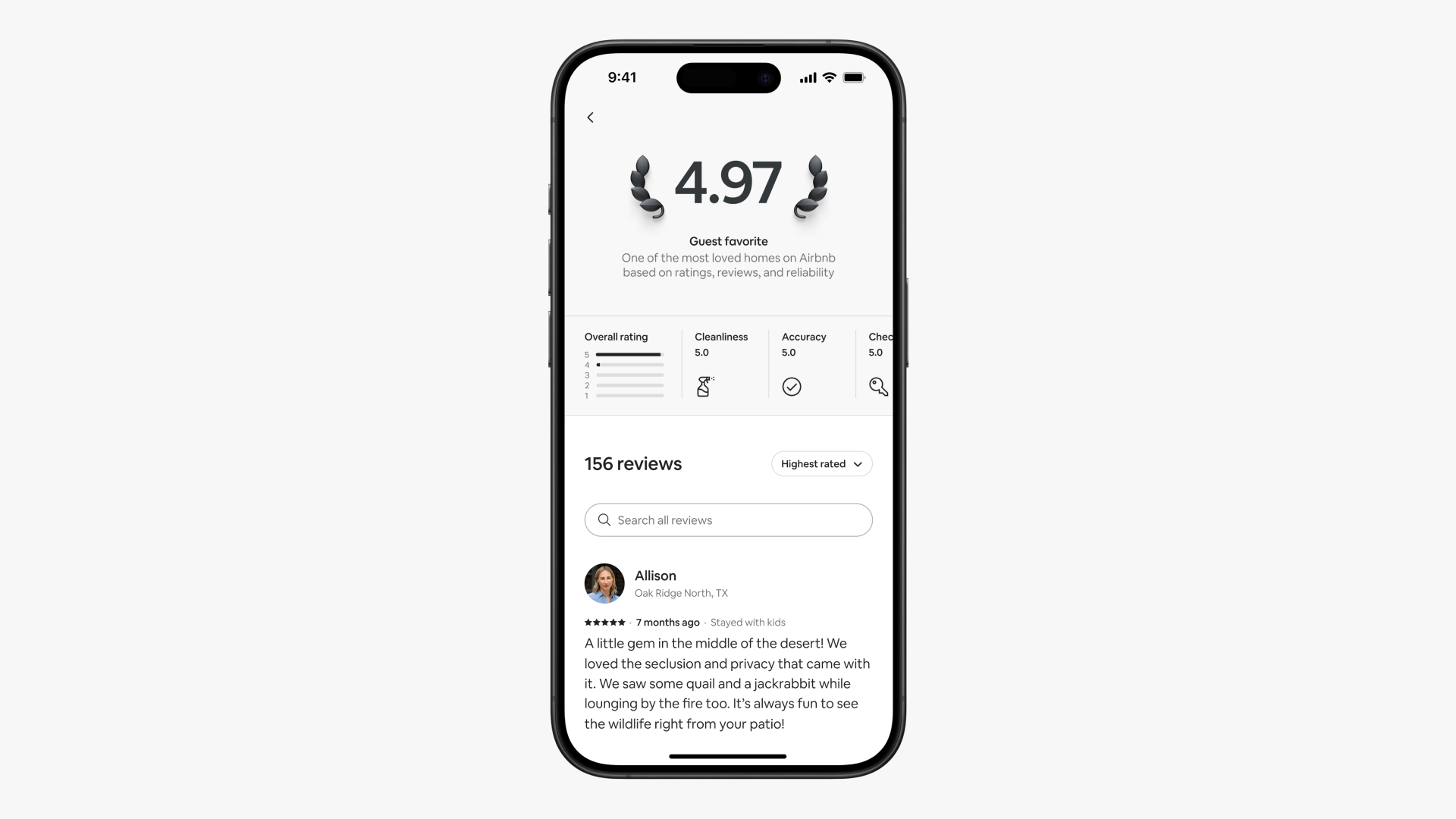
Source: Airbnb
27. Actively encourage reviews
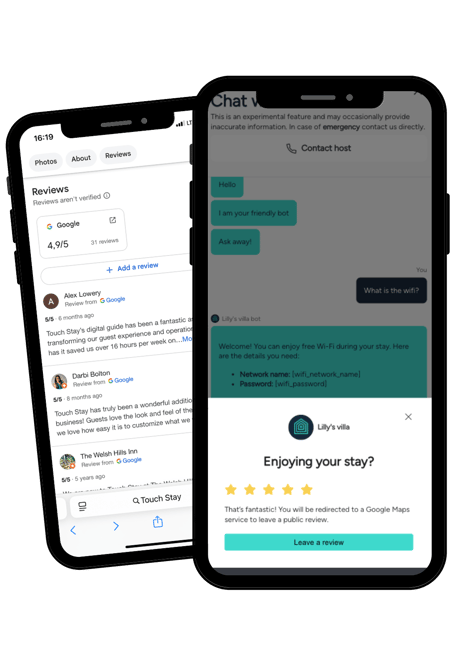
The vast majority of hosts in our survey rely on online reviews as their primary feedback channel. But many don’t actively encourage them. Send a warm, personalised message after checkout thanking guests for their stay and gently nudging them to leave a review.
Timing matters: send it within a few hours of checkout while the experience is still fresh.
Want more reviews without the hassle of extra messages? We get it, which is why we built the 5-star Feedback Pop-up feature!
28. Respond to every review
Good or bad, respond thoughtfully. For positive reviews, a brief thank-you shows future guests you’re engaged and appreciative. For negative reviews, respond professionally, acknowledge any valid concerns, explain what you’ve done to address the issue, and avoid being defensive.
Potential guests read your responses just as carefully as the reviews themselves. Our guest review reply generator can help you draft professional responses quickly.
29. Use negative feedback as free consulting
Very few hosts actively survey their guests for feedback beyond platform reviews. Every piece of negative feedback is an opportunity to improve. If multiple guests mention the same issue, that’s a clear signal to fix something.
Track patterns in your reviews and address recurring themes proactively.
30. Build toward repeat guests
Our survey found that the majority of hosts have relatively low repeat-guest rates. The hosts earning the highest repeat rates tend to be those who collect guest contact details and stay in touch between visits.
A simple email a few months later with a special returning guest rate can turn a one-time visitor into an annual regular, and repeat guests are cheaper to acquire, easier to host, and leave better reviews.
Marketing beyond the listing
31. Don’t rely solely on Airbnb
A third of hosts in our survey do no promotion outside of OTAs. That’s a risky position when competition is intensifying. Diversify your marketing with social media, direct email marketing, paid advertising, and local partnerships.
Our blog on how to market your short-term rental covers each of these channels in detail.
32. Make your listing title and description work harder
Your listing title is the first, and sometimes only, thing potential guests see alongside your main photo. Make it specific and benefit-focused rather than generic.
“Oceanfront 2BR with Private Deck and Hot Tub” will always outperform “Beautiful Apartment Near Beach.” Use your description to paint a picture of the experience, not just list features. Our property headline and description generator can help you get started.
33. Leverage your guest database
If you’re collecting guest contact information, use it. A quarterly newsletter highlighting seasonal events, property upgrades, or returning-guest discounts keeps your property top of mind.
Even a simple annual email before your peak season can generate bookings with zero platform fees.
34. Partner locally
Restaurants, tour operators, activity providers, and local businesses can be valuable referral partners. Recommend them in your guidebook, and ask if they’d be willing to recommend your property to their customers.
These partnerships cost nothing but can drive bookings from exactly the kind of guests who’ll appreciate your property.
The long game: what experienced hosts want you to know
We asked our survey respondents: “What one thing do you wish you knew before starting in STR?” Here are the themes that came up again and again.
It’s more work than you expect. The idea of passive income is misleading. Hosting requires time, energy, and attention to detail.
Cleaning is the linchpin. Finding, training, and retaining reliable cleaning staff is the single most operationally critical element of hosting.
Regulations can change overnight. Staying informed about regulatory developments in your area isn’t optional.
The guests are mostly great. The difficult ones stand out precisely because they’re rare.
If I knew I would love it so much, I would have started sooner.
Tools and resources to level up your hosting
Based on what our survey respondents are actually using, here are the categories of tools that make the biggest difference.
- Digital guidebook for reducing guest questions and sharing property information efficiently.
- Dynamic pricing tool for optimising your nightly rate based on market conditions.
- Automated messaging for handling routine guest communication without manual effort.
- Smart lock for seamless, keyless check-in with unique codes for each guest.
- Property management system for hosts managing multiple properties or listing across multiple platforms.
Your next step
The best hosts aren’t the ones who do everything perfectly from day one. They’re the ones who keep learning, keep refining, and keep listening to their guests.
Start with the fundamentals, build reliable systems, and improve continuously.
If one tip from this guide could make an immediate impact, it’s this: invest in proactive guest communication. Share the right information at the right time, and most of the common hosting headaches disappear before they start.
Ready to try it?
Frequently Asked Questions (FAQ)