

Summarize in
Search "employee onboarding guidebook" and you'll drown in advice written for a 200-person software company. None of it fits the reality of a short-term rental operator who just hired a cleaner starting Saturday, needs a co-host to cover check-ins while they're away, and manages 30 units with five contractors who have never met each other.
That gap is the whole problem. The people you onboard don't sit in an office. They work alone, on their phones, standing in a doorway between turnovers, often for two or three different companies at once.
Your onboarding has to travel to them, work on a small screen, and answer the question they actually have at 9 a.m. on a turnover day: which unit, what code, what standard, who do I call if something's wrong?
In this guide we'll cover:
- Why STR property managers need an onboarding guidebook
- Who you're actually onboarding
- The 12 sections every PM onboarding guidebook needs
- Free PM onboarding guidebook template
- Sharing your onboarding guidebook (and keeping it updated)
- Frequently asked questions
Why STR property managers need an onboarding guidebook
Most short-term rental operations run on tribal knowledge. The gate code that sticks, the owner who wants texts not calls, the linen closet in unit 4 that's actually in the hallway, the guest turnaround that has to be spotless by 3 p.m. because it's a same-day check-in. All of it lives in your head, and every new hire has to extract it from you one frantic phone call at a time.
That works when you have two units. It falls apart the moment you're managing enough properties that you can't be on every turnover. A new cleaner without written standards cleans to their standard, not yours, and you find out through a bad review.
A co-host without your communication rules answers a guest the way they think is right, and it isn't. A contractor without your access protocols calls you for every lockbox code, every time. The cost isn't just the mistakes; it's that you become the bottleneck for your own growth.
An onboarding guidebook fixes this by turning what's in your head into a single, structured reference a new team member can work through on day one and return to on day fifty. It's the operator-facing cousin of the Airbnb guidebook you already build for guests. It does three things a phone call can't: it's consistent (every hire gets the same standards), it's always available (they don't have to catch you between guests to get an answer), and it scales (onboarding your tenth cleaner takes the same effort as your first).
Here's the part the HR playbooks miss. For a property manager, onboarding never really ends, because your team is fluid. Cleaners come and go seasonally. You add a co-host for a busy summer. A VA covers messaging for three months. Corporate onboarding assumes a permanent employee you invest weeks in; PM onboarding assumes a rotating cast you need productive by the second shift. The guidebook is what makes that possible.
Who you're actually onboarding
Generic onboarding advice treats "the new hire" as one person. You're usually onboarding several very different roles, and each needs different information. Blur them together and your cleaner wades through payroll policy to find the cleaning checklist. Separate them and each person gets exactly what their job requires. (This is staff onboarding specifically. Bringing on a new owner-client is a different process, covered in our client onboarding checklist.)
Cleaners and turnover staff. Your highest-frequency, highest-stakes hire. They need property access, unit-by-unit cleaning standards, the turnover checklist, where supplies live, how to report damage or a maintenance issue, photo requirements, and the hard deadline for a same-day check-in. Most of their onboarding is visual and specific: what "done" looks like in your units. This is the group where a written standard pays for itself fastest. (Pair the guidebook with your Airbnb cleaning checklist so the quality bar is unmistakable.)
Co-hosts. A co-host acts as you when you're not there: greeting guests, handling messages, solving problems, sometimes managing other contractors. They need the widest access and the most judgment, so their onboarding leans on communication SOPs, your escalation rules, guest-issue playbooks, and owner preferences. You're not just teaching tasks; you're transferring how you'd handle a situation.
Virtual assistants. VAs usually run the desk work: guest messaging, booking admin, calendar and pricing updates, review responses. They're often remote and may never see a property, so their onboarding is all systems and scripts, such as which tools they'll use, your message templates, response-time expectations, and what to escalate versus handle. Clear written SOPs matter more here than anywhere, because they can't just walk over and ask.
Contractors and maintenance. Handypeople, landscapers, pool techs, and the like are in and out, often unsupervised, sometimes only occasionally. Their onboarding is lean: which properties, how to get in, what they're authorized to do, how to invoice, and who to call. You're not training them on your standards so much as giving them safe, repeatable access and a clear scope.
You don't necessarily need a separate document for each. One well-structured guidebook with role-specific sections works, so a cleaner can jump to their part and a VA to theirs. What matters is that each role can find their information without reading everyone else's.
The 12 sections every PM onboarding guidebook needs
Think of these as the master outline. Not every role needs every section, but a complete guidebook covers all twelve so nothing critical lives only in your head.
1. Company introduction and how you work. Who you are, what you manage, your standards in a sentence, and the culture you expect (reliable, guest-first, discreet in occupied homes). A new hire should finish this section understanding what "good" looks like to you.
2. Roles and who does what. A simple map of the team and responsibilities so a new person knows where they fit and who owns what. Even a three-person operation benefits from this being explicit.
3. Tools and systems. Every platform the role touches, with how to log in and what it's for: your PMS or channel manager, messaging tool, dynamic pricing, smart-lock app, scheduling, payment, and shared drives. List the tool, the purpose, and the access steps. This single section prevents a week of "how do I get into..." messages.
4. Property access protocols. How team members get into each property: lockbox codes, smart-lock procedures, key handoff, alarm codes, parking, and any building-specific quirks. Include the rule for what to do if a code fails. Access is the number one thing contractors call you about, so make it self-serve.
5. Cleaning and turnover standards. Your non-negotiable quality bar: the room-by-room checklist, staging and presentation, linen handling, restocking consumables, and the photo evidence you require at the end of a turn. Show, don't just tell, ideally with reference photos of a correctly finished room.
6. Communication SOPs. How your team talks to guests and to each other: which channel, tone, response-time expectations, message templates for common situations, and what must go through you. For co-hosts and VAs, this is the heart of onboarding.
7. Guest issue and problem playbook. The common problems (lockout, no hot water, noise complaint, a guest asking for early check-in) and the approved response to each. A playbook turns a panicked call into a followed procedure.
8. The escalation tree. Crystal clear rules for what a team member handles alone, what they flag, and what's an emergency that reaches you immediately, with names and numbers. When something goes wrong at 11 p.m., this is the section that saves you.
9. Schedules and expectations. How shifts and jobs are assigned, how to confirm and communicate availability, deadlines (especially same-day turnovers), and what to do if they're running late or can't make a job.
10. Payroll, invoicing, and payment. How and when people get paid or invoice you, what details you need, rates, and any approval steps. Getting this clear up front prevents awkward conversations and keeps good contractors loyal.
11. Health, safety, and property care. Safe handling of chemicals and equipment, what to do about a maintenance issue or damage, insurance basics, and respecting occupied or owner-occupied homes. Protects your team, your guests, and your properties.
12. Owner and property specifics. The per-property details that don't generalize: individual owner preferences, quirks of each unit, restricted areas, pet situations, and anything a team member must know for that specific home. This is where your tribal knowledge finally gets written down.
Work through these twelve and you've captured essentially everything a new hire needs, in a structure they can navigate by role.
Free PM onboarding guidebook template
To make this concrete, here's a skeleton you can copy, fill in, and hand to your next hire. No email gate, just adapt it to your operation.
[Your Company] Team Onboarding Guidebook
1. Welcome and how we work: who we are, what we manage, our standard in one line.
2. Your role: what this role owns and who you'll work with.
3. Tools you'll use: [PMS], [messaging], [pricing], [smart locks], [scheduling]. Logins and purpose for each.
4. Getting into properties: access method per property; what to do if a code fails; emergency access contact.
5. Cleaning and turnover standards: room-by-room checklist; staging photos; restock list; end-of-turn photo requirements.
6. How we communicate: channels, tone, response times, templates, what to route to [Name].
7. Guest problem playbook: top 8 issues and the approved response to each.
8. Escalation tree: handle alone / flag to [Name] / emergency contacts and numbers.
9. Schedules: how jobs are assigned, confirming availability, deadlines, running-late procedure.
10. Getting paid: rate, schedule, invoicing details, approvals.
11. Safety and property care: chemical/equipment safety, reporting damage, respecting occupied homes.
12. Property-specific notes: [Unit]: owner preferences, quirks, restricted areas, pets, anything unique.
Last updated: [date]. Questions this doesn't answer? Message [Name] at [contact].
Print it, drop it in a shared doc, or (better, as we'll cover next) build it somewhere your team can actually reach it on the job.
Sharing your onboarding guidebook
A guidebook is only as useful as it is reachable in the moment someone needs it. And here's where most PM onboarding quietly fails: the operator builds a beautiful onboarding doc, emails it once on day one, and it's never opened again. By week two it's buried in an inbox, and the cleaner standing in unit 4 wondering where the extra towels go is texting you instead of the document that has the answer.
Two things fix this: where it lives, and how it stays current.
Where it lives. Your team works on their phones, on the move, often offline in a stairwell. A guidebook they can open in one tap, on any device, without hunting through email, is the difference between a resource they use and a PDF they lose. The same logic that makes a digital guest guidebook beat a paper welcome binder applies to your team: put the information where the person already is when they need it.
How it stays current. Access codes change. You add a property. You switch pricing tools. A printed or PDF onboarding doc is out of date the moment any of that happens, and now you have five copies floating around, each wrong in a different way.
A living guidebook you update in one place means every team member, current and future, sees the correct version instantly. No reissuing, no version confusion, no cleaner working from last season's checklist.
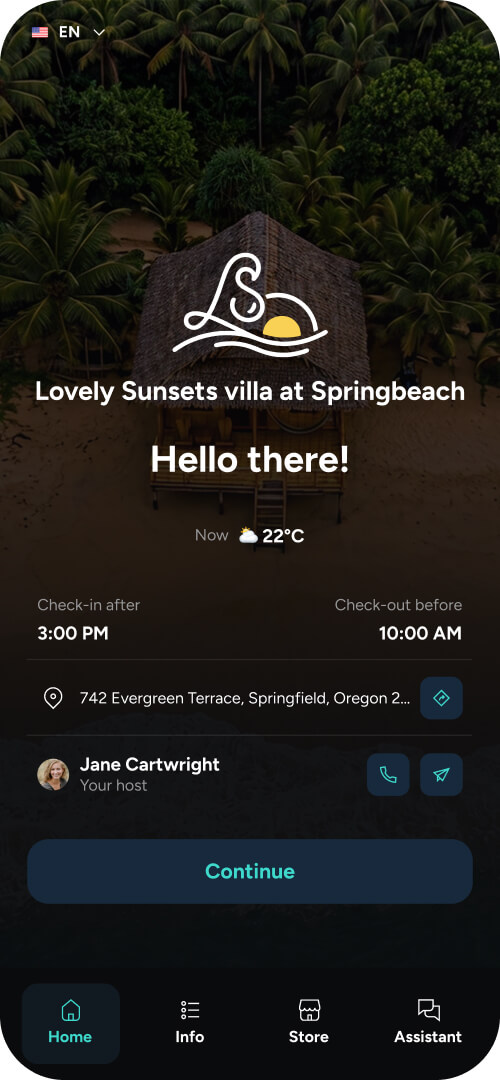
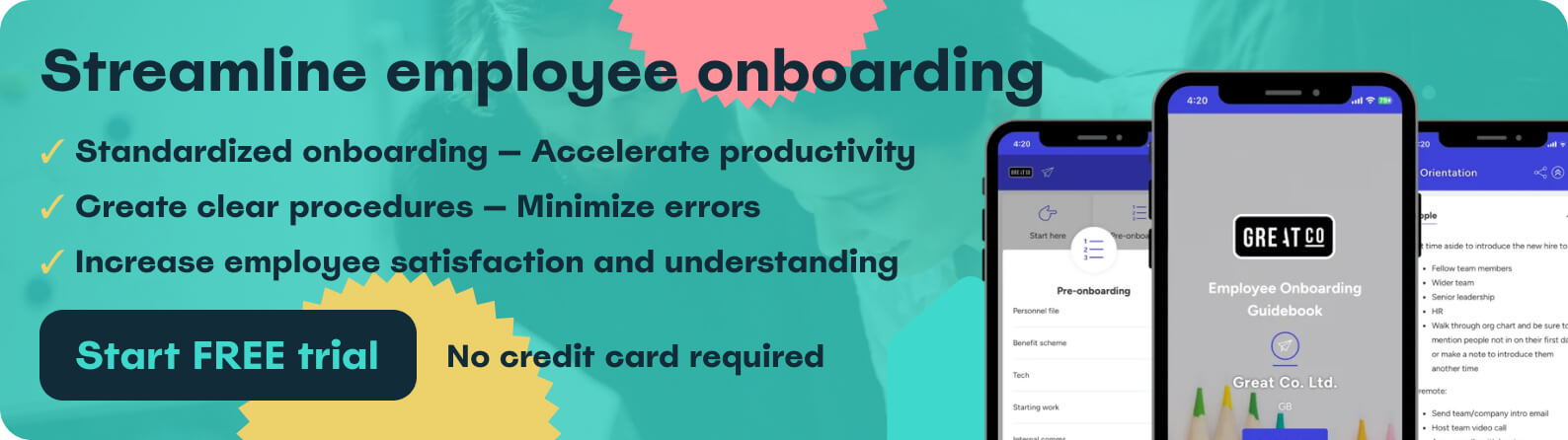
This is exactly what Touch Stay was built for, and it's why operators use it for their teams, not just their guests. You build one branded Touch Stay digital guidebook, share it with a link, update it once, and your whole team, cleaners, co-hosts, VAs, and contractors, always has the current version in their pocket. It's the same product that powers your guest experience, pointed at your operation.
Want your onboarding guidebook living somewhere your team actually opens it? Start a free Touch Stay trial and turn this template into a page your cleaners and contractors can reach in one tap.
Scaling past the point where you can personally onboard everyone is also the moment many operators start weighing whether to bring on help or systematize further, which our guide to running an Airbnb management company covers in depth.
Frequently asked questions
A guest guidebook helps visitors enjoy the stay: WiFi, house manual, local tips, check-out steps. An employee onboarding guidebook helps your team run the operation: access protocols, cleaning standards, communication SOPs, escalation rules, and payroll. Same idea (a single, always-available reference) pointed at your staff instead of your guests. Many operators run both from the same tool.
Usually not. One well-structured guidebook with role-specific sections works well, so a cleaner can jump straight to standards and access while a VA goes to systems and scripts. Separate documents only make sense if roles share almost nothing, which is rare in a small STR operation. The priority is that each role can find its information without reading everyone else's.
Property access, your room-by-room cleaning and staging standards, the turnover checklist, where supplies are, photo requirements at the end of a turn, how to report damage or maintenance, and the deadline for same-day check-ins. Visual standards (reference photos of a finished room) matter more than long text for this role.
Keep it in one place you can edit, rather than distributing static copies. Update access codes, tools, and property notes as they change, and your whole team sees the current version instantly. A digital guidebook makes this a single edit instead of reissuing and re-explaining, which is the main reason operators move off PDFs and shared docs.
Far less than corporate onboarding, because the roles are task-focused and your team may be seasonal or part-time. With a solid guidebook, a cleaner can be productive on their first shift and a co-host or VA within a few days, since the standards and systems are documented rather than transferred verbally. The guidebook is what compresses the timeline.

Laura Clayton
Laura Clayton is a copywriter with a BA in fiction writing from Columbia College Chicago. From holding a position as a background investigator retained by the United States government, to teaching English, and writing about real estate, Laura has a diverse and varied background. She has been writing for SaaS companies since 2019 in a wide range of industries.
Be the first to know!
Join our newsletter for early access to:
- ✅ Free guides
- ✅ Pro tips & tricks
- ✅ Time saving tutorials
- ✅ Latest blog posts
- ✅ Checklists & templates
Thanks for subscribing! You're on the list.