Summarize in
The hospitality industry is about making people feel welcome. But behind every great hotel stay, memorable meal, or well-managed vacation rental is a business balancing guest expectations, operating costs, employee needs, and changing technology.
Guests want convenient, personalized experiences. Businesses need to work efficiently without losing the human touch. And employees need the tools and support to deliver great service.
So, what does the future hold for the hospitality industry, and how can businesses keep up?
In this guide, we’ll explain what the hospitality industry includes, explore the trends shaping its future, and look at how technology, AI, and employee engagement can help businesses thrive.
Contents
- What is the hospitality industry?
- The main sectors of hospitality
- Six hospitality industry trends to watch
- IT solutions for the hospitality industry
- How AI is changing hospitality
- Why employee engagement matters
- How to prepare your business for the future
- Frequently asked questions
What is the hospitality industry?
The hospitality industry includes businesses that provide accommodation, food, drink, entertainment, and other services designed to welcome and serve guests.
It covers everything from hotels and restaurants to vacation rentals, resorts, event venues, and leisure experiences.
Hospitality is about more than customer service, though. Businesses also need to manage bookings, staffing, maintenance, payments, marketing, and day-to-day operations. Delivering a great guest experience depends on getting those details right.
A hotel might offer warm, attentive service, for example, but guests will still be frustrated if their room isn't ready or their reservation details are wrong. Likewise, a vacation rental can be beautifully furnished, but unclear check-in instructions can get a guest's stay off to a poor start.
Successful hospitality businesses bring together good service and efficient operations. One supports the other.
What are the main sectors of the hospitality industry?
The hospitality industry covers several connected sectors, each with its own priorities.
Accommodation
This includes hotels, resorts, hostels, bed and breakfasts, serviced apartments, and vacation rentals.
Businesses in this sector manage reservations, guest communication, room readiness, maintenance, and the overall stay. A large hotel might coordinate several departments, while a vacation rental manager may oversee multiple properties remotely.
Food and beverage
Restaurants, cafés, bars, catering companies, and hotel dining operations all fall into this category.
Success depends on food quality, service, cost control, staffing, and adapting to customer preferences. Managing inventory and reducing waste are also important to profitability.
Travel and tourism
Travel agencies, tour operators, and experience providers help people plan trips and explore destinations.
Travel and tourism overlap with hospitality, but they're not quite the same. Tourism covers the wider activities of visitors, while hospitality focuses on welcoming and serving them through accommodation, food, and related services.
Events and entertainment
This sector includes conference centers, wedding venues, event planners, and entertainment destinations.
These businesses need to coordinate schedules, suppliers, staffing, and guest expectations, often within tight timeframes.
Supporting services and technology
Hospitality also relies on cleaning and maintenance providers, booking platforms, payment services, consultants, and software companies. These businesses help operators deliver reliable service and run their operations more effectively.
Six hospitality industry trends to watch
Hospitality continues to evolve as guest expectations change, operating costs rise, and new technology becomes available. Here are six trends worth paying attention to.
1. More personalized guest experiences
Guests appreciate recommendations and services that feel relevant to their needs. A family traveling with young children may want different local recommendations from a couple on a weekend break. Business travelers may value speed and convenience above all else.
Personalization doesn't have to mean complex AI systems or expensive technology. It can start with understanding guest preferences, making useful recommendations and providing information at the right time.
Review the full guest experience improvement process to identify where small changes could make a stay easier or more memorable.
2. Digital convenience without losing the human touch
Guests increasingly expect to find information, make requests, and manage parts of their stay online. Mobile-friendly information, self-service options, and digital communication can make these tasks easier.
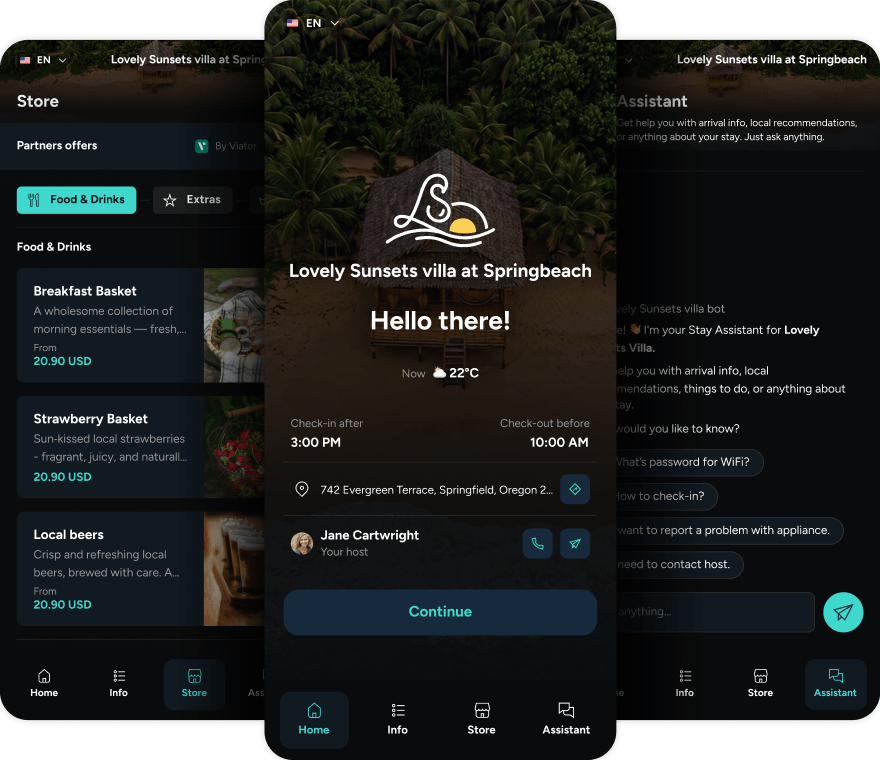
But convenience shouldn't come at the expense of personal service. Technology works best when it handles routine tasks and staff remain available for situations that need empathy, judgment, or flexibility.
Touch Stay's guest communication data illustrates how much practical information guests need during a stay. Across 37,359 conversations at 11,293 properties between November 2025 and May 2026, location and directions generated 4,019 questions, while check-in generated 3,822.
These figures reflect questions asked during stays, not what drives bookings. They do show why clear, accessible information matters once guests arrive.
3. Greater focus on operational efficiency
Hospitality businesses need to maintain service quality while managing staffing, energy, supplies, and other costs.
That makes it worth reviewing repetitive tasks, improving schedules, connecting systems, and reducing avoidable errors.
For example, clearer arrival instructions can reduce check-in confusion. Better coordination between housekeeping and reception can help rooms become ready on time. More accurate inventory tracking can help restaurants cut waste.
Efficiency isn't about removing every human interaction. It's about reducing unnecessary work so staff have more time for the things that matter to guests.
4. More sustainable operations
Sustainability is influencing how hospitality businesses manage energy, waste, purchasing, and their relationships with local communities.
Practical steps include reducing single-use products, limiting food waste, improving energy efficiency, and working with local suppliers where it makes sense.
Focus on actions that make a real difference, and communicate them honestly. Specific examples are more meaningful than broad sustainability claims that are difficult to substantiate.
5. New revenue opportunities
Accommodation providers can sometimes increase revenue without relying solely on higher nightly rates. Optional extras such as early check-in, late checkout, parking, equipment rental or local experiences can offer guests more flexibility while creating additional income.
Touch Stay Store data from March 9 to September 29, 2026, showed that 38% of accepted guest orders included early check-in or late checkout. This suggests that flexibility can be a useful paid option for some guests, although results will vary by property and market.
The key is to offer extras that genuinely improve the stay, explain them clearly and make them easy to purchase. Our guide to vacation rental upsells explores ways to approach additional services in a guest-friendly way.
6. Smarter use of data
Hospitality businesses collect information through bookings, reviews, guest questions, service requests, and financial records. Looking at this data together can reveal patterns that aren't always obvious in day-to-day operations.
A hotel might find that guests repeatedly struggle with the same check-in step. A restaurant might identify a source of food waste. A vacation rental manager might discover that guests often ask for information that's available but difficult to find.
The goal isn't to collect more data for its own sake. It's to use what you know to make better decisions.
IT solutions for the hospitality industry
IT solutions help hospitality businesses manage operations, communicate with guests, and make informed decisions. The right setup depends on the size and type of business. A large hotel may need several integrated systems, while a small accommodation provider might only need a few focused tools.
Common hospitality IT solutions include:
- Property management systems (PMS): Manage reservations, availability, guest records, and accommodation operations.
- Booking engines and channel managers: Support direct bookings and synchronize availability across booking channels.
- Customer relationship management (CRM) tools: Organize customer information and support marketing and guest relationships.
- Point-of-sale systems: Process payments and track sales in restaurants, bars, and other hospitality businesses.
- Staff scheduling tools: Help managers coordinate shifts and staffing requirements.
- Guest communication tools: Share important information, answer routine questions, and support communication throughout the stay.
- Reporting and analytics tools: Turn operational and financial data into useful insights.
The most important thing is to choose technology that solves a real problem.
Before investing in a new system, consider what you want to improve, whether it integrates with your existing tools, and how your team will use it. Adding software without fixing an inefficient process can create more work rather than less.
For accommodation providers, guest-facing tools can also improve the experience. A digital guidebook gives guests one convenient place to find arrival instructions, property information, and local recommendations. Explore Touch Stay's digital guidebooks to see how they can support clearer guest communication.
From robot receptionists to AI assistants: how hospitality technology has evolved
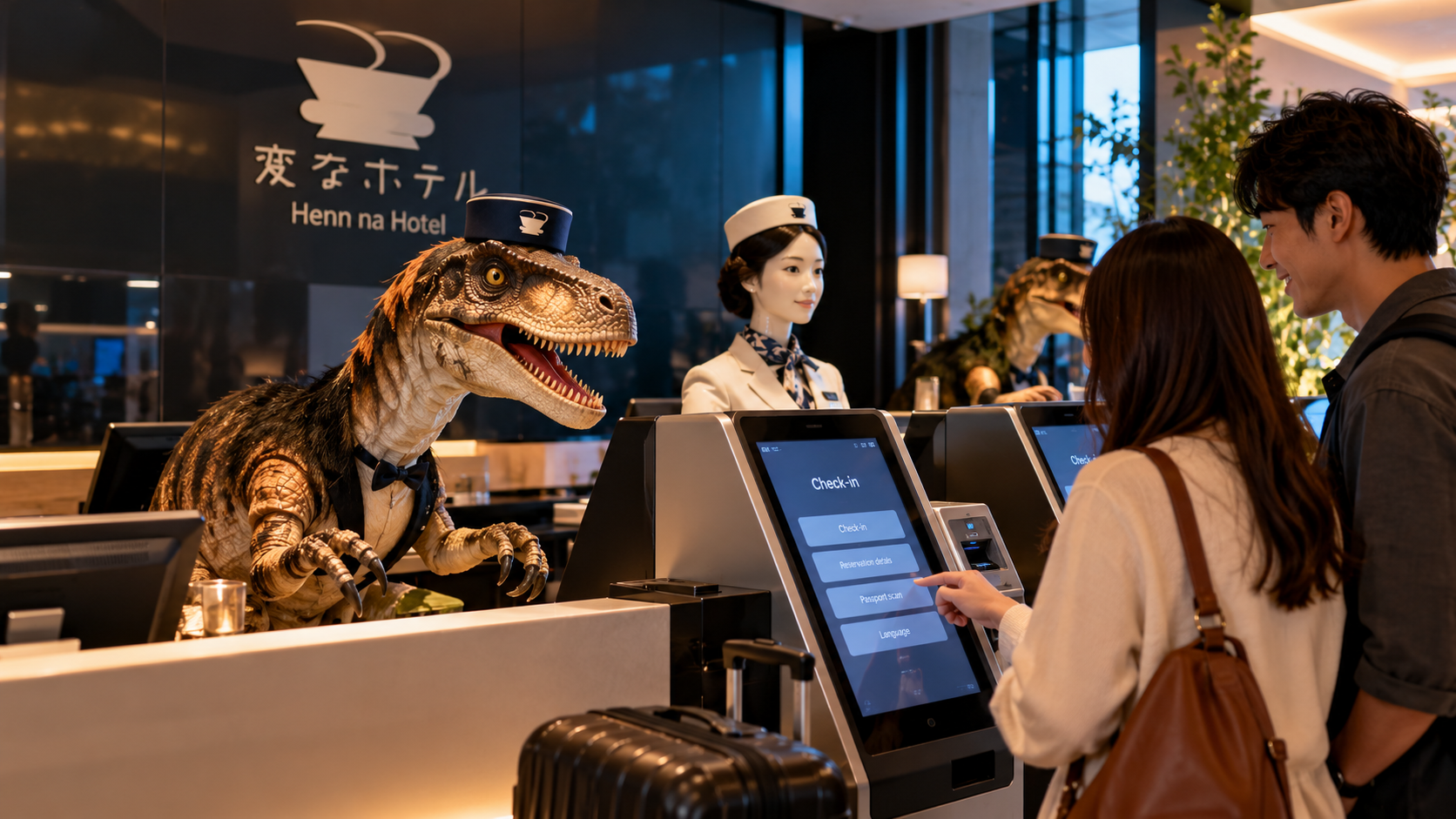
When Henn na Hotel opened in Japan in 2015, it offered a glimpse of what many imagined the hotel of the future would look like. Robot receptionists, dinosaur check-in staff and automated processes made the experience feel like something from science fiction. The idea was simple: use robots to handle routine tasks and make hotel operations more efficient.
More than a decade later, the hospitality technology conversation has shifted. Robots still have a place, but AI is changing the industry in a less visible, and potentially more widespread, way. Instead of focusing only on replacing a human interaction with a machine, businesses can use AI to answer guest questions, summarize feedback, personalize recommendations and help staff find information faster.
That’s an important distinction. A robot receptionist is a visible piece of technology designed for a specific task. An AI assistant can potentially support many parts of the guest journey, from pre-arrival questions to in-stay recommendations and post-stay feedback. Neither guarantees a better experience on its own. The value comes from how well the technology solves a real problem.
In hindsight, the future of hospitality may be less about filling lobbies with robots and more about making technology work quietly in the background. Guests might not care whether an answer comes from a robot, a chatbot or a member of staff. They care that it’s accurate, timely and useful.
For hospitality businesses, that means looking beyond the novelty factor. The most valuable technology may not be the most visible. It may be the tool that helps a guest find their check-in instructions instantly, gives staff more time to provide personal service or resolves a routine question without another message to the host.
The lesson from a decade of hospitality automation is that innovation isn't just about what technology can do. It's about making the experience better for guests and more manageable for the people delivering it.
Why employee engagement matters in hospitality
Hospitality depends on people. Employees need the right information, tools, training, and support to deliver consistent service, especially during busy periods.
Employee engagement isn't just about keeping staff happy. It's about creating an environment where people understand their responsibilities, feel supported, and can do their jobs well.
Here are four ways hospitality businesses can support it.
Give staff the right tools and information
Scattered information, unclear procedures, and repetitive manual tasks make work harder than it needs to be.
Clear processes and accessible guidance help staff find answers quickly and avoid unnecessary back-and-forth. A reliable source of property information, for example, can help teams respond consistently to common guest questions.
Invest in training and development
Hospitality roles require practical knowledge and strong interpersonal skills. Training should cover daily responsibilities, communication, problem-solving, and handling difficult situations.
Opportunities to learn new skills and take on more responsibility can also help employees see a future with the business.
Recognize good work
Specific, timely feedback helps employees understand what they're doing well and why it matters. Recognition should include behind-the-scenes contributions, too. Housekeeping, maintenance, kitchen teams, and administrative staff all shape the guest experience.
Listen and act on feedback
Regular check-ins and team discussions can help managers identify what's making work difficult.
Listening is only the first step. When staff raise recurring problems, explain what can change and follow through where possible.
Employee engagement takes ongoing effort. Fair treatment, clear expectations, manageable workloads, and responsive management all matter.
How to prepare your hospitality business for the future
You don't need to adopt every new trend or technology to stay competitive. Start with the fundamentals and make improvements that fit your business.
1. Understand your guests. Review feedback, enquiries, booking patterns, and reviews to learn what people value and where they encounter problems.
2. Identify operational friction. Look for repetitive tasks, communication gaps, and processes that rely too heavily on manual work.
3. Support your team. Make sure employees have the training, tools, and information they need to deliver reliable service.
4. Choose technology with a clear purpose. Start with a specific problem, then assess whether a tool solves it without adding unnecessary complexity.
5. Measure results. Track relevant indicators such as guest satisfaction, repeat bookings, operating costs, staff turnover, and response times.
6. Keep the guest experience central. Digital convenience is valuable, but people still want to feel welcome, understood, and supported.
Choose one improvement, decide how you'll measure its impact, and build on what you learn. Small, well-chosen changes can be more useful than a major overhaul without a clear goal.
Final thoughts
The hospitality industry is changing, but its core purpose remains the same: helping people feel welcome while running a sustainable business.
Technology, AI, sustainability, and shifting guest expectations are changing how hospitality businesses operate. But success still depends on reliable service, well-supported employees, clear communication, and an understanding of what guests need.
The businesses best placed to adapt won't necessarily be those using the most technology. They'll be the ones choosing the right tools, listening to guests and employees, and turning what they learn into practical improvements.
For accommodation providers, guest communication is a useful place to start. Making essential information easier to find can reduce friction for guests and cut down on repetitive questions. Explore Touch Stay's digital guidebooks to see how clearer information can support a better stay.
Frequently asked questions about the hospitality industry