

Summarize in
Hotel upselling has an image problem. Say the word and most people picture a front desk agent pushing a room upgrade, or a pop-up demanding a credit card before the guest has even seen their room. That kind of selling makes guests defensive, and it makes staff uncomfortable delivering it.
The best hotel upselling does the opposite. It feels like service. It offers the guest something they genuinely want, at the moment they are most receptive, with clear pricing and zero pressure. Done that way, upselling is not a tax on the guest experience. It is part of the guest experience, and the revenue follows naturally.
This guide covers hotel upsell ideas that land as hospitality rather than a hard sell, grounded in real data on what guests actually buy, and the presentation choices that make the difference between an offer guests resent and one they thank you for.
In this article
- Why most hotel upselling backfires
- The mindset shift: upselling as service
- What guests actually pay for
- Hotel upsell ideas that feel like hospitality
- When to make the offer
- How to present an upsell without the pressure
- The hidden problem: guests don't know your extras exist
- Frequently asked questions
Why most hotel upselling backfires
The reason so much hotel upselling feels grubby is that it is built around the hotel's needs rather than the guest's. An offer made at the wrong moment, with vague pricing, for something the guest did not want, reads as extraction. The guest feels handled, not hosted.
There is also a timing problem. Traditional upselling clusters at check-in, which is often the worst possible moment. The guest is tired, they want their room, and they have not yet formed a relationship with the property. Pitching a spa package to someone who just wants to put their bag down is asking for a no.
And there is a pressure problem. When a human being makes an offer face to face, the guest feels obliged to respond on the spot, which many people find uncomfortable. That discomfort attaches itself to the offer and, by extension, to the hotel. The result is an upsell that may occasionally convert but erodes goodwill in the process.
None of these failures are inherent to upselling. They are failures of framing, timing, and presentation, and each one is fixable.
The mindset shift: upselling as service
The reframe that changes everything is simple: a good upsell is a service you are offering, not a sale you are pushing.
A late check-out is not a way to extract more money; it is a genuine convenience for the guest with a leisurely last morning. A pre-arrival grocery drop is not a gimmick; it is one less errand for a family arriving late with tired kids. When the offer solves a real problem or adds a real pleasure, presenting it is an act of hospitality.
This mindset has a practical consequence: you stop trying to sell everything to everyone and start matching the right offer to the right guest at the right moment. A couple on a romantic weekend and a business traveler on a Tuesday night want completely different things. Treating them the same is what makes upselling feel like selling. Tailoring the offer to what the guest plausibly wants is what makes it feel like care.
Framed this way, the goal is not to maximize the pitch. It is to make relevant, well-timed offers easy to say yes to and easy to ignore. The guests who want them buy; the guests who do not are not bothered. Everyone feels hosted.
What guests actually pay for
Guessing at upsells is where a lot of hotels go wrong. The good news is there is real data on what guests actually buy. An analysis of 385 real upsell orders across a range of properties, currencies, and guest types reveals clear, repeatable patterns.
The single most reliable upsell across every market and property type is flexible timing: late check-out and early check-in. These lead the order data comfortably, and they map directly onto stated guest demand.
In a survey of 1,204 guests, 44% said they would pay for a late check-out and 41% for an early check-in, the two most-wanted paid extras of all. Flexible timing works because it requires no inventory, solves a real friction point, and applies to almost every guest.
Beyond timing, the data shows two other strong categories. High-value amenities tied to the specific property, such as heated pools, prepared hot tubs, and firewood, generate outsized revenue per order even at low volume; these are premium experiences guests will pay well for when the property offers them.
And per-person extras, such as robes, breakfasts, and welcome provisions, show guests buying for the whole party rather than one person, which means they scale naturally with group size.
The lesson is to build your upsell menu around what guests demonstrably want, led by flexible timing, layered with the high-value amenities your specific property can offer, and rounded out with per-person extras priced to reflect how groups actually buy.
Hotel upsell ideas that feel like hospitality
Here are upsell ideas that read as service rather than selling, organized by the need they meet.
Comfort and convenience. Early check-in and late check-out top this list for good reason: they remove real friction from a guest's day. Room upgrades framed around a specific benefit ("a quieter room at the back" or "a balcony for the morning coffee") land better than a generic "upgrade available." A pre-arrival grocery or fridge-stocking service saves arriving guests an errand.
Experience and occasion. Spa treatments, in-room dining, curated local experiences, and celebration packages for anniversaries or birthdays all add to a stay a guest is already invested in. These convert best when the guest has had a reason to signal the occasion, which is why capturing a little context before arrival matters.
Property-specific premiums. If your property has a pool, offer heating. If it has a hot tub, offer it prepared and ready on arrival. If it has fireplaces, offer firewood. The order data shows these property-matched amenities command strong prices because they are genuinely valued and available nowhere else.
Small indulgences. A bottle of wine chilling on arrival, a breakfast hamper, robes for the family, a late-night snack option. Individually modest, these per-person extras add up, and they carry a disproportionate amount of goodwill because they feel like thoughtfulness rather than a transaction.
The common thread is that every one of these is something a guest might genuinely be glad to be offered. That is the test for whether an upsell belongs on your menu: would a thoughtful host mention it?
When to make the offer
Timing is what separates an upsell that feels like service from one that feels like pressure. The strongest moments are almost never at the front desk.
Before arrival is the single best window for many offers. A guest planning their trip is thinking ahead, has time to consider, and can say yes without anyone watching. This is the ideal moment for early check-in, grocery stocking, airport transport, and occasion packages, all of which the guest would rather sort out in advance than be surprised with at the door.
During the stay is the moment for offers tied to how the stay is unfolding. A guest who has settled in and is enjoying the property is receptive to a spa treatment, an extra night, a dinner reservation, or a late check-out as their departure approaches. These land well because they respond to a want the guest is feeling in real time.
The principle underneath both is that the offer should arrive when the guest is relaxed and has room to consider it, not when they are stressed or rushed. A well-timed offer the guest can mull over and accept at their own pace feels like an option. The same offer pushed at a busy check-out desk feels like an imposition.
How to present an upsell without the pressure
Presentation is the final piece, and it is where the "doesn't feel like selling" promise is kept or broken.
Show clear pricing. Nothing makes an offer feel like a trap faster than a vague "ask us about our packages." A guest is far more likely to accept an offer with an honest price attached, because there is no fear of a surprise. Clarity is reassurance.
Remove the human pressure. The most comfortable upsell for a guest is one they can consider and accept privately, without a staff member waiting for an answer. When the offer sits somewhere the guest can browse in their own time and tap to accept, the pressure evaporates and the acceptance rate rises. This is a large part of why digital, self-service upselling outperforms the face-to-face pitch: it hands the guest control.
Keep it relevant and light. A short, well-matched set of offers beats a long menu of everything. Guests tune out a wall of options; they engage with a handful that feel chosen for them.
Meet the guest where they already are. The most natural place to present an upsell is inside the tool the guest is already using to find the WiFi password and the check-out time. An offer encountered there, in the flow of a guest checking a practical detail, feels like part of the service rather than an interruption of it.
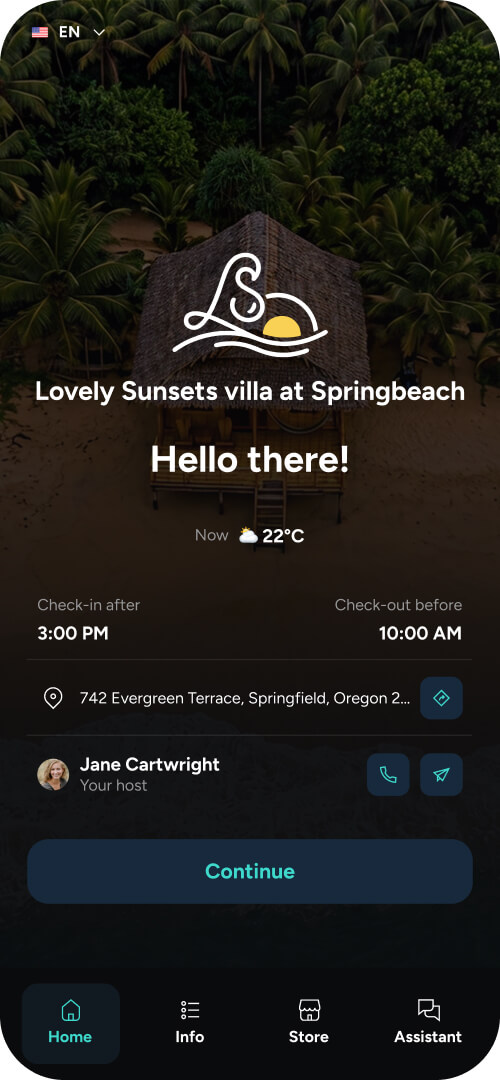
A digital guidebook with a built-in upsell widget does exactly this: it surfaces early check-in, late check-out, experiences, and provisions with clear pricing, right where the guest is already looking, with no one standing over them.
The hidden problem: guests don't know your extras exist
Here is the finding that reframes the whole subject. When guests were asked why they do not buy add-ons, the single most common answer was not price and not lack of interest. It was that they did not know the extras were available. Thirty-five percent simply had no idea the offers existed.
Combine that with the guests who said they would buy if something were offered, and more than half of guests are, in effect, waiting for an offer that never reaches them. This is not a demand problem.
The demand is clearly there: 88% of surveyed guests are open to paid extras. It is an awareness problem. The offers exist, but they are buried in an email the guest deleted, or mentioned once at a check-in the guest has forgotten, or never surfaced at all.
This is the strongest argument for putting your upsells where guests will actually see them: inside the guide they open repeatedly throughout their stay. An offer the guest encounters naturally, several times, in the place they go for practical information, gets seen. And an offer that gets seen, priced clearly and matched to the guest, gets bought, without anyone ever having to sell.
The best hotel upselling, in the end, is not really selling at all. It is making genuinely useful offers easy to find, easy to understand, and easy to accept, and then letting the guests who want them help themselves.
Frequently asked questions
Hotel upselling is offering guests paid extras or upgrades that enhance their stay, such as early check-in, late check-out, room upgrades, spa treatments, dining, or experiences. Done well, it functions as a service that adds genuine value for the guest, not a hard sales pitch, and it generates meaningful ancillary revenue for the hotel.
The most reliable are flexible timing offers, early check-in and late check-out, which lead real order data and stated guest demand alike. Beyond those, strong ideas include property-specific premiums (heated pool, prepared hot tub, firewood), experiences and occasion packages, and per-person extras like robes, breakfasts, and welcome provisions that scale with group size.
Before arrival and during the stay, not at a busy check-in desk. Pre-arrival is ideal for early check-in, grocery stocking, transport, and occasion packages, when guests are planning and relaxed. During the stay suits spa treatments, extra nights, dining, and late check-out. The goal is to reach guests when they have time to consider an offer without pressure.
Show clear pricing, match the offer to the guest, keep the menu short, and let guests accept in their own time rather than putting them on the spot. Self-service digital upselling works well because it removes the face-to-face pressure and hands the guest control. An offer that solves a real want and is easy to ignore never annoys.
The most common reason is not price or disinterest, it is awareness: 35% of guests in one survey said they did not know the extras were available. With 88% of guests open to paid add-ons, the barrier is usually that offers are buried in a deleted email or mentioned once and forgotten. Surfacing them where guests actually look, inside a guide they use throughout the stay, solves this.
Laura Clayton
Laura Clayton is a copywriter with a BA in fiction writing from Columbia College Chicago. From holding a position as a background investigator retained by the United States government, to teaching English, and writing about real estate, Laura has a diverse and varied background. She has been writing for SaaS companies since 2019 in a wide range of industries.
Be the first to know!
Join our newsletter for early access to:
- ✅ Free guides
- ✅ Pro tips & tricks
- ✅ Time saving tutorials
- ✅ Latest blog posts
- ✅ Checklists & templates
Thanks for subscribing! You're on the list.