

Summarize in
When every stay starts to look the same
The original appeal of short-term rentals was simple, travelers could stay somewhere that felt different from a hotel. Instead of a standardized room in a tourist district, they could rent a real home, discover a neighborhood and experience a destination through a local perspective.
That promise helped transform travel. But as short-term rentals have grown into a global industry, some properties have lost the character and personal touch that made them appealing in the first place. Professionally managed apartments, interchangeable interiors, impersonal check-ins and limited local insight can leave guests wondering what makes one property different from another.
Hotels face a similar challenge. Clean rooms, comfortable beds and reliable service are essential, but they're also the baseline guests expect. When travelers can compare hundreds of options online, the experience around the stay becomes an opportunity to stand out.
For hotels and short-term rental (STR) operators, the question isn't simply how to attract bookings. It's how to give guests a stay that feels thoughtful, distinctive and worth recommending.
In this article, we'll cover:
- The short-term rental boom: More choice, more competition
- Have short-term rentals lost some of their original charm?
- Why hospitality matters in a crowded tourism market
- 6 ways hotels and STRs can stand out through better hospitality
- How to know whether your guest experience is actually improving
- Final thoughts: Stand out by making guests feel looked after
The short-term rental boom: More choice, more competition
Airbnb began in 2007, when its founders welcomed guests into their San Francisco home. Its early proposition centered on offering unique places to stay and helping travelers experience destinations in a more local way. Over time, the platform expanded into a global marketplace spanning private rooms, apartments, houses and professionally managed vacation rentals.
The scale of the business today is a long way from those early days. Airbnb reported more than 9 million active listings worldwide, over 5.5 million hosts and more than 2.5 billion guest arrivals over its history as of May 2026. These are Airbnb figures, not a count of the entire short-term rental market.
The wider STR market has expanded, too. AirDNA reported that Airbnb had more than 5.4 million active listings in 2021, compared with around 2.3 million at the beginning of 2017. Different data providers use different definitions and coverage, so these figures shouldn't be treated as a perfectly comparable annual series. They nevertheless illustrate how dramatically the market has grown.
For travelers, this growth means more choice of locations, property types and price points. For operators, it means competing in a crowded market where a good-looking listing and a convenient location may not be enough.
When dozens of nearby properties offer similar interiors, amenities and self-check-in, differentiation becomes harder. Operators need to think beyond the physical space and consider what guests experience before, during and after their stay.
Have short-term rentals lost some of their original charm?
Not every traveler wants to meet their host, stay in someone's personal home or receive a long list of local recommendations. Many value privacy, independence and a smooth self-check-in. Professional management can also improve reliability and consistency.
But some travelers feel that the shift toward professionalized, standardized rentals has come at the expense of personality.
In a 2021 discussion on Reddit's r/AirBnB, one traveler reflected on the change:
Nowadays all the Airbnb’s are these cold, hotel looking things that don’t have that personal touch anymore and are just rental units.
The traveler recalled a host who shared a picture book about the village he came from, describing it as a memorable part of the stay.
Another traveler, writing in 2022 after years of using Airbnb, described recent stays as lacking the charm and advantages that originally attracted them to the platform. They pointed to unresponsive staff, apartments not being ready at check-in and poor value compared with hotels. They concluded that the experience had become "totally 'souless".
These are individual experiences, not representative surveys of all travelers. But they highlight a useful distinction: standardization can make a stay easier to operate without making it more memorable for the guest.
A property doesn't need to be filled with personal photographs or hosted by its owner to feel distinctive. It can express its character through thoughtful design, carefully chosen amenities, useful local knowledge and communication that feels genuinely helpful.
The opportunity for operators is to keep the efficiency of professional hospitality while adding back the details that make a stay feel considered.
Why hospitality matters in a crowded tourism market
The importance of hospitality in tourism isn't just about being friendly. It's about shaping the experience around the accommodation itself.
Guests might choose a property because of its location, price, pool, kitchen or views. But the practical details of the stay influence whether that choice meets their expectations.
Consider two similar apartments in the same neighborhood. Both are clean, well furnished and competitively priced. At one, guests receive confusing access instructions, struggle to find the Wi-Fi password and have no idea where to get breakfast nearby. At the other, arrival is straightforward, property information is easy to find and the host has shared a short list of genuinely useful local recommendations.
The second property hasn't necessarily invested more in its physical space. It has made the experience easier.
That matters because the guest experience extends beyond the room or rental itself. It includes how accurately the property is presented, how easy it is to arrive, how quickly problems are resolved and whether guests feel they've received good value for their money.
For hotels, this can mean combining dependable service with local character and thoughtful personalization. For STR operators, it can mean making self-service feel supportive rather than impersonal.
Neither requires constant contact with guests. The aim is to provide the right help at the right time.
6 ways hotels and STRs can stand out through better hospitality
1. Give your property a clear point of difference
Start with a simple question: why would a guest choose your property over another one nearby?
The answer doesn't have to be a dramatic feature. It might be distinctive design, a family-friendly setup, a genuinely useful workspace, an exceptional breakfast, a dog-friendly welcome or local expertise that helps guests discover places they wouldn't find on their own.
Choose a few things your property can deliver consistently, then make them visible in your listing and guest communications.
Avoid trying to appeal to everyone. A property that understands its ideal guests can make more relevant choices about amenities, recommendations and service.
2. Share local knowledge that cuts through the noise
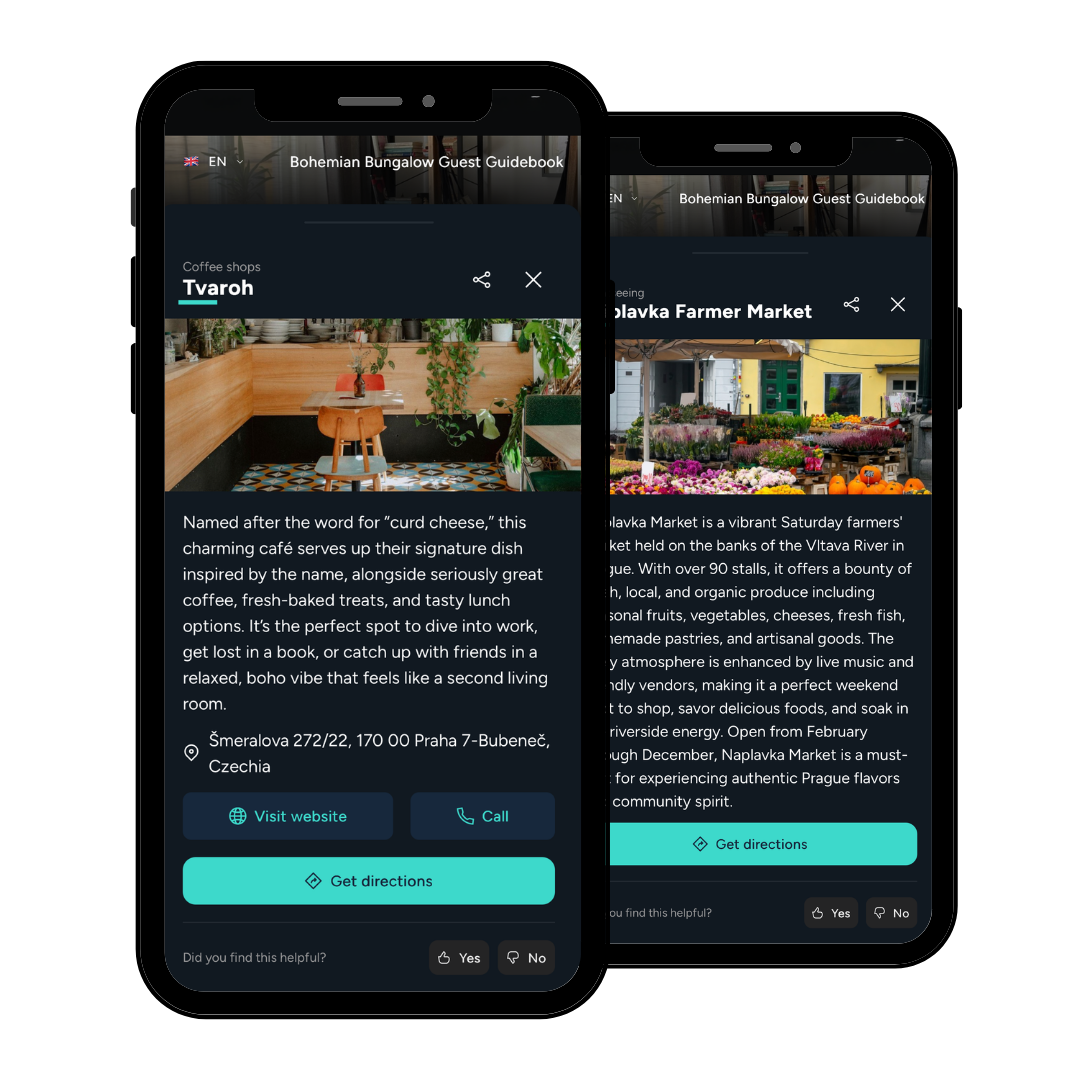
Travelers have endless ways to research a destination, from search engines and review sites to social media and AI-generated recommendations. But having more information doesn't necessarily make it easier to find the right place to eat, explore or spend an afternoon.
A 2026 Travelport survey found that 69% of US consumers feel overwhelmed by online travel options at least sometimes. Gartner also reported that 41% of surveyed US consumers found AI-generated search summaries more frustrating than traditional search. These findings aren't specific to local recommendations, but they point to a wider challenge: travelers have plenty of information available, yet finding useful, trustworthy advice still takes effort.
Touch Stay's own data shows how much guests rely on practical information during their stays. Across 37,359 chatbot conversations from 11,293 properties between November 2025 and May 2026, questions about location and directions came up 4,019 times, while food and restaurant questions appeared 2,638 times. Guests also asked 471 questions about things to do.
These are questions guests asked during their stays, not evidence of what influenced their booking decisions. But they show that the need for local guidance doesn't end when a reservation is confirmed. Guests still want help navigating the destination once they arrive.
This creates an opportunity for hotels and STR operators. Rather than giving guests another generic list of highly rated attractions, offer the kind of local insight that's harder to get from a quick search.
That might mean the café locals actually visit for breakfast, the best time to walk a popular route, a neighborhood market worth visiting on a Saturday, or a family-run restaurant that suits a particular occasion. The value isn't necessarily in revealing a secret nobody knows about. It's in making recommendations that feel relevant, personal and grounded in local knowledge.
How to turn local knowledge into a better guest experience:
- Go beyond the obvious attractions. Include well-known landmarks where useful, but add independent businesses, neighborhood favorites and experiences that reflect the character of the area.
- Explain why you recommend somewhere. “Great local bakery, especially for breakfast pastries” is more helpful than a name and address alone.
- Make recommendations relevant. Offer options for families, couples, solo travelers, rainy days, different budgets and guests with accessibility needs.
- Include practical details. Explain how to get there, whether booking is necessary, when it's open and any local tips that will help guests enjoy the experience.
- Keep everything current. Check opening hours, links and recommendations regularly. An outdated suggestion can undermine the trust you're trying to build.
- Support local businesses. Where appropriate, recommend independent businesses and experiences that help guests engage with the community they're visiting.
You don't need to be a tour guide or personally know every business in town. Start with places you trust, ask your team for recommendations and pay attention to what guests enjoy and recommend to others.
A digital guidebook can make those recommendations easier to access. Touch Stay helps hotels and STR operators bring local tips together with property information and practical guest instructions in one place. Guests can find suggestions when they need them, without searching through old messages or starting from scratch.
The goal isn't to give guests more information. It's to help them find the right information, at the right moment, from a source they trust.
3. Make the stay feel personal without requiring constant interaction
Personalization doesn't mean messaging guests every day or leaving an expensive welcome hamper in every room.
It means paying attention to what will make the stay easier or more enjoyable. Clear arrival instructions, a note about a relevant local event or information tailored to a family's needs can be more useful than a generic welcome gift.
For multi-property operators, personalization also needs to be manageable. Build consistent processes for essential information, then add property-specific details and relevant recommendations.
Hotels can empower staff to make small decisions that improve a guest's stay. STR operators can create a welcoming experience through clear communication and useful information, even when they don't meet guests in person.
4. Use technology to remove friction, not personality
Self-check-in, automated messages and property management systems can make hospitality more efficient. But automation becomes frustrating when it leaves guests without the information or support they need.
Use technology to handle routine tasks and make essential information easy to access. Make arrival instructions clear, explain how appliances work and provide straightforward guidance on contacting someone if a problem arises.
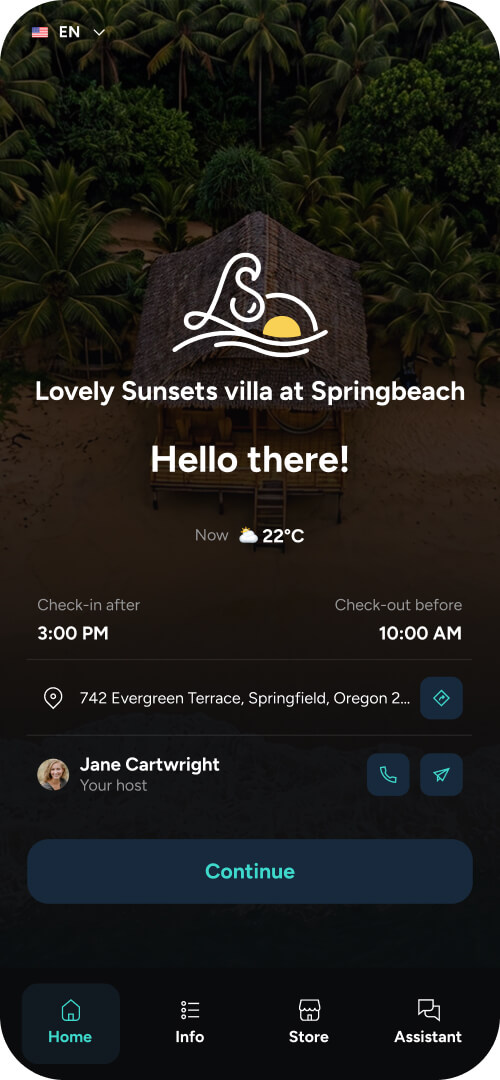
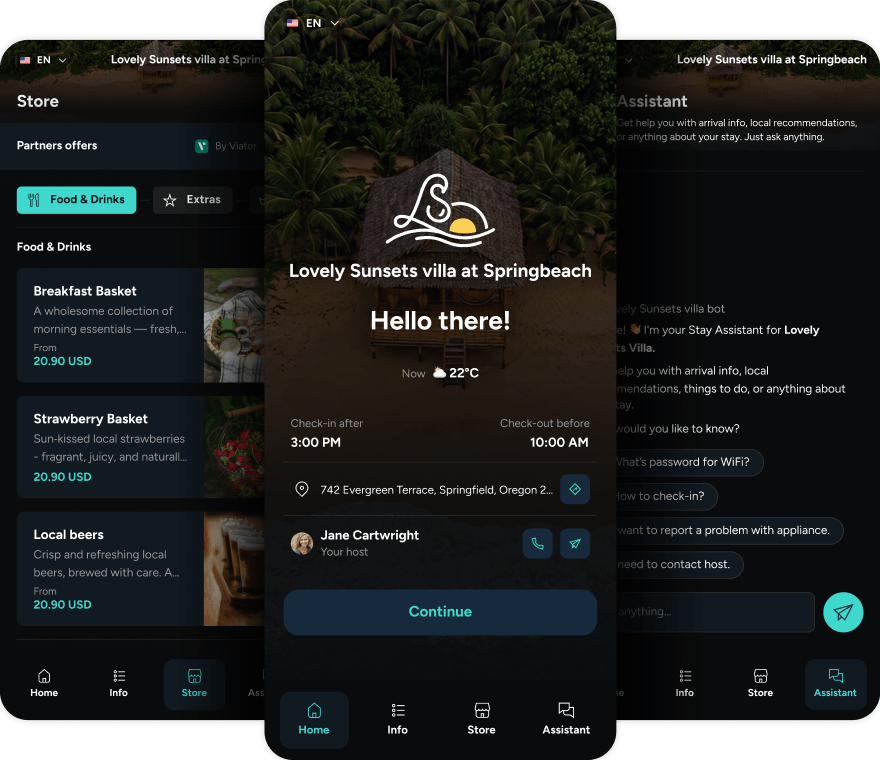
Digital guidebooks are one way to do this. Touch Stay helps hotels and STR operators bring property information, arrival and checkout instructions, house rules and local recommendations together in a branded, mobile-friendly guidebook.
That means guests can find practical information without searching through old messages, while teams can update content instead of repeatedly answering the same questions.
The point isn't to replace human hospitality. It's to make routine information easier to manage, leaving staff and hosts more time to handle requests that genuinely need personal attention.
5. Offer extras that improve the stay
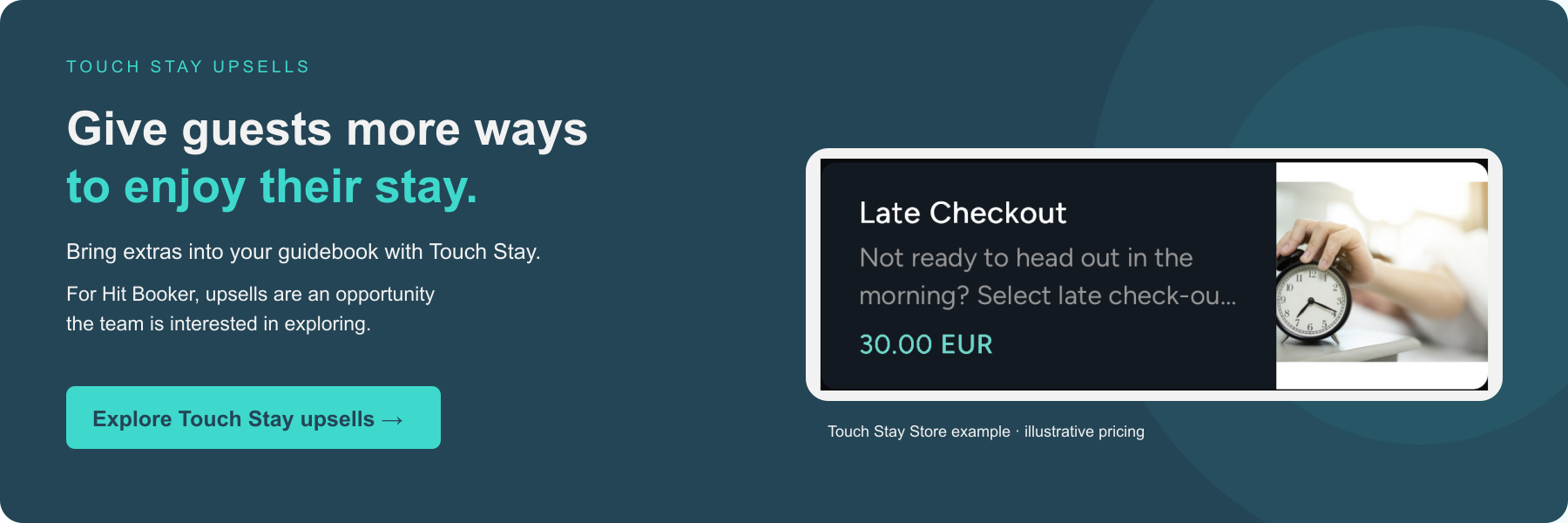
Adding value doesn't always mean installing a hot tub or renovating a room. Often, the most useful extras are the ones that solve a problem for the guest.
Depending on your property and operational capacity, consider:
- Early check-in or late checkout when availability allows.
- Luggage storage or information about nearby storage options.
- Pre-arranged grocery delivery.
- Local activities, tours or restaurant bookings.
- Family-friendly amenities available on request.
- Clear information about transport, parking and nearby services.
Some extras can also create additional revenue. Make paid options and their conditions clear, and promote them when they're relevant rather than overwhelming guests with offers.
Review which services guests use and which generate complaints or extra work. The best extras make the stay better while remaining practical for your team to deliver.
6. Build consistency without making every stay feel identical
As hotel groups and STR portfolios grow, hospitality can't rely entirely on individual memory or improvisation. Teams need processes that make good service repeatable.
Set standards for the moments that matter most: arrival communication, property readiness, cleaning, responding to problems and checkout. Give staff clear guidance on resolving common issues and when to escalate them.
Then leave room for personality. A standard check-in process can coexist with a distinctive property, useful local recommendations and a warm welcome. Consistent information doesn't have to mean identical experiences.
For STR managers, this might mean using shared checklists while tailoring guidebooks to each property. For hotels, it might mean aligning front-desk and housekeeping teams around the same service expectations.
The goal is to make the basics reliable so that thoughtful hospitality can happen on top of them.
How to know whether your guest experience is actually improving
Better hospitality should be more than a vague ambition. Choose a few indicators that help you identify what guests value and where the experience falls short.
Look at:
- Review themes: What do guests repeatedly praise or complain about?
- Repeat bookings: Are guests choosing to return?
- Direct booking performance: Are previous guests coming back to book with you directly?
- Recurring questions: Are guests repeatedly asking for information that should already be easy to find?
- Extra-service uptake: Which add-ons do guests actually choose?
- Operational issues: How often do check-in problems, missing information or preventable service failures occur?
Establish a baseline and review changes over time. Don't assume every improvement in reviews or revenue was caused by one initiative. Pricing, seasonality, location and guest mix can all influence results.
Use the evidence to decide what to improve next. If guests repeatedly struggle to access the property, fix the arrival process before investing in another amenity. If reviews praise your local recommendations, find ways to make those recommendations more accessible and consistent.
Final thoughts: Stand out by making guests feel looked after
The growth of short-term rentals has given travelers more choice than ever. It has also made it harder for individual properties to stand out on location, décor and amenities alone.
For hotels and STR operators, the answer isn't necessarily to add more features or imitate competitors. It's to understand what your guests value, remove unnecessary friction and offer thoughtful details that make the stay feel distinctive.
Keep the basics reliable. Share useful local knowledge. Make information easy to find. Offer extras that genuinely help. And use technology to support the experience rather than make it feel automated.
Great hospitality doesn't have to be elaborate or expensive. It needs to be intentional, consistent and focused on the person staying with you.
Want to make your guest information easier to manage? Touch Stay helps hotels and STR operators create digital guidebooks with property details, arrival instructions and local recommendations in one convenient place.