

Summarize in
Hospitality experience is the sum of every interaction a guest has with a property, from the first enquiry through to the post-stay follow-up. It covers practical logistics like booking, check-in, and information delivery, plus service warmth, personalisation, and local knowledge. For independent hotels and B&Bs, most of it is decided by how well guests are informed.
Most boutique hotels and B&Bs don't lose guests over cold staff or uncomfortable beds. They lose them over unanswered questions, the kind that pile up in a guest's head between booking and check-in, and go unresolved because there's no obvious place to look.
Where do I park? What time does breakfast start? Is the spa booking or walk-in? Is there a kettle in the room?
These are small things. But the accumulation of small uncertainties is what makes a guest feel like they're navigating your property rather than enjoying it. And that gap, between the hospitality experience you intend to deliver and the one guests actually have, almost always comes down to information.
This guide is for independent hoteliers and B&B owners who want to close that gap without hiring a consultant or restructuring their team.
In this article, you'll find:
-
Why information is the most underrated part of the guest experience
-
What separates a good hospitality experience from a great one
-
The role of a digital guidebook in your hospitality experience
- FAQ
What is hospitality experience, actually?
The hospitality experience is the full impression a guest takes away from every interaction with your property, from the moment they land on your booking page to the moment they leave a review. It's not just service warmth, though that matters. It's how smooth the check-in felt. Whether their room matched what they expected. Whether they knew what to do when something wasn't right.
If you want the broader definition and the full guest-journey breakdown, our guide to what guest experience is covers it in depth. This piece focuses specifically on independent hotels and B&Bs.
For small, independent properties, the hospitality experience is both a challenge and an advantage. You can't match a four-star chain on amenities or staffing ratios. But you can be faster, warmer, and more personal at every single touchpoint. The chains can't replicate that.
The question is how to do it consistently, without burning out your team.
Why information is the most underrated part of the guest experience
Ask most boutique hoteliers what makes a great stay and they'll talk about décor, local recommendations, staff attitude. These things matter. But review analysis tells a different story about what actually drives low scores.
Guests don't typically leave two-star reviews because they disliked the wallpaper. They leave them because they felt confused, ignored, or caught off-guard. "Nobody told me check-out was at 10." "I couldn't find the Wi-Fi password anywhere." "The breakfast menu wasn't what I expected."
These aren't service failures. They're information failures. And they're almost entirely preventable.
The good news is that fixing your information delivery, making the right details available to guests at the right moment, is the highest-leverage, lowest-cost improvement most independent hotels can make to their guest experience. It's also where the broader industry is heading: McKinsey's research on how the world's best hotels deliver exceptional customer experience points to consistency and anticipation across the whole journey, not isolated luxury touches, as the real differentiator.
The hospitality experience across the guest journey
A useful way to think about the guest experience is as a series of stages, each with its own emotional tone and information needs.
Before booking
Your website and listing copy aren't just marketing, they're the first test of whether guests can find what they need. A potential guest trying to understand your cancellation policy, parking situation, or accessibility provisions is already forming an impression of how easy you'll be to deal with.
Keep it clear and specific. "Parking available on-site, charged at $15/night" is more useful, and more trustworthy, than "parking available nearby." The more precise you are before booking, the fewer surprises there are after.
After booking, before arrival
This is the window most independent properties leave almost entirely unused. The guest has committed. They're curious and open to information. They want to know what to expect, how to prepare, whether there's anything to look forward to.
A pre-arrival message, ideally delivered a few days before check-in, can do a lot of work here. Share check-in details, parking instructions, and a genuine welcome note. Better still, give them access to a digital guidebook they can browse at their leisure. Guests who arrive already knowing the layout, the breakfast situation, and your local restaurant picks feel oriented before they've even walked through the door.
Check-in
First impressions are formed fast. A smooth check-in, warm but not drawn-out, with clear next steps, sets the tone for everything that follows. If you offer self or contactless check-in, it doesn't have to feel impersonal; our guide to a seamless contactless check-in experience shows how to keep the warmth while losing the friction.
For small properties especially, the check-in is also a natural moment to make a personal connection. Ask where guests have come from, whether they've visited before, what brings them to the area. Then let them get settled without bombarding them with information they'll immediately forget. That's what the guidebook is for.
During the stay
Most in-stay friction comes from guests not knowing something, where to find an extra towel, what the Wi-Fi password is, when the pool opens. The traditional answer is a paper compendium in the room, but printed directories go out of date the moment something changes, and many guests never read them.
A digital guidebook they can access from their phone gives guests the answers they need on their own timeline, without having to call reception or feel embarrassed about asking. It also frees up your team for the interactions that actually need a human touch.
Check-out and beyond
A frictionless check-out, ideally a key drop or a pre-settled bill, leaves guests with a final positive impression. Follow up afterwards with a brief thank-you and a gentle nudge towards leaving a review. Guests who had a smooth, well-informed experience are far more likely to review positively and promptly.
What separates a good hospitality experience from a great one
Plenty of hotels clear the bar on the basics. The guest got in, the room was clean, the staff were polite. That earns a four-star review and a vague intention to return. It's the details that create genuine loyalty.
Personalization doesn't have to be elaborate. Remembering that a guest mentioned a birthday, or leaving a local chocolate on their pillow, or recommending the specific restaurant that matches what they told you they were looking for, these things cost almost nothing and create a disproportionate impression. The data backs this up: Deloitte's research on elevating guest experiences (Stay With Me: five keys to elevating guest experiences) found that emotional connection, not transactional efficiency, is what drives guests to return and recommend.
Anticipating needs beats responding to requests. If you know most guests ask about parking on arrival, put it in your pre-arrival message. If guests consistently ask about the best place for a morning run, add it to your guidebook. Removing friction before guests encounter it is the definition of good hospitality.
Consistency matters as much as the peaks. A stunning welcome moment followed by a confusing check-out experience doesn't balance out. Guests remember the friction points as much as the highlights. Aim for a consistently smooth experience at every stage, not just the ones that feel significant.
Your local knowledge is a genuine differentiator. Independent hotels can do something chains categorically cannot: recommend the place they actually eat at, introduce guests to the supplier who makes their breakfast jam, point them towards the walk most visitors miss. This is the part of the hospitality experience that no amount of budget can replicate, and it's yours by default.
Common mistakes that undermine the guest experience
Even well-run boutique hotels make these:
Overloading guests with information at check-in. The instinct to be helpful leads to a verbal download that guests can't retain. Give them the highlights, then point them to where they can find the rest.
Updating prices and hours verbally without updating written materials. Guests who see different information in different places feel confused and slightly deceived, even if the discrepancy is innocent. Keep everything in sync.
Waiting for problems to surface rather than asking proactively. A quick "How's everything going?" during the stay catches issues before they become reviews. Most guests who are mildly dissatisfied say nothing, unless asked. Our piece on guest happiness goals goes deeper on turning small moments into loyalty.
Not following up post-stay. The window between check-out and a guest writing (or not writing) a review is short. A simple, warm thank-you message is often all it takes to convert a satisfied guest into a vocal advocate.
The role of a digital guidebook in your hospitality experience
A digital hotel guidebook is increasingly the most practical way for independent properties to deliver a consistent, professional guest experience without adding to their operational load.
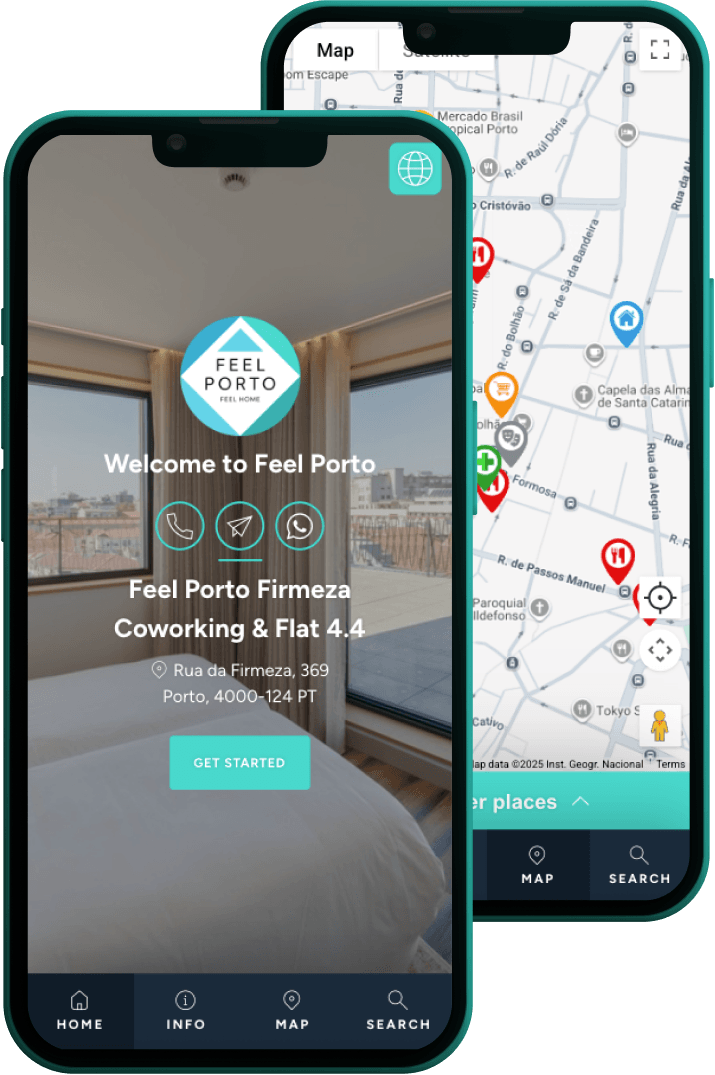
Rather than printing and maintaining a physical compendium, a digital guidebook lets you compile everything guests need, like check-in instructions, house rules, room features, F&B details, local recommendations, transport, emergency contacts — in one place, accessible from any device via QR code or link. Update it once and every guest immediately sees the current version.
For boutique hotels and B&Bs in particular, the guidebook also becomes an extension of your brand. Your voice, your photography, your local picks. Guests who feel like they're getting insider access , not a printed PDF from a corporate template, are experiencing the independent hospitality difference.
Touch Stay is built for exactly this. Independent hoteliers use it to create branded digital guidebooks that guests receive before arrival, browse throughout their stay, and refer to long after checkout. The result is fewer repetitive questions, more informed guests, and more time for your team to focus on the hospitality moments that matter. If you want welcome-specific inspiration, our roundup of hotel welcome amenity ideas pairs well with it.
Quick-reference checklist: hospitality experience by stage
Use this to audit your current guest experience and identify where the gaps are:
Pre-booking
- Is your parking situation clearly stated?
- Are cancellation terms easy to find?
- Is your accessibility information accurate and complete?
Pre-arrival
- Do you send a pre-arrival message with check-in logistics?
- Do guests have access to local recommendations before they arrive?
- Is Wi-Fi and parking information included?
Check-in
- Is the process warm but efficient?
- Are guests given a clear point of reference for in-stay questions?
- Do staff have time for a personal moment before the guest heads to their room?
During stay
- Can guests find answers to common questions without calling reception?
- Are in-room materials current and accurate?
- Is there an easy way for guests to flag issues or make requests?
Check-out and beyond
- Is check-out clearly communicated in advance?
- Do you follow up post-stay with a thank-you?
- Is there a clear and easy path to leaving a review?
FAQ
A digital hotel guidebook is a mobile-friendly, web-based guide that replaces the printed in-room compendium. Guests open it on their phone without downloading an app to find check-in instructions, WiFi codes, appliance guidance, breakfast times, and local recommendations. Hoteliers update it once, and every guest sees the change immediately.
The highest-leverage improvements for small properties are usually information-related: pre-arrival communication, clear in-room guidance, and a consistent follow-up process. These can be significantly improved with the right tools without adding headcount.
Customer service typically refers to reactive interactions, how staff respond when guests have needs or problems. Guest experience is broader: it includes every proactive touchpoint, the quality of information available, the physical environment, and the emotional impression left across the whole stay.
Not strictly, but the alternative is relying on printed materials that go out of date, staff who have to answer the same questions repeatedly, and guests who arrive without the information they need. For independent hotels with limited team capacity, a digital guidebook is one of the most practical investments in the guest experience you can make.
Want to see what a digital hotel guidebook looks like in practice?
Explore Touch Stay for hotels and B&Bs →

Laura Clayton
Laura Clayton is a copywriter with a BA in fiction writing from Columbia College Chicago. From holding a position as a background investigator retained by the United States government, to teaching English, and writing about real estate, Laura has a diverse and varied background. She has been writing for SaaS companies since 2019 in a wide range of industries.
Be the first to know!
Join our newsletter for early access to:
- ✅ Free guides
- ✅ Pro tips & tricks
- ✅ Time saving tutorials
- ✅ Latest blog posts
- ✅ Checklists & templates
Thanks for subscribing! You're on the list.