

Summarize in
The guest’s flight leaves at six. Checkout is at ten. A few more hours at the property would make their last day considerably easier.
If your turnover schedule allows it, that extra time is something you can offer. But the guest needs to know it’s available.
That is where vacation rental upsells become useful: giving guests a straightforward way to purchase something that improves their stay.
Touch Stay Store data shows that early check-in and late checkout are the most common upsells. Together, they appear in 38% of accepted orders.
Across 1,507 accepted orders recorded, the average order value was $55.70 USD, with guests buying 2.8 items per order on average.
The clearest opportunity starts with something familiar to almost every host: guests wanting a little more flexibility.
In this article, we’ll cover:
- What guests are buying through the Touch Stay Store
- What the sales figures mean for hosts
- Why your guidebook is a useful place to offer extras
- How to create offers guests can understand
- How to start with a manageable selection
- Frequently asked questions
Guests are paying for more time
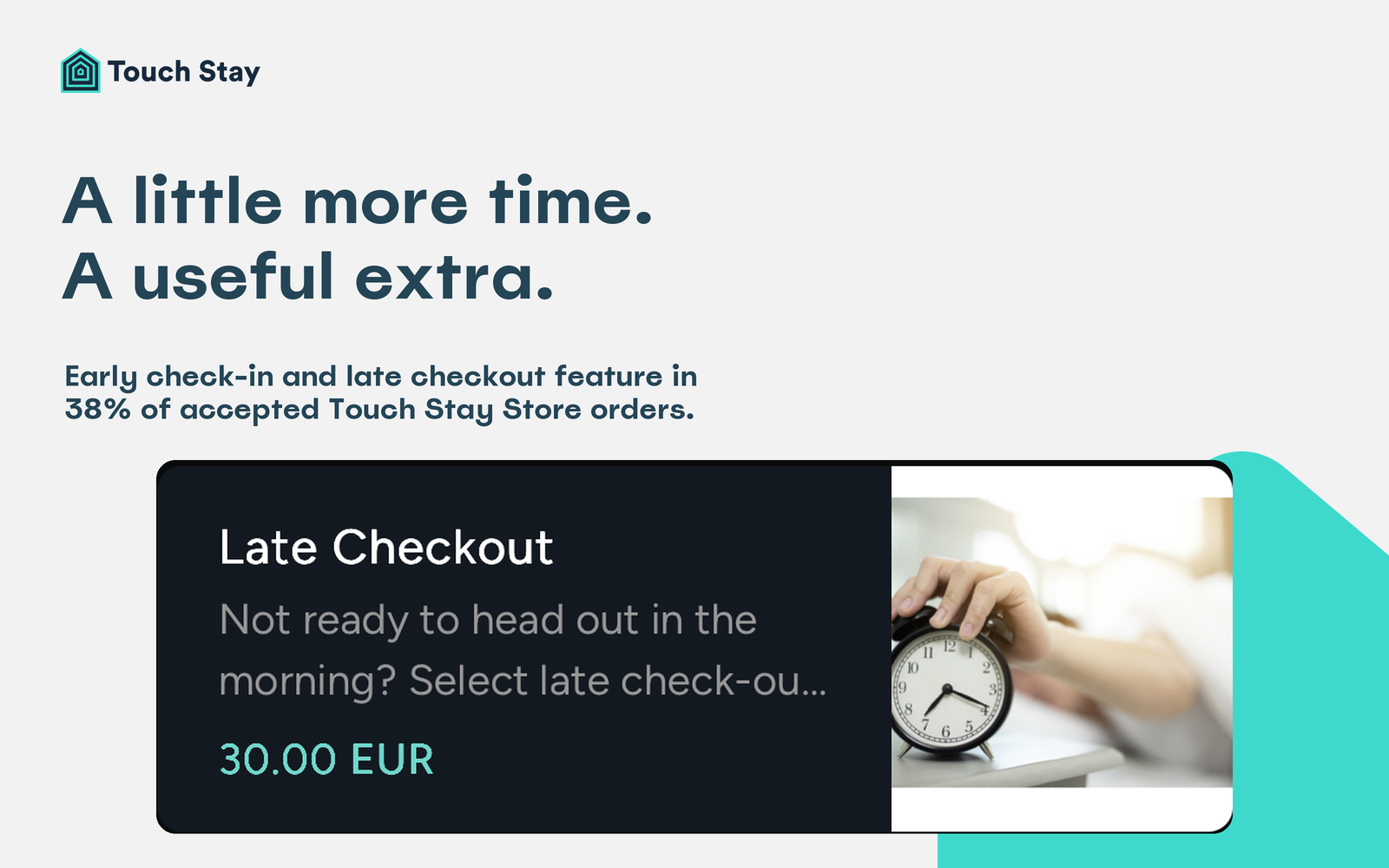
Early check-in and late checkout lead Touch Stay Store sales.
That makes sense when you think about the parts of a trip guests cannot always control. Flights arrive before check-in. Trains leave after checkout. Children need somewhere to rest, and luggage needs somewhere to go.
A few extra hours can solve a practical problem.
The finding gives hosts a useful place to start. Before building a long list of products or arranging elaborate packages, look at whether you can offer more flexibility around arrival and departure.
Availability matters. An early check-in should leave enough time to prepare the property properly. A late checkout needs to work with your cleaner and the next booking.
Be specific about the time you are offering, the price and whether confirmation is required. Guests should know exactly what they can expect before changing their plans.
What the Store’s sales figures tell us
In it's first few months, the Touch Stay Store recorded:
|
Measure |
Finding |
|---|---|
|
Accepted orders |
1,507 |
|
Total guest spend |
Approximately $68,000 USD |
|
Average accepted order value |
$55.70 |
|
Average items per order |
2.8 |
|
Accepted orders including early check-in or late checkout |
38% |
Order values across currencies have been converted to USD for the overall figures.
The average basket contains more than one item, which gives hosts a reason to offer a few useful choices. Guests may want more than one extra, or more than one quantity of a product.
Your guidebook puts the offer in context
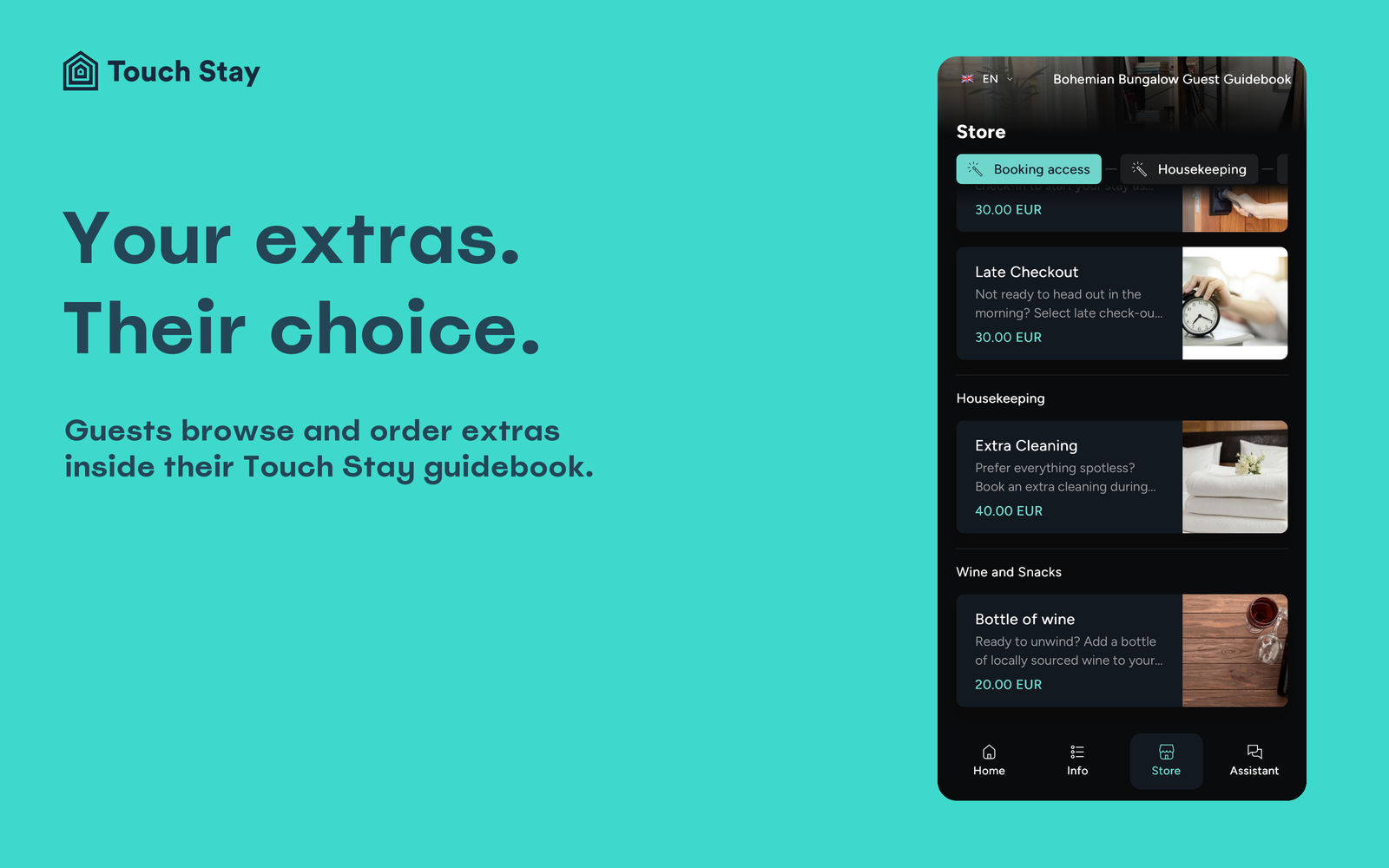
A guest reading checkout instructions is already thinking about departure. Someone checking arrival details may be working out what to do before they can get into the property.
Your guidebook is a useful place to make relevant extras visible.
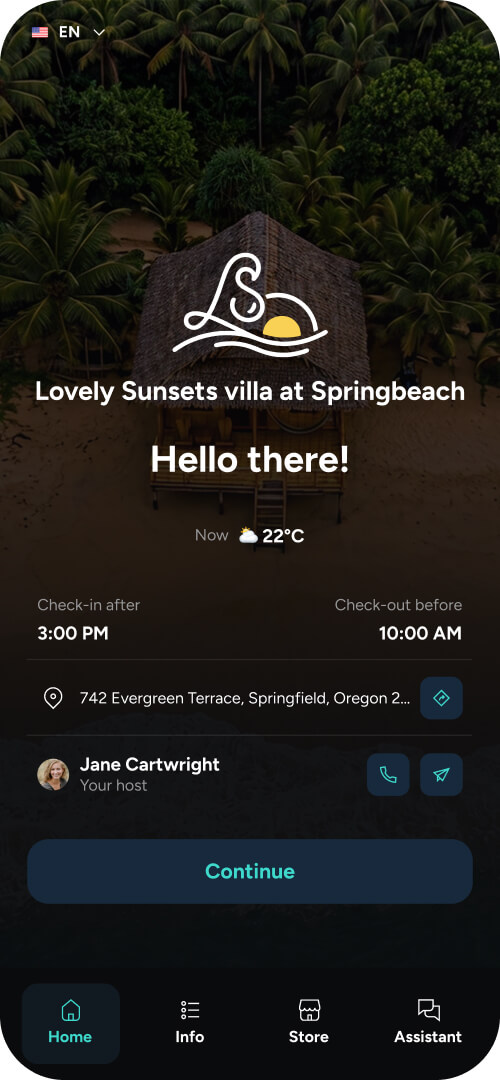
With an integrated store, guests can browse the options, read what is included and place an order in the same guidebook they use for their stay.
For hosts, this can reduce the back-and-forth involved in explaining each offer individually.
A message asking about late checkout might otherwise lead to several more: what time, what price, how to request it and what happens next. A clear listing can answer those questions before they are asked.
Keep essential information easy to find, and make the store an optional part of the experience. Guests should be able to get their access instructions or WiFi password without working through a sales pitch.
Start with flexibility, then consider other useful extras
Early check-in and late checkout are the strongest starting points in the Store findings. Your own guests’ requests can help you choose what to offer alongside them.
A small selection might include:
- Early check-in: access from a stated time, subject to your preparation schedule.
- Late checkout: extra time before departure when your next booking allows it.
- Additional cleaning: a mid-stay refresh with a clear description of the work included.
- Arrival extras: breakfast supplies, local produce or a bottle of wine waiting at the property.
- Local experiences: activities or services arranged with dependable partners.
Beyond early check-in and late checkout, these are ideas to consider rather than a ranking of the Store’s best-selling items.
Choose extras you can deliver consistently. An offer needs to work for the guest and for the people responsible for providing it.
If you regularly receive requests for a particular service, that is a good reason to investigate. Check the costs, decide how it will be fulfilled and make sure the price reflects the work involved.
Write the listing so guests know what they are buying
“Late checkout available” is an invitation to ask more questions.
A useful listing tells guests:
- What they get: the additional time, product or service.
- What it costs: including whether the price is per item, person, service or stay.
- When it happens: a specific time or a clear service window.
- When to order: any deadline you need to fulfil the request.
- What needs confirming: availability conditions and what happens after the order.
For example, a late checkout listing should name the revised departure time. If the offer depends on availability, explain how and when that will be confirmed.
An additional cleaning listing needs a different kind of detail. Does it include fresh towels? A linen change? Washing up? Guests should not have to guess.
Accurate images help too. The product in the photo should reflect what you will actually provide.
Clear expectations make an extra easier to choose and easier to deliver well.
Introduce the options when they are useful
Guests can begin considering extras once their stay is booked.
When you share the guidebook, mention that they can also use it to browse optional additions. Then point them towards relevant offers when there is a practical reason to do so.
Arrival products need enough notice to prepare. An early check-in request needs time to coordinate. An additional clean may become useful during a longer stay.
You do not need to repeat every offer in every message. Give guests a clear place to find the options and enough time to choose.
Keep the distinction between included amenities and paid extras equally clear. Guests should be able to enjoy the stay they booked without buying anything else.
Test a small selection before expanding
Three well-defined extras are a manageable starting point.
You might begin with early check-in, late checkout and one additional service guests already request. If flexible arrival and departure do not work for your property, choose options you can reliably fulfil instead.
Before sharing your store, check it on a phone:
- Can guests find it easily?
- Is each offer understandable without further explanation?
- Are prices, timings and conditions clear?
- Does the guest know what happens after placing an order?
Once orders start coming in, review both sales and fulfilment.
Which extras are guests choosing? Which lead to questions? How much time does each take to provide? What remains after costs?
An extra that sells well but regularly disrupts your cleaning schedule may need a different availability rule. A product that generates repeated questions may need a clearer description.
Use the Store-wide findings as a starting point, then let your own orders guide the decisions.
Give your guidebook another way to earn its keep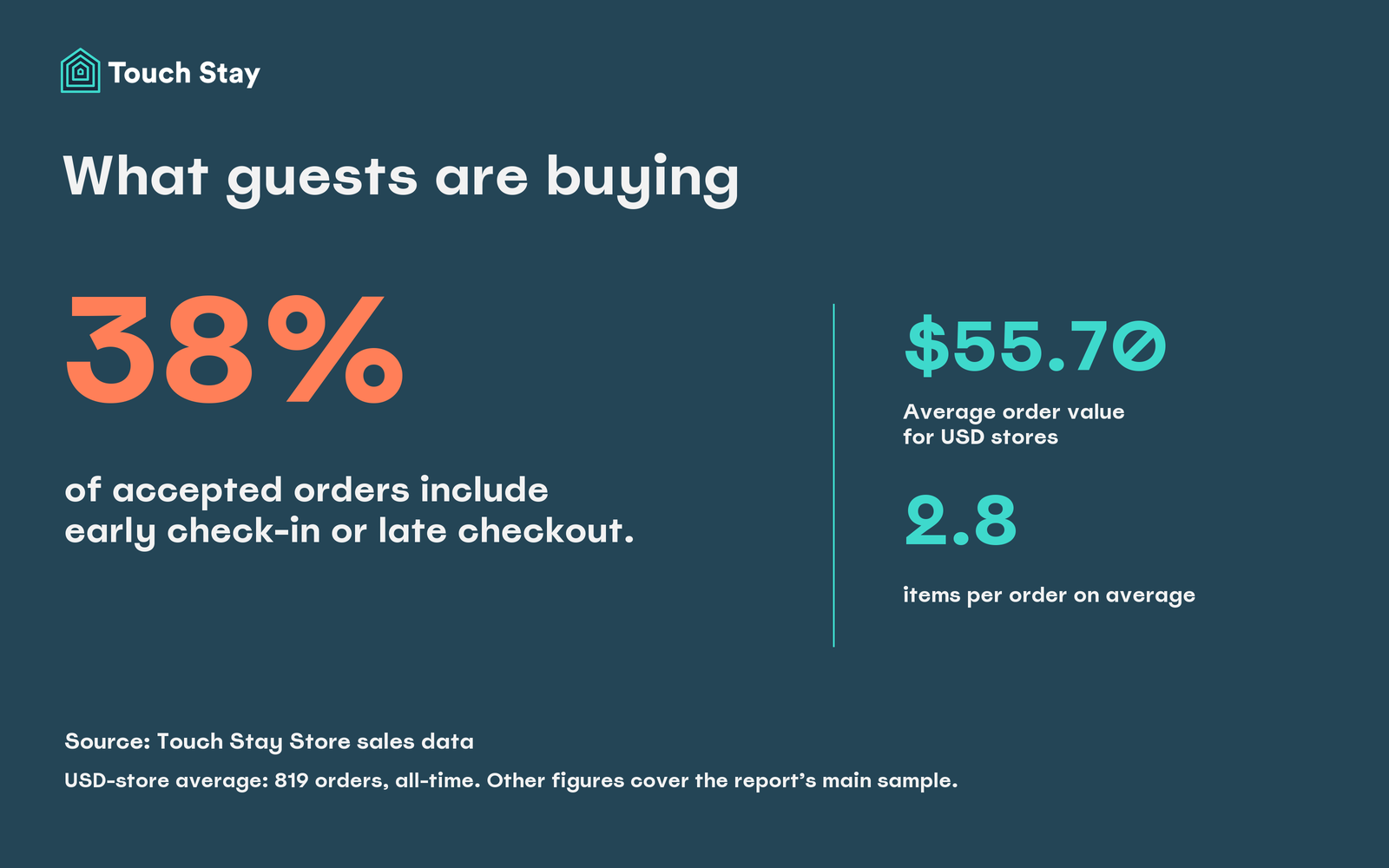
Your guidebook already helps guests arrive, settle in and find answers.
Adding a store gives them a way to choose more from their stay. The sales data suggests that a useful place to begin is extra time: early check-in and late checkout appear in more than a third of accepted orders.
Start with offers that solve a real guest need and fit the way you run your property. Make the details clear, fulfil them well and track the results.
Your guidebook can then contribute to the business in another measurable way: helping generate additional revenue alongside the guest support it already provides.
Frequently asked questions