Summarize in
An OTA (online travel agency) is a website or app where travelers can search for and book places to stay, flights, rental cars and activities from many different providers in one place. Booking.com, Expedia and Airbnb are all OTAs.
For hosts and hotels, an OTA is a sales channel: it lists your property in front of millions of travelers, takes the booking and charges you a commission for it.
OTAs are a huge part of how people book travel. In the US alone, OTA gross bookings reached $100.3 billion in 2025, about one fifth of all travel spending, and hotels make up 63% of that.
For independent hotels, OTAs brought in 63.4% of bookings in 2025.
In this guide, you'll learn how OTAs work, which ones matter most, what they cost, and how to get the most from them without depending on them.
In this article
- How do OTAs work?
- Examples of OTAs
- The pros and cons of OTAs for hosts
- How to make OTAs work for you
- OTA FAQ
How do OTAs work?
The basic idea is simple:
- You list your property with photos, a description, rates and availability.
- Travelers search and book on the OTA's website or app.
- The OTA handles payment (or passes the guest's details to you) and sends the booking to you.
- You host the guest, and the OTA takes a commission on the booking.
The three main OTA business models
- Agency model. The guest books through the OTA but pays the property, either at booking or at the stay. The OTA then invoices the property for its commission. Booking.com has traditionally worked this way, and Expedia calls it "Hotel Collect."
- Merchant model. The OTA takes the guest's payment and pays the property afterward, minus its commission. Airbnb and Vrbo work this way, as do Expedia Collect bookings and Payments by Booking.com.
- Opaque model. The traveler sees a discounted price but not the exact property until after they pay. It lets hotels sell spare rooms cheaply without advertising a lower public rate.
How much do OTAs charge?
Every OTA charges a commission, and the rate depends on the platform, your market and your property type. Here's where the big ones stand in late 2026:
|
OTA |
Typical host or property cost |
|
Airbnb |
15.5% host-only fee for hosts who use property management or channel management software |
|
Booking.com |
About 15% in the US, 10% to 25% worldwide, plus 1.1% to 3.1% if Booking.com processes payment |
|
Vrbo |
12% to 15% on bookings made from October 29, 2026 |
|
Expedia |
Around 15% to 30% for hotels, depending on market |
Visibility programs, like Booking.com's Genius or Preferred Partner, can add to that cost. Not sure how to adjust your prices for Airbnb's host-only fee? Touch Stay's Emma Cole and Mark Simpson of Boostly walk through it in our webinar, Balancing your Airbnb strategy.
OTAs vs metasearch vs channel managers
These three get mixed up a lot:
- OTAs take the booking. Examples: Booking.com, Expedia, Airbnb.
- Metasearch engines compare prices across sites and send the traveler elsewhere to book. Examples: Google Hotels, Kayak, Trivago.
- Channel managers and property management systems (PMS) are the software hosts use to connect to many OTAs at once and keep rates and calendars in sync, so you don't get double bookings.
Examples of OTAs
A handful of companies own most of the big names:
|
Company |
OTAs it owns |
Best known for |
|
Booking Holdings |
Booking.com, Priceline, Agoda |
Hotels and apartments worldwide, strong in Europe and Asia |
|
Expedia Group |
Expedia, Hotels.com, Vrbo, Orbitz, Travelocity, Hotwire |
Hotels, flight-plus-hotel packages, vacation homes (Vrbo) |
|
Airbnb |
Airbnb |
Homes, apartments and unique stays |
|
Trip.com Group |
Trip.com, Ctrip |
Travel to and from Asia |
There are also specialist OTAs, like Hostelworld for hostels, and plenty of regional and niche players.
Is Airbnb an OTA? Yes. Airbnb started as a home-sharing marketplace, but it works the same way as other OTAs: it lists your property, takes the booking and payment, and charges a fee. If you're deciding where to list, our guide to the best short-term rental platforms compares the options, and Booking.com vs Expedia goes head to head on the two biggest.
OTAs are moving into AI assistants
The newest place to find OTAs is inside AI chat. In October 2025, Booking.com and Expedia launched apps inside ChatGPT, so travelers can search for hotels in a normal conversation. For hosts, it means your OTA listing (its photos, description and reviews) may now be what an AI assistant reads and recommends.
The pros and cons of OTAs for hosts
The pros
- Reach. OTAs spend billions on marketing, so your listing gets in front of travelers you'd never find on your own.
- Trust. Many travelers feel safer booking a place they've never heard of through a brand they know.
- Payments and languages handled for you. Most OTAs take payment in many currencies and show your listing in dozens of languages.
- Reviews. Guest reviews build social proof that helps new guests choose you.
- New channels. OTAs are already plugged into new ways of booking, from Google to AI assistants.
The cons
- Commission. Paying 15% or more on every booking adds up fast, especially on long or high-value stays.
- Their rules, not yours. OTAs set rules for cancellations, refunds and what you can say to guests. Airbnb's November 2026 policy changes, for example, limit how hosts can collect guest contact details and promote direct bookings.
- Less guest data. You often can't contact OTA guests freely before or after their stay, which makes building repeat business harder.
- More cancellations. OTA bookings were cancelled at about twice the rate of direct bookings at independent hotels in 2025 (21.8% vs 10.6%).
- Dependence. If an OTA changes its fees, rules or search rankings, your income can change overnight.
The good news for hosts in Europe: the EU's Digital Markets Act bans Booking.com from using parity clauses, so you're free to offer a better price on your own website.
For a deeper look, see our take on online travel agencies: friends or foes?
How to make OTAs work for you
- Pick the right two or three. You don't need to be everywhere. Choose the OTAs your guests actually use, based on where they come from and how they travel.
- Connect them to one system. A channel manager or PMS keeps your calendars and rates in sync and saves hours of admin.
- Price for the commission. Build each platform's fee into your rates, and recheck when fees change.
- Make your listing match reality. Accurate photos and descriptions mean fewer complaints, better reviews and higher rankings. In our AMA on how review scores affect OTA rankings, revenue management expert Thibault Masson explains how platforms decide who shows up first.
- Know each platform's rules. What you can send guests, and when, varies by OTA.
- Build a direct channel alongside them. Use OTAs to find guests, then give them every reason to come back to you.
Turn OTA guests into lifelong fans with Touch Stay
Wherever a guest booked, their stay is where you win them over. A Touch Stay digital guidebook puts check-in steps, Wi-Fi, house rules and local tips in one link, with no app to download. A 24/7 AI assistant answers guest questions from your guidebook, so guests get help even when you're asleep.
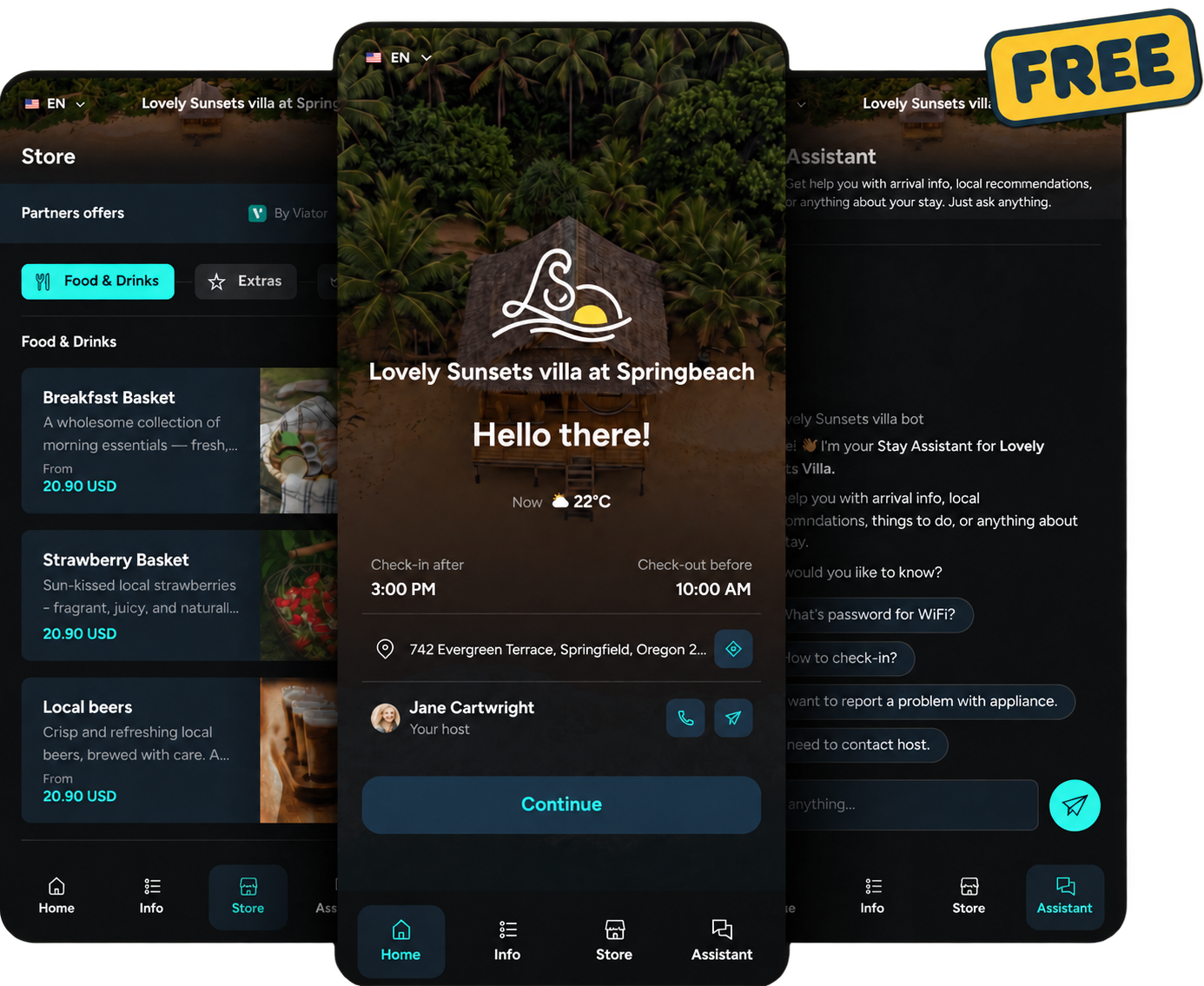
One guidebook for every guest: arrival details on the home screen, extras in the Store, and an AI assistant for questions.
For guests who book directly with you, Touch Stay also helps you grow that direct business:
- Email Capture and the Contact Collection pop-up, with marketing consent, so you can stay in touch with guests who opt in.
- Return-stay offers, like a discount code for their next booking.
- Ratings and Google review invitations, so happy guests help new ones find you.
- The Store, for extras like early check-in or late checkout, with no OTA commission on top.
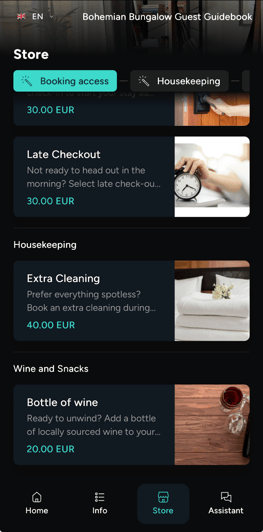
The Store lets guests add extras like late checkout or a bottle of local wine to their stay.
For Airbnb guests, Touch Stay's OTA Compliance Centre hides marketing prompts, review invitations and the topics you choose, so your guidebook stays within the rules. And you can start on the free plan.
Want to build more independence from OTAs? Here are the benefits of direct bookings and how to earn more of them.
Watch: hosts on breaking free from OTAs
We've hosted two webinars with hosts who've built strong direct businesses alongside the OTAs:
- How to achieve independence from the OTAs: innkeepers and B&B owners share how they grew direct bookings, from treating commission as a marketing budget to teaming up with other local properties.
- Harnessing the power of direct bookings, with Hospitable: self-catering and lodge owners on building a brand guests come back to, and what to get right before you take bookings yourself.
And for the latest on Airbnb's fees and rules, watch Balancing your Airbnb strategy, where Emma Cole and Mark Simpson of Boostly cover Airbnb's 15.5% host-only fee, its newest policies, how it compares with Vrbo and Booking.com, and why direct bookings matter more than ever.
OTA FAQ