

Summarize in
Airbnb says fewer than 0.1% of stays lead to a reported safety issue, but with hundreds of millions of bookings a year, that still leaves plenty of eventful stories.
From hosts who came home to a house wrecked by a 200-person party, to guests who arrived to find their booking had vanished minutes before check-in, some stories are funny in hindsight, while others influenced Airbnb's rules for everyone.
We've rounded up 10 real Airbnb horror stories, split into host stories and guest stories. After each one, we look at what went wrong and what would have helped. Then we cover the patterns behind them and how to make sure your listing never becomes the next viral thread.
In this article
- Airbnb host horror stories
- Airbnb guest horror stories
- What these Airbnb horror stories have in common
- How hosts can avoid their own Airbnb horror story
- Airbnb horror stories FAQ
Airbnb host horror stories
1. The Calgary party a police veteran called the worst he'd seen
In April 2015, Star and Mark King rented out their Calgary home for a weekend. Neighbors watched the guests arrive in a party bus, and police were called out for noise complaints several times during the stay. When the Kings got home, they found couch cushions piled on the kitchen floor, cigarette butts on plates in the sink and multiple clogged toilets. The police staff sergeant who surveyed the damage told TIME it was the worst case of a trashed home he'd seen in his 27-year career.
The lesson: A weekend booking from a guest with no reviews and a vague reason for the trip is a red flag. Ask questions before you accept, and spell out guest limits and party rules in your listing.
2. The $40 room that hosted a 200-person New Year's party
Over the New Year's weekend heading into 2018, a guest in Seven Hills, Ohio, booked a single room for $40 a night. He then advertised a "New Year's banger" on Twitter and charged $5 at the door. More than 200 people turned up. The homeowner, who was in his own room playing video games, ended up locking himself in after partygoers threatened him. According to a local news station, it took officers from five police departments to clear the house, and damaged exceeded $10,000.
The lesson: Peak party dates like New Year's Eve, Halloween and graduation weekend deserve extra screening. Airbnb now runs extra anti-party checks around holidays like these, but your own screening is still the first line of defense.
3. The long-term guests who put up a "no trespassing" sign
Farzana Rahman, a single parent in Durham, North Carolina, told ABC7 she accepted a long-term Airbnb booking that ran from October to May. When her cleaner arrived after checkout, the guests said they hadn't moved out and told her not to come back. They promised police they'd leave the next morning, then taped a handwritten "no trespassing" sign to the front door, saying they'd only go once eviction papers were filed. Rahman had to start formal eviction proceedings to get her own home back.
4. The one-month guest who stopped paying
In July 2026, Wendy Weissman's Hermosa Beach, California, townhome also made headlines on ABC7 News. Local rules limit her rentals to 30 days or more. Her guest booked for a month, paid for 48 days, then stopped paying but didn't leave. Police told her it was a civil matter.
And after several attempts to regain access to her property, she was finally successful when a neighbor reported water pouring out of the townhome. The damage inside was extensive, including what looked like an attempt to break into a locked closet. After the incident, the guest finally loaded a U-Haul and left. And while Airbnb did remove him from the platform, a real estate attorney warned that once a guest passes 30 days, removal can take six months or more of civil litigation.
The lesson from stories 3 and 4: In many places, a guest who stays 30 days or more can gain tenant rights. Before you accept a long stay, check your local laws. Airbnb allows a separate rental agreement for stays of 28 nights or more, as long as you disclose it on your listing before booking. If you're weighing it up, here's whether long-term Airbnb rentals are worth it.
Airbnb guest horror stories
Hosts aren't the only ones with stories. This next batch comes from guests, and most of them start with the same problem: what they found didn't match what they were told.
5. The "plumbing flood" that turned out to be a scam
In 2019, writer Allie Conti was about 10 minutes from checking in to an Airbnb in Chicago when the "host" called. There had been a plumbing flood, he said, so she'd have to move to another of his properties. The replacement was grim, leading Conti to investigate further. In doing so, she uncovered a scam running the same playbook across 8 cities and nearly 100 listings, with friendly host profiles fronting it. After her story ran in Vice, the FBI got in touch.
The lesson: Last-minute switches are a classic red flag. Guests should never agree to move outside the platform, and honest hosts can build trust by sending check-in details early and keeping every message on the record.
6. The gas leak nobody noticed
One Reddit user described a stay where they started hallucinating and feeling seriously unwell. It turned out to be a gas leak, and they said it came close to being fatal.
The lesson: Carbon monoxide and smoke detectors aren't optional extras. Test them before every check-in, and tell guests where they are and what to do if one goes off. Our Airbnb safety guide has the full checklist.
7. The host's son at the foot of the bed
A guest staying in a shared home in Iceland shared on Reddit that they woke in the night to find the host's son standing silently at the end of the bed. The host never explained it.
The lesson: In a shared space, privacy has to be designed in. Locks on guest rooms, clear rules about who else is in the home, and a quick reply when something feels off.
8. The stranger with the keys
One Reddit user staying in London said their host sent someone else to hand over the keys. That person didn't check any ID, and after check-in the host went quiet for the rest of the stay.
The lesson: If someone else handles check-in, tell the guest who it will be and when. A named contact and a way to reach you during the stay make a big difference. Here's what most often goes wrong at check-in, based on real guest questions.
9. The fee shock
One guest posted an estimate for two nights that looked like about $524 at $262.50 a night. With fees, the total came to $1,211.73. Another said their host asked for a tip after charging a $350 cleaning fee.
The lesson: Nobody likes surprises at checkout. Airbnb now shows guests the total price up front, and keeping fees fair and checkout chores light goes a long way toward a five-star review.
10. The hot tub that was the reason for booking
A guest picked a rental for its hot tub, then arrived to find it smelling terrible and looking like it hadn't been cleaned in a long time.
The lesson: If an amenity sells the booking, it has to deliver. Add it to your cleaning checklist, and tell guests how to use it and who to call if it isn't right.
What about hidden cameras? It's one of the most common guest fears. Since April 30, 2024, Airbnb has banned indoor security cameras in all listings. Outdoor cameras and noise monitors are still allowed, but they must be disclosed, and they can't watch private areas.
What these Airbnb horror stories have in common
Read enough of these and the same causes keep showing up:
- Unclear expectations. House rules, occupancy limits and fees that guests never saw, or never read.
- Unvetted bookings. Anonymous profiles with no reviews booking a whole home for one night.
- Peak party dates. New Year's Eve, Halloween, the Fourth of July and graduation weekends.
- Long stays with no paperwork. Past 30 days, many places give a guest tenant rights.
- Gaps in communication. No one to call, a stranger at the door, a host who goes silent.
- Listings that don't match reality. The hot tub, the photos, the price.
The good news is that almost all of these can be fixed before a guest arrives.
How hosts can avoid their own Airbnb horror story
You can't rule out every bad stay. You can make most of them far less likely.
Before the booking
- Screen every request. Look at reviews, verification and how the guest writes. A one-night, whole-home booking on a peak date from a brand-new profile deserves a closer look.
- Put your rules on the listing. Occupancy limits, quiet hours, parties, pets and smoking. If a rule isn't on the listing, it's hard to enforce. See what to include in your Airbnb house rules, and how Airbnb's November 2026 changes affect them.
- Price honestly. Make fees and checkout chores clear from the start so the total never feels like a trick.
- Make sure the photos match. Every amenity you show should work and be clean on the day guests arrive.
Before the stay
- Plan for long stays. For bookings of 28 nights or more, use a rental agreement and check your local tenant laws before you accept.
- Use disclosed noise monitors. They flag a party without recording anyone. Say on the listing that you have them.
- Test the safety basics. Smoke and carbon monoxide detectors, a fire extinguisher and a first aid kit.
- Send clear check-in details early. Who will meet the guest (if anyone), how to get in and who to call. Here's how to write Airbnb check-in instructions guests can follow.
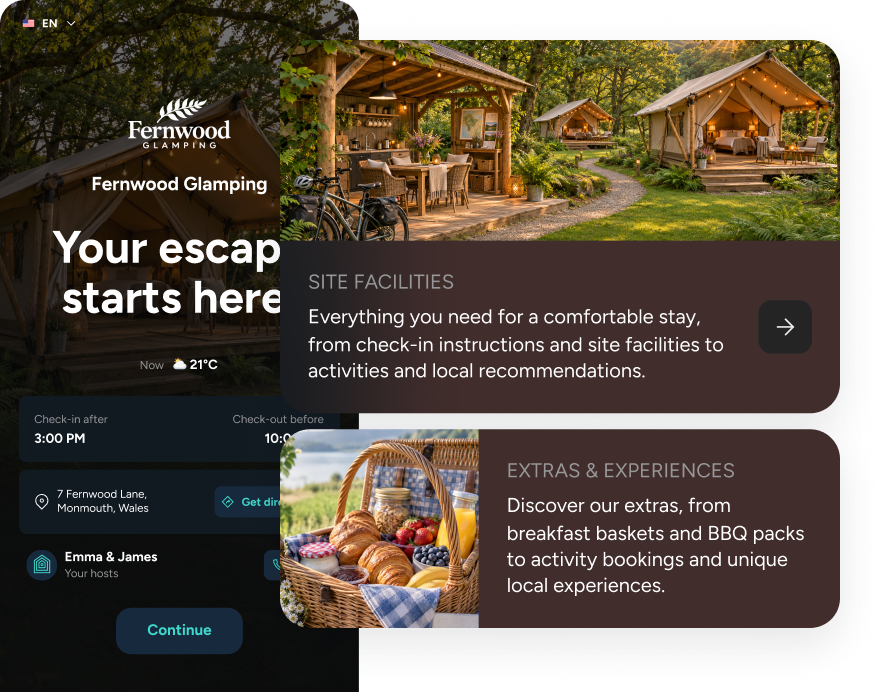
Check-in and checkout times, directions and a one-tap way to reach the host, all on the guidebook home screen.
During the stay
- Be easy to reach. Share an emergency contact and a backup for when you're unavailable.
- Check in once. A short message on day one catches small problems before they turn into a bad review.
- Act early. If noise or numbers look wrong, contact the guest and Airbnb's support straight away.
Where a digital guidebook helps
A lot of horror stories start with a guest who didn't know something. A Touch Stay digital guidebook puts everything they need in one place, so they arrive informed and stay that way:
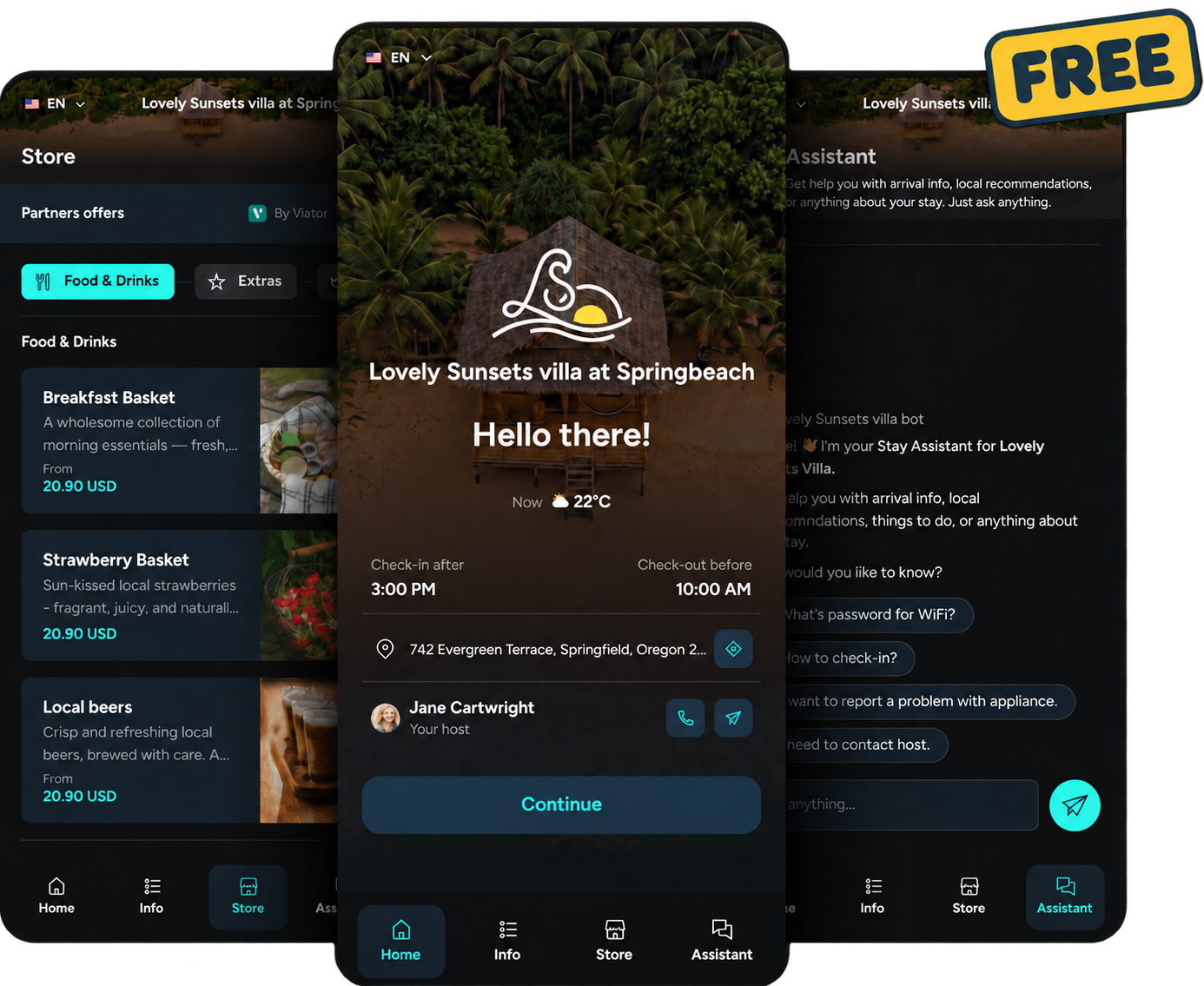
A Touch Stay guidebook: extras in the Store, check-in details and host contact on the home screen, and an AI assistant for guest questions.
- House rules that match your listing, written in a friendly way that guests actually read.
- Step-by-step check-in instructions, with photos, door codes and parking.
- Emergency contacts and safety info, from where the fuse box is to what to do if an alarm goes off.
- Amenity guides, so the hot tub, the heating and the coffee machine work the way they should.
- A 24/7 AI assistant that answers guest questions from your guidebook content, even at 2am.
- One link, no app. Guests open it in their browser, with nothing to download.
When guests know what to expect, they're more likely to respect your home, and you spend less time answering the same questions. That leaves more time for the part of hosting that matters most: giving every guest a stay they'll want to come back to. Ready to build one? Here's how to create an Airbnb guidebook.
Airbnb horror stories FAQ